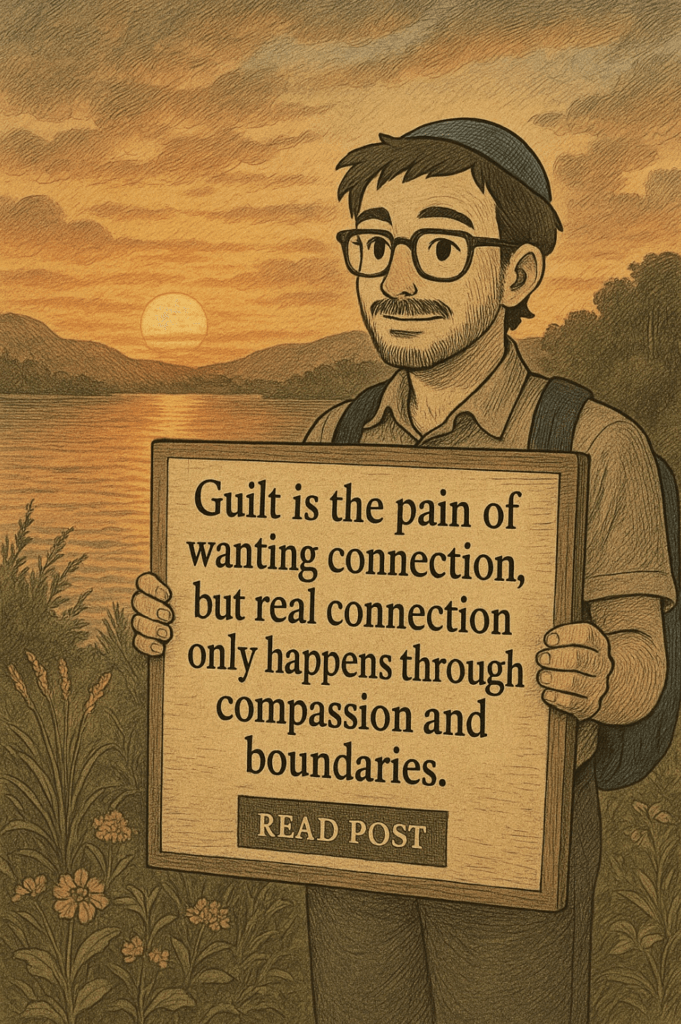
“Guilt is the pain of wanting connection, but real connection only happens through compassion and boundaries.”
It means you want connection, relationship, and a part of you wants to take responsibility but responsibility requires clarity, not overwhelm.
Here’s the mistake many people make:
they try to reconnect while drowning in guilt.
And guilt is too overwhelming to let you think clearly or choose a healthy compassionate boundary.
Here’s a practice that may work:
1. Practice 45 seconds of compassion for the other person, like:
“Their experience matters.” “they are going through hard times”
This relaxes your defensiveness.
2. 30 seconds of self-compassion.
“My feelings make sense too. My life matters” “My challenges matter”
This stops the guilt from turning into shame.
3. Repeat: compassion → self-compassion → compassion.
Back and forth, like breathing.
Why?
Because when both sides are allowed to exist, your nervous system relaxes enough to make a boundary without feeling like you’re abandoning anyone.
Guilt is the pain of wanting connection, and responsibility is the way you make that connection real.
But responsibility only works when it’s shaped by compassion and boundaries.
This practice helps get you there. And sometimes guilt isn’t a call “to connect.” It means “grieve this.”
If repair isn’t possible, mourning is what lets your system let go.
Check out more posts at https://nextself.ai/wisdom/daily/
#CompassionInAction#NextSelf#guiltfree