

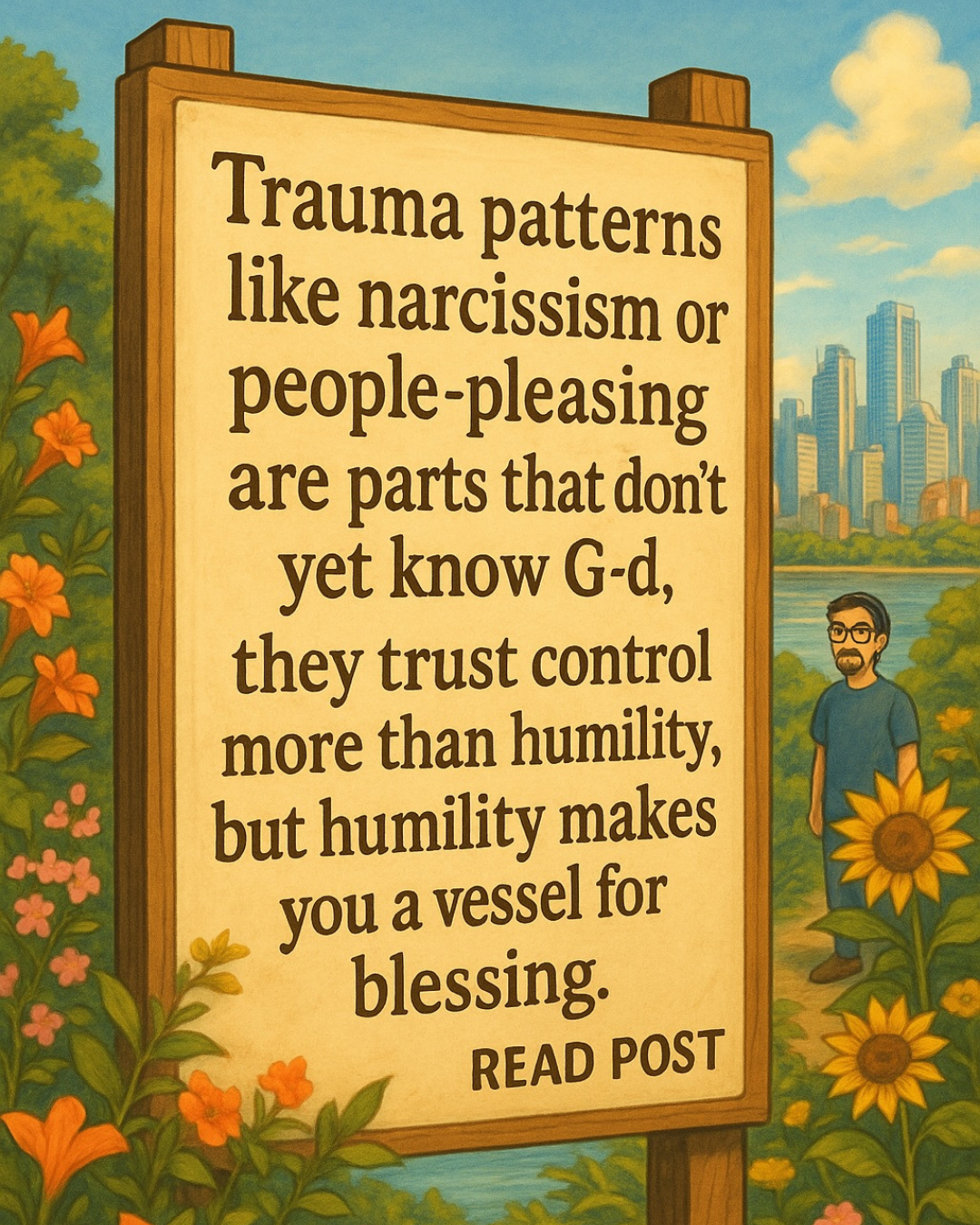
An adaptive trauma pattern isn’t evil, it’s misunderstood.
Narcissism, people-pleasing, perfectionism, each one is a part
that doesn’t yet know G-d.
Why do Jewish teachings compare trauma patterns to idol worship?
Jewish wisdom says these patterns are like idol worship.
An idol never says no, that’s people-pleasing,
love without boundaries.
Trying to control an outcome, “I’ll be safe if I please”.
Self-protection through control of others’ emotions.
The worshipper takes without awareness, that’s narcissism, boundaries without love.
Why is humility the opposite of both patterns?
Both are opposites of humility, compassion + boundaries,
they trust control more than healthy surrender.
But humility is what makes the soul a vessel for blessing.
It’s how awareness enters the parts that once had to close off to survive.
How do these patterns begin to soften?
When the body remembers that love doesn’t need to be earned,
and safety doesn’t come from power or pleasing,
those patterns begin to soften,
and the parts that didn’t know G-d
become channels of His infinite kindness.
More guides:
forgiveness doesn’t erase anger, change does: Many people misunderstand forgiveness,
Joy isn’t about living in denial – Bringing Messiah Through Joy
How trauma disrupts your personality: Abusive thinking doesn't appear out of nowhere.
Trauma turns anger into hatred – Baseless hatred isn't only about others.
Jewish secret to transform suffering into blessing: Your pain isn't random.
Explore the NextSelf Blog. Start with this post explaining the world of souls, and what does it mean to be light? And my Youtube. Content is published to this facebook first and a few days later, to the blog.
The blog lists all the difference patterns to study, understanding patterns is how one can develop 'Daas' [felt knowing].
Content does not provide medical services or professional counseling, and it is not a substitute for professional medical care.