

How can a finite human being have a real relationship with the Infinite Creator?
A real relationship is more than believing He exists or trying to do the right things; it means that the relationship becomes emotionally real.
Many people still care about the Creator, still try, and still follow His instructions, but something feels missing because there is very little joy or felt closeness.
The answer is not to force happiness. The relationship itself has to become deeper.
---
Why is the Creator called King and not only Father?
The Creator is not only described as our Father. He is also our King.
That matters because a relationship between a finite person and the Infinite Creator cannot begin through sameness.
We are not the same as Him, so kingship gives us a structure for relationship across that difference: a subject remains a subject, the King remains the King, and yet a real relationship can exist through awareness, trust, shared will, and choice.
A relationship with a King begins with awe.
---
What does awe actually feel like?
Awe is the felt awareness:
“I am living before the Infinite Creator right now.”
You reflect on the fact that He knows the whole story while you experience one moment inside it, nothing you do surprises or threatens Him, and yet your choices inside the life He is creating truly matter.
That awareness contains wonder, humility, and healthy fear.
Wonder comes from realizing that His wisdom and the depth of reality are far beyond what you can fully understand, humility comes from realizing that you are not the Source and do not control the whole story, and healthy fear comes from realizing that the relationship is real and your choices matter.
That is awe.
---
How does trust turn awe into love?
Then trust changes how awe feels.
When you trust that the Infinite Creator is good, His greatness does not only make the relationship feel serious; it makes love possible.
That intimacy contains joy because some of His goodness and closeness are already revealed, and it can contain sadness because you want more of that goodness and closeness to be revealed.
That sadness can become longing:
“I want to know You more.”
“I want to feel Your closeness more clearly.”
“I want more of Your goodness revealed.”
Sadness can also deepen awe because it makes you look more carefully at the Creator, His purpose, and what your choices can help reveal.
So sadness is not part of awe itself. It is part of intimacy, and it can deepen awe and increase your desire to channel more goodness.
---
Why does the Creator stay hidden?
This whole relationship is possible because of hiddenness.
For a finite person to experience real choice, the Creator's infiniteness and goodness cannot be completely obvious, because hiddenness creates enough space for us to experience ourselves as separate people who can choose whether to notice Him, trust Him, respond to Him, and live according to His will.
That is what makes a King-subject relationship possible.
But hiddenness can also be painful.
When there is not enough trust or emotional safety, distance can be felt as shame, fear, loneliness, confusion, or sadness.
Those feelings are not awe by themselves. They are feelings that need somewhere healthy to go.
---
What can you do with shame, fear, and sadness?
Giving those feelings words can bring them into relationship.
Instead of hiding shame, you can say, “I feel ashamed.”
Instead of letting fear control you, you can say, “I am afraid, but I still want to choose how I respond.”
Instead of numbing sadness, you can say, “I miss closeness, and I want more goodness revealed.”
Fear can become healthy fear inside awe, shame can be met with compassion, honesty, and responsibility, and sadness can become longing that deepens love.
This is part of what prayer does: your inner world becomes part of a conversation with the Creator.
---
Is people-pleasing the same as humility?
People-pleasing, perfectionism, control, and emotional numbness are not humility.
They are ways the nervous system can learn to survive fear, shame, rejection, or the feeling that relationship is not safe.
People-pleasing says, “I need your approval to feel safe.”
Perfectionism says, “I cannot let you see me fail.”
Control says, “I have to control what happens so I do not get hurt.”
Numbness says, “It is safer not to feel.”
Humility is different.
Humility means recognizing your limits while still knowing that your needs, choices, and responsibilities matter, and in everyday relationships that means practicing compassion and boundaries: caring about another person without abandoning yourself.
---
This helps explain why the Creator can be described as both Father and King.
Father expresses closeness, care, and love, while King expresses the structure through which a finite person begins relationship with the Infinite through awe, responsibility, and freely choosing to respond to His will.
Just as human connection often begins with curiosity about another person, connection with the Infinite begins when your attention moves beyond yourself toward the One you are living before.
That is awe.
---
What is repentance in this relationship?
This also changes how repentance can be understood.
Repentance is not staying trapped in guilt. It is returning to relationship.
You remember Who you are living before, honestly notice where your choices moved you away from the relationship you want, repair what you can, and choose again.
Awe brings you back into awareness, trust lets you stay in the relationship, love makes you want closeness, joy lets you enjoy the goodness already revealed, sadness makes you long for more goodness to be revealed, and responsibility turns all of that into action.
---
How do the Creator's instructions turn love into action?
This is where the Creator's commandments become important.
Love is not only a feeling. It needs a physical form.
The Creator's instructions give a finite person ways to express awe, love, trust, responsibility, and shared will through the body and physical world.
You give, repair, speak honestly, respect boundaries, and choose what the relationship asks from you.
That is how inner relationship becomes physical action.
---
Creation is an act of unconditional goodness.
When we turn shame into compassion and responsibility, fear into healthy awe, sadness into longing, and love into action, we become partners in revealing more of that goodness.
The goal is not to stop being finite.
It is to become a finite person who can consciously live before the Infinite Creator with awe, trust, love, joy, sadness, responsibility, and choice.
That is how intimacy becomes alive.
Based on teachings of Chabad Chassidus, especially the teachings of the Lubavitcher Rebbe.
Questions people ask
How can a finite human have a real relationship with the Infinite Creator?
Not through sameness. You are not the same as the Creator, so it cannot begin there. He is also our King, and kingship gives you a structure for relationship across that difference: awareness, trust, shared will, and choice. The emotional skills are awe, trust, and responsibility — noticing Who you are living before, then letting your choices answer Him.
What does awe mean in a relationship with the Creator?
Awe is the felt awareness that you are living before the Infinite Creator right now, and it holds three things at once: wonder, humility, and healthy fear. You practice that emotional skill by paying attention — reflecting that He knows the whole story while your choices inside it still truly matter.
What's the difference between people-pleasing and real humility?
They are not the same. People-pleasing, perfectionism, control, and numbness are ways your nervous system learns to survive fear, shame, and rejection. Humility is different: it means knowing your limits while your needs, choices, and responsibilities still matter. The emotional skills it asks for are compassion and boundaries — caring about someone without abandoning yourself.
What purpose does hiddenness serve in this relationship?
Hiddenness is what makes real choice possible: if the Creator’s goodness were completely obvious, there would be no space left to choose to notice Him, trust Him, and respond. Hiddenness can also hurt. The emotional skill here is naming the feeling — saying “I feel ashamed” or “I miss closeness” — so it has somewhere healthy to go.
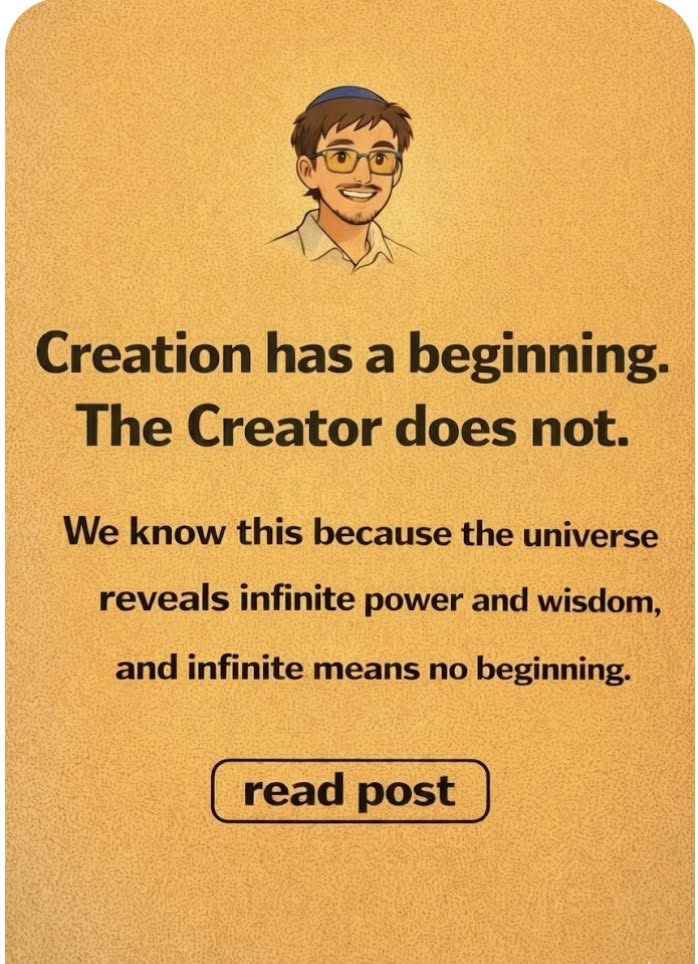
“Creation has a beginning, the creator does not, we know this b/c the universe reveals infinite power and wisdom, and infinite means no beginning”
Explore the NextSelf Blog. Start with this post explaining the world of souls. And my Youtube.
The blog lists all the difference patterns to study, understanding patterns is how one can develop 'Daas' [felt knowing].
Update: As awe, trust, and love deepen, they can allow greater openness and intimacy with the Creator. That intimacy can include sadness when you notice how much more of His goodness can be revealed.