

the Talmud says you’re mistaken.
Why?
Because the point of the story with Batsheva isn’t failure, it’s how a person comes back from a moment that feels like failure. it was recorded to teach us something about love, repair, and what it means to come back to G-d after you’ve broken something.
What did King David actually walk through?
King David didn’t fall the way people imagine.
But he did walk through an inner darkness so deep that something new was born out of it:
Tehillim (Psalms) Chapter 51. And that chapter is the key.
What is Chapter 51 an emotional map for?
Chapter 51 is the emotional map for a person who acted from a place of out-of-control narcissism, not the personality disorder, but the human pattern of protecting shame through:
1. acting without compassion
2. making boundaries without compassion
3. hurting someone to protect your own fear
It’s the moment you realize:
“I damaged something… and I don’t know how to speak to G-d anymore.”
King David gave us the script for that moment.
What questions does a person ask after they hurt someone?
He gave language to the feelings inside a person who wants to repair, but doesn’t know where to begin:
1. How do I face what I did without drowning in shame?
2. How do I ask for closeness when I feel unworthy?
3. How do I reconnect when my actions came from fear, not love?
How does Chapter 51 help you talk to G-d again?
Chapter 51 is the answer.
It teaches you how to talk to G-d again. How to let humility soften your defenses. How to let compassion back into the system. How to begin repairing what you broke, inside yourself and with others. In that sense, King David’s “sin” wasn’t a fall.
It was an act of love, because it gave every person who ever hurts someone, not out of cruelty, but out of fear, a pathway back to truth, and relationship.
Why does the Talmud say this was not a fall?
That’s why the Talmud says:
If you think King David sinned, you don’t understand the story. He didn’t fall away from G-d. He opened a door for you to find your way back.
More guides:
How does a person become a channel for G-dliness? We live feeling distant
Trauma takes away your awareness: From what we know about trauma today
Why is everyone living in survival mode? Your pain isn’t random
What does Jesus feel embarrassed by? centuries of institutional antisemitism
Questions people ask
Did King David really sin with Batsheva?
The Talmud says that if you think King David sinned, you are mistaken. He did not fall the way people imagine. The story was not recorded to show us a failure. It was recorded to show us how a person comes back after a moment that feels like failure.
Why is Tehillim (Psalms) Chapter 51 so important?
Chapter 51 is the emotional map for someone who acted from out-of-control narcissism, not the personality disorder, but the human pattern of protecting shame. It gives language to the moment you realize you damaged something and no longer know how to speak to G-d. King David gave us the script for that moment.
What should you do after you damage a relationship?
Tehillim (Psalms) Chapter 51 gives you the words. It walks you through facing what you did without drowning in shame, asking for closeness when you feel unworthy, and reconnecting when your actions came from fear instead of love. Then you begin repairing what you broke, inside yourself and with others.
How can King David’s “sin” be called an act of love?
King David’s “sin” was an act of love because it gave every person who ever hurts someone, not out of cruelty but out of fear, a pathway back to truth and relationship. He did not fall away from G-d. He opened a door for you to find your way back.
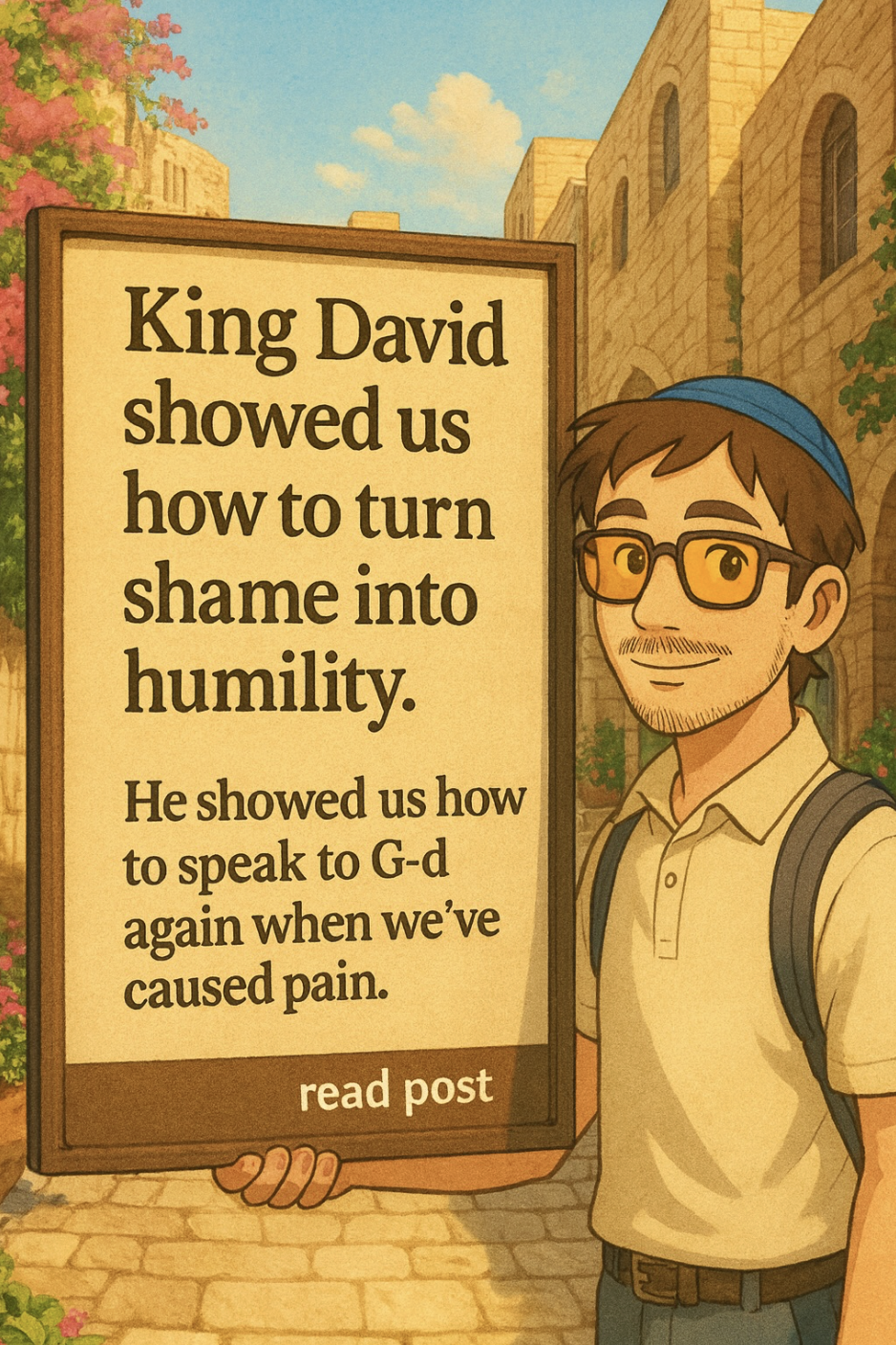
“King David showed us how to turn shame into humility. He showed us how to speak to G-d again when we've caused pain.”
Explore the NextSelf Blog. Start with this post explaining the world of souls. And my Youtube.
The blog lists all the difference patterns to study, understanding patterns is how one can develop 'Daas' [felt knowing].
Update: As awe, trust, and love deepen, they can allow greater openness and intimacy with the Creator. That intimacy can include sadness when you notice how much more of His goodness can be revealed.