

Because that’s exactly what happened in much of church history.
⸻
Belief #1:
“Someone had to die for your sins.”
→ This comes from people who couldn’t face their own mistakes without pushing the blame onto someone else.
If your faith needs someone else’s pain to feel valid, is it really from the Creator?
Why do some beliefs say non-believers are punished forever?
Belief #2:
“Non-believers will be punished forever.”
→ From people who couldn’t handle rejection or difference.
So they imagined the Creator couldn’t either.
⸻
These weren’t divine revelations.
So what were these beliefs, if not divine revelations?
They were emotional defense mechanisms.
Born from unhealed shame, fear, and insecurity, and then given the stamp of “the Creator’s truth.”
⸻
If your idea of the Creator sounds more like a fearful human than an infinite Creator…
maybe it came from someones pain, not from heaven.
⸻
The problem:
Fear-based beliefs keep people disconnected and afraid.
They can’t produce the emotional maturity true spirituality calls for.
Can faith grow emotional maturity instead of fear?
The truth:
A healthy relationship with the Creator grows your ability to take responsibility, give compassion and feel awe.
It never needs fear as fuel.
⸻
Tip #1: Notice when a “spiritual” teaching is really just an ultimatum in disguise.
Tip #2: Ask, “Does this make me more loving or more afraid?”
⸻
The the Creator who made your soul didn’t design you to cower.
He designed you to mature.
And maturity is what lets you love without fear.
⸻
Question for you:
What’s one fear-based belief you’ve unlearned about the Creator?
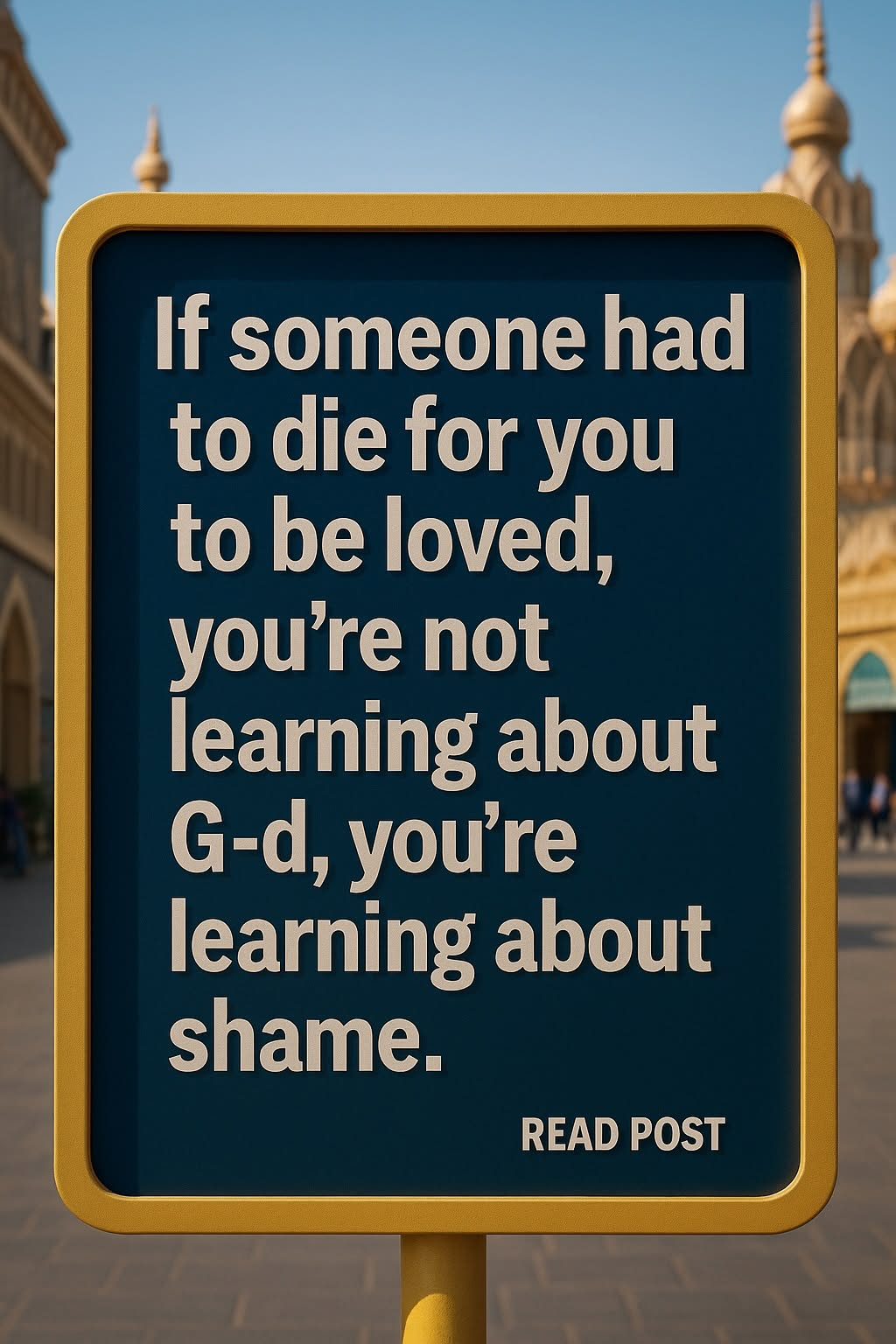
"If someone had to die for you to be loved, you're not learning about G-d, you're learning about shame."
Explore the NextSelf Blog. Start with this post explaining the world of souls, and what does it mean to be light? And my Youtube. Content is published to this facebook first and a few days later, to the blog.
The blog lists all the difference patterns to study, understanding patterns is how one can develop 'Daas' [felt knowing].
Content does not provide medical services or professional counseling, and it is not a substitute for professional medical care.