

It keeps the mind busy scanning, predicting, and trying to stay in control.
It asks:
What is wrong?
What could go bad?
How do I protect myself?
How do I not get hurt again?
That kind of thinking can feel smart. But often, it is the mind trying to survive.
What does relationship mode look like?
Relationship mode is different. It begins when a person can slow down enough to become curious. Not just about ideas. About reality.
What am I feeling?
What is this other person feeling?
What is true here?
What does this moment actually need?
Why is curiosity not enough on its own?
You stop only analyzing the situation. You start becoming aware of it. But curiosity is not enough. Because what you become aware of can feel painful. You may notice fear.
Sadness.
Shame.
Anger.
Need.
Disappointment.
And if you do not know how to meet that with compassion and boundaries, you will go back into survival mode. Awareness without compassion becomes harsh. You notice what is happening, and then attack yourself for it. Awareness without boundaries becomes overwhelming. You feel too much, and do not know how to stay safe inside it.
So the nervous system goes back to survival.
Back to analyzing.
Back to control.
Back to defense.
What are the four steps from analysis to boundaries?
So healing is not just going from analysis to curiosity.
It is going:
1. from analysis
2. to curiosity
3. to compassion
4. to boundaries
Curiosity helps you notice.
Compassion helps you stay kind while noticing.
Boundaries help you stay safe while noticing.
And this is what it really means: Life is a responsibility. Not just to think. Not just to react.
But to learn how to stay present with what is real, without attacking yourself, and without losing yourself.
Why does self-forgiveness matter in healing?
And part of that responsibility is learning self-forgiveness. Because you will not do this perfectly. You will go back into survival sometimes. You will analyze again.
Shut down.
Get defensive.
Lose awareness.
That does not mean you failed. It means you are still learning how to stay in relationship.
Self-forgiveness is what lets you return. Without it, responsibility becomes pressure. With it, responsibility becomes growth. That is what makes relationship possible.
Not just seeing more. But learning how to come back, again and again, without turning on yourself.
Questions people ask
What is survival mode?
Survival mode is when the mind stays busy scanning, predicting, and trying to stay in control. It keeps asking what is wrong, what could go bad, and how to not get hurt again. That kind of thinking can feel smart, but often it is simply the mind trying to survive.
What is the difference between survival mode and relationship mode?
Survival mode analyzes. Relationship mode begins when a person slows down enough to become curious, not only about ideas but about reality. It asks what am I feeling, what is this other person feeling, and what does this moment actually need. You stop only analyzing, and you start becoming aware.
Why do I keep going back into survival mode?
Because what you become aware of can feel painful. Fear, sadness, shame, anger, need, and disappointment all show up. Awareness without compassion becomes harsh, and awareness without boundaries becomes overwhelming. When you cannot meet those feelings with both, the nervous system returns to analyzing, control, and defense.
How do you get out of survival mode?
Healing is not just going from analysis to curiosity. It goes from analysis, to curiosity, to compassion, to boundaries. Curiosity helps you notice, compassion helps you stay kind while noticing, and boundaries help you stay safe while noticing. And when you slip back, self-forgiveness is what lets you return, so responsibility becomes growth instead of pressure.
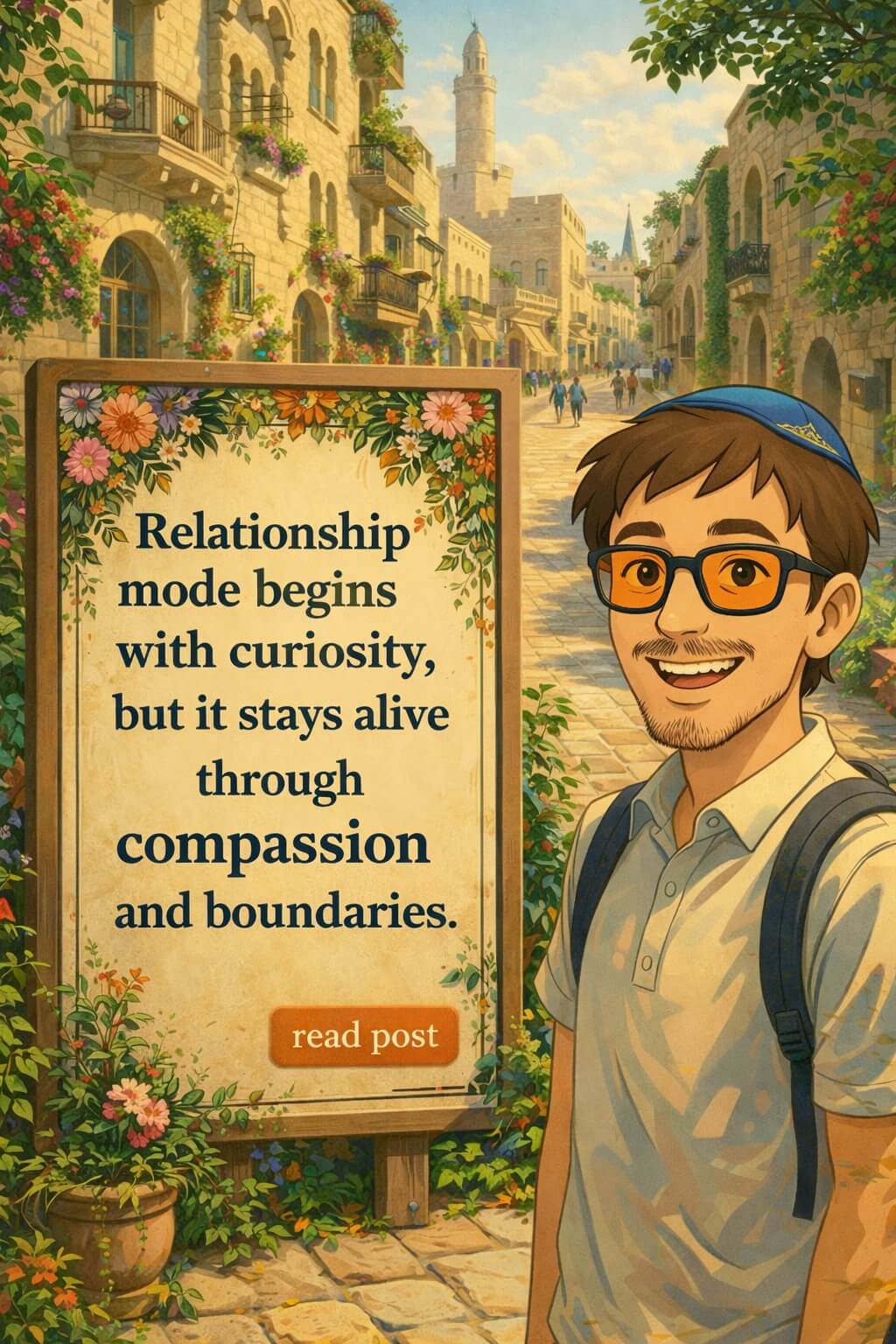
“Relationship mode begins with curiosity, but it stays alive through compassion and boundaries.”
Explore the NextSelf Blog. Start with this post explaining the world of souls. And my Youtube.
The blog lists all the difference patterns to study, understanding patterns is how one can develop 'Daas' [felt knowing].
Update: As awe, trust, and love deepen, they can allow greater openness and intimacy with the Creator. That intimacy can include sadness when you notice how much more of His goodness can be revealed.