

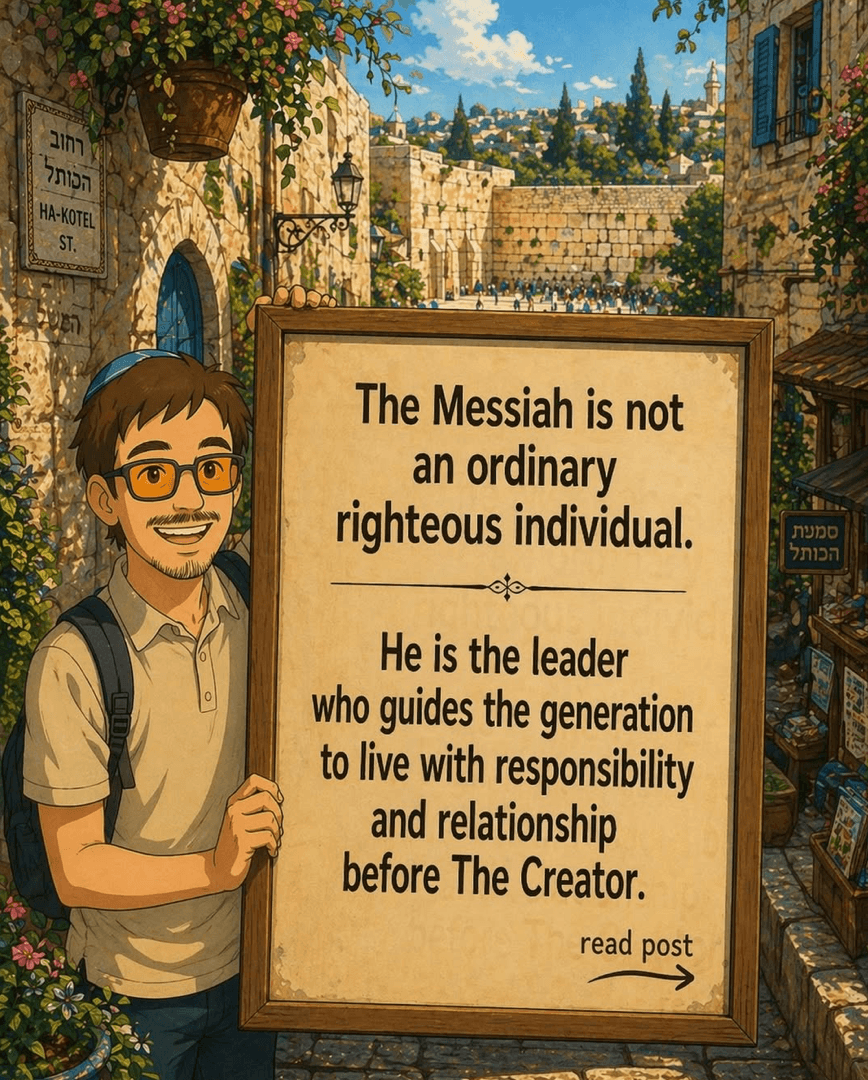
based on the Hebrew Bible, do not describe the Messiah as only a great righteous individual.
The Talmud says: “If Moshiach is among the living, he is like Rabbi Yehudah HaNasi. If he is among those who have passed away, he is like Daniel.”
Why do the Talmud and Midrash point to a leader?
Again and again, the person being pointed to is someone guiding the generation.
A king.
A judge.
A national leader.
Someone whose life stands in the middle of the generation’s struggle.
The Talmud says King Chizkiyahu could have been the Messiah.
Midrash says Jacob saw Shimshon, a national judge, and thought he was the Messiah.
Rabbi Akiva identified Bar Kochba as the Messianic king while he was leading the generation.
That suggests something important:
The Messiah is not just a private holy person. He is tied to the leader who guides the generation. The one through whom the generation’s direction becomes clearer. That is why this question does not go away.
Can a leader who already passed away be the Messiah?
If Messiah is connected to the leader of the generation, then redemption is not only about private goodness.
It is also about whether people can recognize who is truly guiding them. And if that person is someone who passed away, the question is still not simple.
The Talmud does not just mention someone from among the dead. It describes Daniel as “the beloved man.”
So the question is not only whether someone passed away. It is whether that description still fits him. This matters even more today.
We do not seem to have a living figure like Rabbi Yehudah HaNasi, someone broadly accepted across the Jewish world as the leader of the generation.
So if the Talmud leaves open the possibility of “among those who have passed away, like Daniel,” that possibility has to be discussed seriously.
What blocks people from recognizing the leader?
But that raises another question:
If redemption is connected to recognizing who truly guides the generation, what blocks that recognition?
Fear can.
And the Midrash Yalkut Shimoni shows how real that fear can become. It describes world leaders taunting each other, the king of Arabia going to Aram for advice, Persia shaking/destroying the world, the nations falling into panic, and the Jewish people becoming afraid.
The Lubavitcher Rebbe explained that Aram there refers to the United States in our era. And in that exact moment, The Creator speaks to that fear directly:
“My children, do not be afraid. All that I have done, I have done only for your sake. Why are you afraid? Do not be afraid; the time of your redemption has arrived.” (from the time all jewish people acknowledge who the redeemer is, more effort will be put into the work that redemption requires)
That means trust in The Creator is not a side point in redemption. It may be part of what makes redemption possible.
What does trust in The Creator actually mean?
That also teaches what trust is.
Trust is not just a feeling. Trust means practicing responsibility and relationship before The Creator.
We live life before Him.
And relationship begins with awe. Awe is a blend of humility, fear, and wonder.
Fear because of the responsibility. Wonder at the greatness of The Creator.
Awe causes love when you trust He is good.
As awe, trust, and love deepen, they can allow greater openness and intimacy with the Creator. That intimacy can include sadness when you notice how much more of His goodness can be revealed.
What does a healthy relationship with The Creator look like?
A healthy relationship with The Creator does not have two different healthy psychological structures.
There is a healthy way to live before Him.
Responsibility.
Awe.
Trust.
Relationship.
Not panic. Not image management [narcissism].
Not people pleasing.
Not trying to stay safe by avoiding truth.
Chassidus explains this healthy structure in many ways. Chazal also say that most of the Jewish people did not leave Egypt. One way to understand that is this:
Redemption needs trust in The Creator and in the leader He sends.
Trust means reminding yourself: I do not need to panic.
The Creator will provide in the best way for me.
That trust helps people let go of control, fear, image management, and ego reactions. People pleasing can also come from that same place. Trying to stay safe by being liked instead of standing with truth.
Who is the leader of the generation today?
After Moses, leadership did not disappear.
So the question is not whether there is a leader of the generation. The question is who it is.
The Alter Rebbe, who is also an accepted Jewish law authority, teaches that in every generation there is a leader who is an extension of Moses. So the idea of a leader of the generation is not a later invention.
It is part of how Torah [Hebrew Bible] leadership continues. A simple way to think about it is this:
Whose teachings are guiding the most Jewish people toward a deeper relationship with The Creator?
And who is teaching the healthy structure of that relationship most clearly? And if someone rejects one answer, they should still be able to say who they do accept. Otherwise the idea of leadership is being avoided, not clarified.
What does this mean for Torah leadership today?
And practically, that means public Torah leadership should follow the leader of the generation.
The chief rabbi of Israel should not be working in a separate direction. He should be someone who accepts the guidance of the leader who is truly guiding the generation. Maybe that is part of what unity means here.
Not everyone repeating the same thoughts. But enough trust in The Creator to recognize who is truly guiding the generation.
Rambam teaches we cannot be 100 percent certain a leader is Mashiach until he builds the Third Temple.
If people were jealous of Moshes leadership in the desert, it was probably worse in Egypt, if spiritual giants guided people to be against Moses after Sinai, there was likely more of that happening in Egypt.
More guides:
Why should we accept the Lubavitcher Rebbe as the Nasi Hador?
False messianic tragedies look different in every community.
Lubavitcher Chassidim that teach the Rebbe is the Messiah are misguided.
Why are Chabad Rebbeim generational leaders like Rabbeinu Bachya and the Rambam?
How does the Lubavitcher Rebbe explain free choice?
In relation to the Creator the Jewish people are the feminine and the Gentiles are the masculine.
How does the Lubavitcher Rebbe explain suffering?
“When one person does relationship work with another human, it’s like bringing an atonement offering on behalf of the Creator for the suffering humanity experienced through Creation” – based on a talk of the Lubavitcher Rebbe about a Midrash.
The purpose of exile according to Chabad Chassidus.
Questions people ask
Who does the Talmud say the Messiah is?
The Talmud says that if Moshiach is among the living, he is like Rabbi Yehudah HaNasi, and if he is among those who have passed away, he is like Daniel. Both answers point the same way: again and again, the person being pointed to is someone guiding the generation. A king, a judge, or a national leader.
Why does the Talmud call Daniel “the beloved man”?
The Talmud does not just say the Messiah could be someone who already passed away. It specifically calls Daniel “the beloved man.” That description matters because the real question is not only whether someone passed away, but whether that same description still fits them today, when no living figure is as broadly accepted as Rabbi Yehudah HaNasi was.
What does the Midrash Yalkut Shimoni describe happening before redemption?
It describes world leaders taunting each other, the king of Arabia turning to Aram for advice, and Persia shaking the world until the nations panic and the Jewish people grow afraid. The Lubavitcher Rebbe explained Aram refers to the United States in our era. In that moment, The Creator tells the fear: do not be afraid, your redemption has arrived.
Which emotional skills does this teaching ask a person to practice?
Four: responsibility, awe, trust, and relationship. Awe is a blend of humility, fear, and wonder, and awe causes love when you trust He is good. Trust is the emotional skill of telling yourself you do not need to panic, which loosens control, image management, and people pleasing.
Explore the NextSelf Blog. Start with this post explaining the world of souls. And my Youtube. Content is published to this facebook first and a few days later, to the blog.
The blog lists all the difference patterns to study, understanding patterns is how one can develop 'Daas' [felt knowing].
Update: As awe, trust, and love deepen, they can allow greater openness and intimacy with the Creator. That intimacy can include sadness when you notice how much more of His goodness can be revealed.