

Sometimes we do good. Sometimes we do the opposite. And sometimes we’re not even sure if what we did was right at all.
The Torah teaches:
1. A sin offering for a certain sin costs just 1/6th of a selah.
2. But a guilt offering for a doubtful sin must be two full selahs.
Strange, right?
Why should doubt cost more than certainty?
Rabbeinu Yonah of Gerona explains:
When I know I’ve done wrong, my repentance is full and sincere. Even a small offering is enough. But when I’m uncertain, I can trick myself into thinking: “Maybe I’m innocent. Maybe I don’t need to change.”
That weakens my repentance. So the Torah demands something much greater.
Here’s the hidden gift:
When a misguided person finally wakes up, he doesn’t just say an apology. (doubtful sin requires more action then certain sin) He repents with more passion. And with the same noise he once misled others, he now pulls them back into light.
That’s the benefit of being misguided:
Your confusion, once corrected, becomes the very fuel of your redemption, and the redemption of others who stumbled like you.
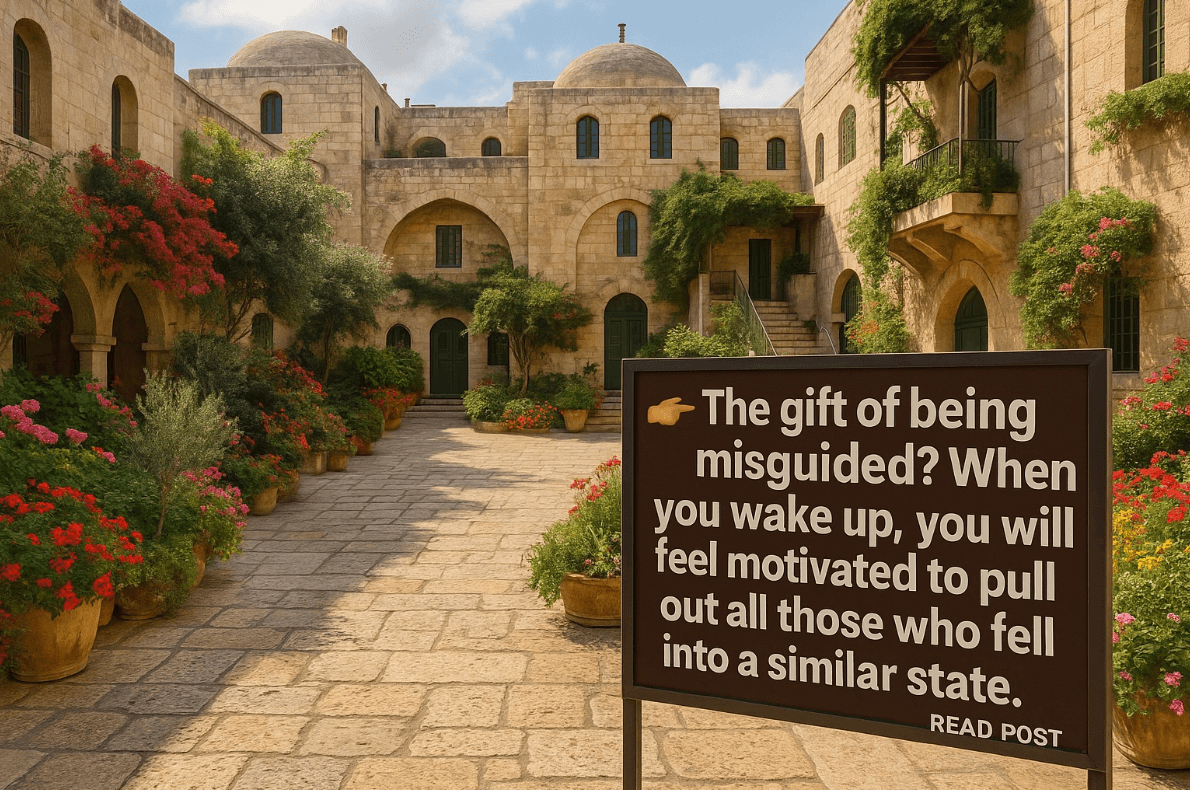
“The girt of being misguided? When you wake up, you will feel motivated to pull out all those who fell into a similar state.”
Explore the NextSelf Blog. Start with this post explaining the world of souls. And my Youtube.
The blog lists all the difference patterns to study, understanding patterns is how one can develop 'Daas' [felt knowing].
Update: As awe, trust, and love deepen, they can allow greater openness and intimacy with the Creator. That intimacy can include sadness when you notice how much more of His goodness can be revealed.