Important Note:
I use metaphors like “Tohu” (chaos), “vessels” (our inner selves), and “light” (divine kindness) from Jewish and Kabbalistic teachings. These are personal interpretations meant to inspire reflection and healing—not strict theology.
The Anonymous Gift: Kindness Without Limits
Kabbalah teaches that G-d’s first act of giving was anonymous.
This powerful act of kindness—given without clear acknowledgment—caused the vessels of Tohu to misunderstand the source of their strength. They believed it came from themselves, leading to an inflated ego and imbalance, called Tohu.
How Kindness Can Turn into Darkness
When we don’t recognize our inner strength as a gift from G-d, we take credit ourselves.
This mistaken belief creates ego-driven responses, leading to unhealthy behaviors (trauma responses):
People Pleasing (Fawn): Seeking approval at any cost, sacrificing your needs.
Inactivity (Freeze): Overthinking without taking action.
Addiction/Workaholism (Flight): Using distractions or addictions to avoid pain.
Self-Centeredness (Fight): Ignoring others’ needs to protect oneself excessively.
All these behaviors come from confusion about who gives us our inner light, causing darkness and imbalance.
How Idol Worship Relates to People Pleasing
Tzvi Hirsch of Nadvorna (explained by Rabbi YY Jacobson) says an idol isn’t just a statue—it’s the energy of people pleasing. The idol accepts anything, while the worshipper exploits this acceptance selfishly.
When we live for others’ approval rather than from true kindness, we lose touch with our real inner light, creating more confusion and darkness.
Healing: Becoming a Vessel for True Kindness
Healing from trauma—known as Tikkun, meaning repair—helps us turn darkness back into genuine kindness. Healing involves:
Self-compassion: Understanding your pain matters.
Acceptance: Recognizing and accepting reality.
Healthy boundaries: Being clear and honest about your limits.
Self-forgiveness: Letting go of guilt and shame.
Through these actions, we become stronger and capable of holding the kindness that originally broke the vessels.
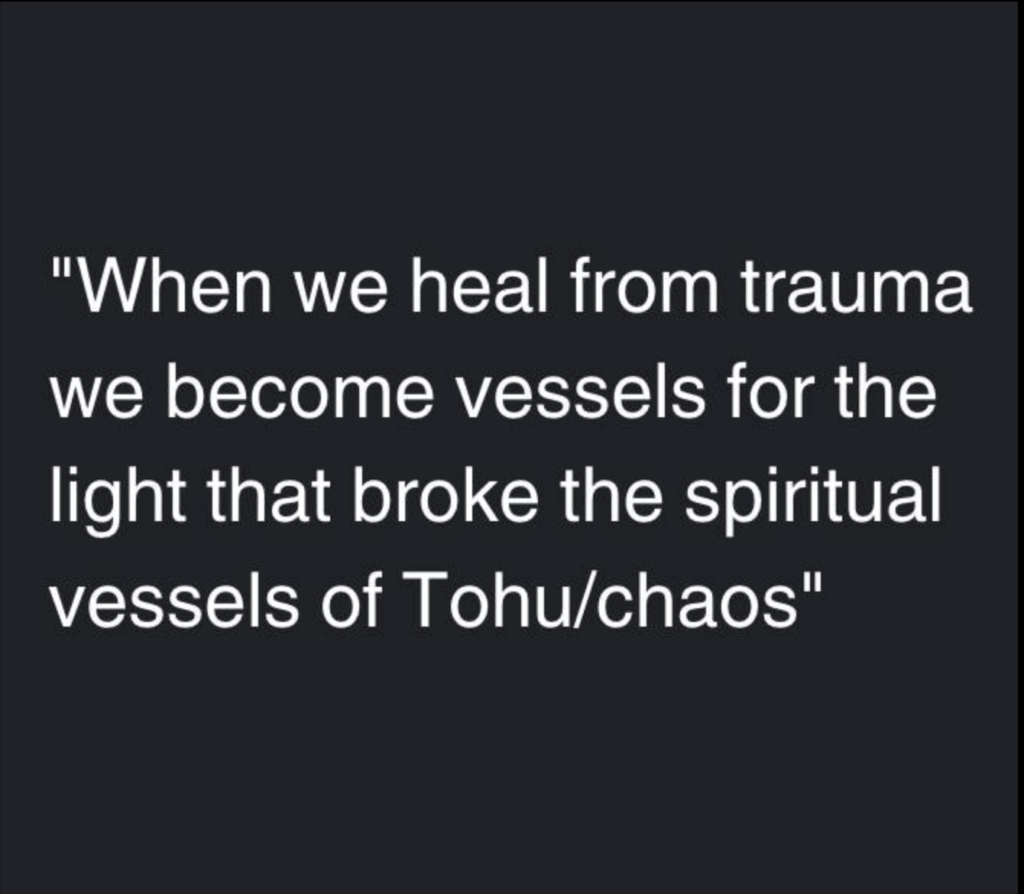
“When we heal from trauma we become vessels for the light/kindness that broke the vessels of tohu”.
My Personal Journey of Healing
I struggled deeply with severe depression and physical pain for several years. A class from Rabbi YY Jacobson inspired me to read psychology books and understand that I needed better boundaries.
When I set healthy boundaries in relationships, I noticed something important: Giving without clear boundaries caused others to lose humility and think they earned what they received.
This is like the vessels in Tohu, overwhelmed by the light because they didn’t know where it came from.
Just like the broken vessels could be repaired, I learned relationships could heal too.
My healing involved:
Caring for myself with self-compassion.
Seeking support from trusted people.
Clearly communicating boundaries.
Practicing self-forgiveness.
This process changed my pain into strength, helping me become a better vessel for true kindness.
A Message of Hope
I share my story to show that no matter how dark your struggles seem, they are kindness in disguise. Each step toward healing turns pain into power and darkness into light.
Remember, even the deepest pain can become your greatest source of strength. By healing yourself, you heal the world.
Humility as the Key to Forgiveness.
The Lubavitcher Rebbe taught we’ll eventually see the moon shine as bright as the sun because of its humility—reflecting rather than trying to outshine.
When we choose humility, we create space for forgiveness and repair.
By forgiving ourselves and others, we help restore the unity G‑d intended between Him and humanity. Even small acts of forgiveness and humility have the power to repair deeply broken parts of our lives.
Additional Hasidic Teachings for Inspiration:
The Chernobyl Maggid (via Rabbi YY Jacobson) taught that our negative thoughts are fallen sparks from the vessels of Tohu.
Through compassion which is wisdom (chochma), we transform these sparks into healing light (acknowledge the connection you are lacking when you experience negativity).
Our trauma responses are like broken pieces of good qualities. When we heal, we can reclaim these sparks and make them whole again.
Here’s what each response can hide:
Fight: Can show assertiveness, strong boundaries, courage, and leadership.
Flight: Hints at perseverance, hard work, and determination.
Freeze: Reveals mindfulness, awareness, and being present.
Fawn: Contains deep listening, fairness, love, and a spirit of service.
Healing helps us take these fallen sparks and turn them back into genuine strength.
Reb Aharon Strashelye teaches that even our deepest pains can positively transform us, creating profound personal growth.
The Baal Shem Tov: Your life tells the story of G-d. Every struggle, joy, and action reflects part of the divine. Through healing, we deepen our understanding of G‑d and experience His presence more clearly.
The Lubavitcher Rebbe taught (through the sun/moon metaphor) that humility—like the moon reflecting the sun—is key to true spiritual greatness and unity.
By forgiving and repairing our relationships, we help restore a deeper bond with G‑d.