

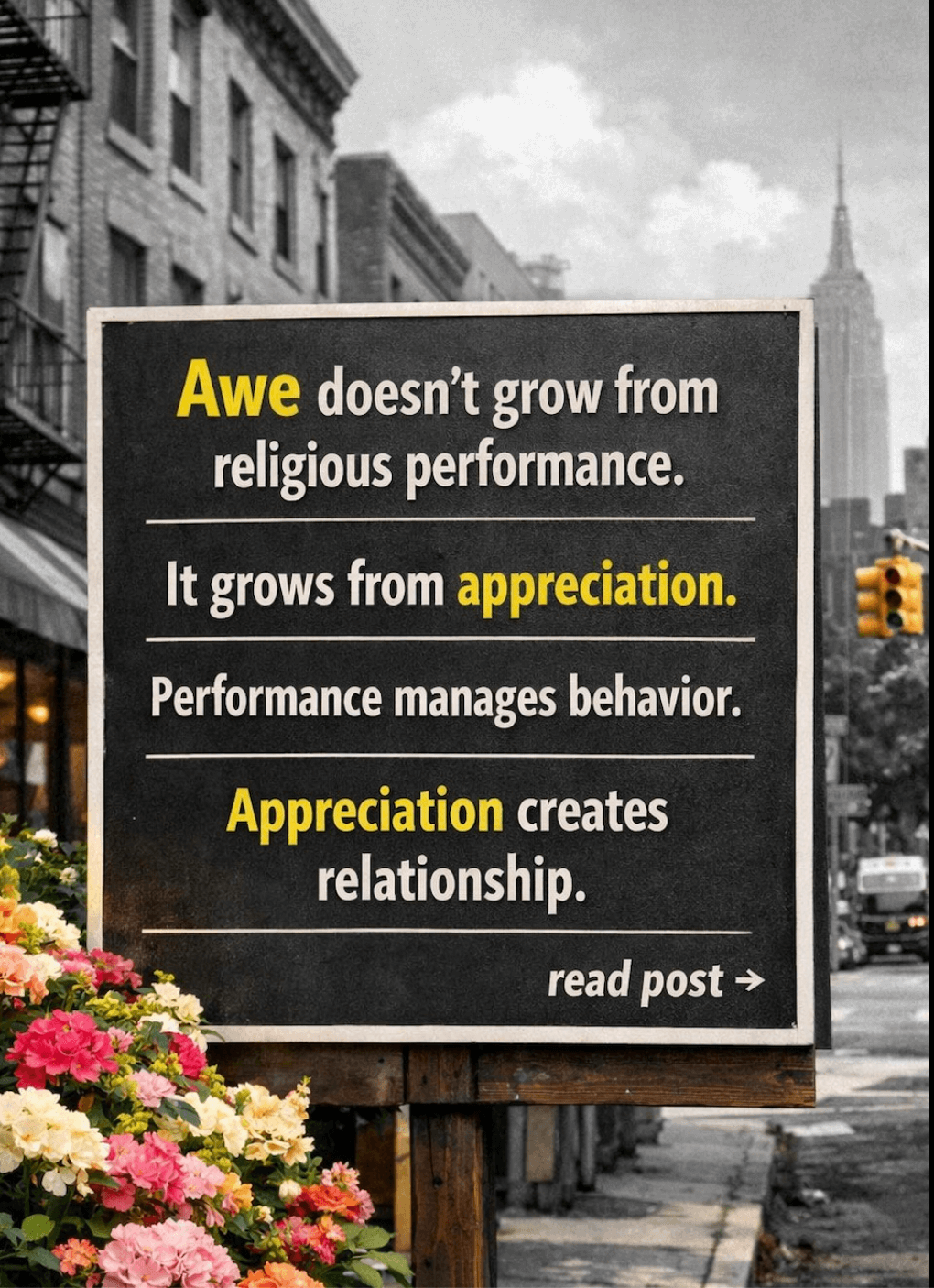
Awe grows through appreciation, not emotion-hunting.
Appreciation means noticing that something is real, meaningful, and not fully in your control.
When you truly appreciate G-d, life, or existence itself, you stop treating reality as ordinary.
You notice more.You feel its depth.You become more aware that you are living before something greater than yourself.
That is how awe grows.
This is how relationship begins.
How does awe open a relationship with the Creator?
With people, relationship often begins through curiosity.
With the Infinite Creator, relationship begins when you feel awe.
Not all awe is the same.
What makes one kind of awe deeper than another?
A lower awe can begin by noticing nature, order, beauty, power, and patterns of wisdom.
A deeper awe comes from appreciating the One behind them.
You are no longer only impressed by creation.
You begin to feel that there is a Source here, that He is giving you existence, and that your choices matter before Him.
Awe is not the same as sadness.
Why does awe hold both wonder and fear?
Awe can include wonder and fear.
Wonder comes from sensing depth beyond what you understand.
Fear comes from realizing that the Creator is here and your choices truly matter.
As trust in His goodness grows, awe becomes safer and deeper.
You are not only standing before something infinitely greater than yourself.
You are standing before a Creator you believe is good.
Appreciation allows awe to become personal.
Why does awe stay distant without appreciation?
Without appreciation, you can observe wisdom and beauty from a distance.
Appreciation turns observation into relationship.
You begin noticing not only what exists, but what its Source is expressing through it.
Awe gives you perspective.
What do wonder, fear, and trust each give you?
Wonder opens you to depth.
Fear creates responsibility.
Trust lets your nervous system stay open while feeling both.
Together, they help you feel:
not in control, but not ignored
not the center, but still noticed
not all-powerful, but still cared about
And as awe, trust, and love deepen, intimacy becomes possible.
Can intimacy hold joy and sadness at the same time?
That intimacy can include joy when you notice that life is a gift.
It can also include sadness when you notice how much more goodness, closeness, and connection could still be revealed.
Sadness does not create awe.
It is one of the feelings deeper intimacy can make room for.
Appreciation is the practice.
Awe begins the relationship.
Trust deepens it.
Love brings you closer.
And intimacy gives you room to feel what the relationship actually means.
Questions people ask
What is the difference between awe and emotion-hunting?
The article's opening line draws the contrast: appreciation, not emotion-hunting. Appreciation notices that something is real, meaningful, and not fully in your control. When you appreciate G-d, life, or existence itself, you stop treating reality as ordinary. You notice more, feel its depth, and become more aware that you are living before something greater than yourself.
Can awe become safer over time?
Yes. Awe can include both wonder and fear at once. Wonder comes from sensing depth beyond what you understand, and fear comes from realizing your choices truly matter before the Creator. As trust in His goodness grows, awe becomes safer and deeper, because you are standing before Someone infinitely greater than yourself who you believe is good.
Does feeling sad mean you are feeling awe?
No. Sadness does not create awe. As awe, trust, and love deepen, intimacy becomes possible, and that intimacy can hold joy when you notice that life is a gift. It can also hold sadness when you notice how much more goodness, closeness, and connection could still be revealed. Sadness is one of the feelings intimacy makes room for.
Which emotional skills does appreciation build?
Appreciation practices several emotional skills at once. Awareness notices that something real and meaningful is in front of you. Curiosity keeps looking for the Source expressing itself through it. Responsibility grows out of healthy fear. Trust lets your nervous system stay open while you feel wonder and fear together, so awe gives you perspective instead of overwhelm.
Explore the NextSelf Blog. Start with this post explaining the world of souls. And my Youtube.
The blog lists all the difference patterns to study, understanding patterns is how one can develop 'Daas' [felt knowing].
Update: As awe, trust, and love deepen, they can allow greater openness and intimacy with the Creator. That intimacy can include sadness when you notice how much more of His goodness can be revealed.