

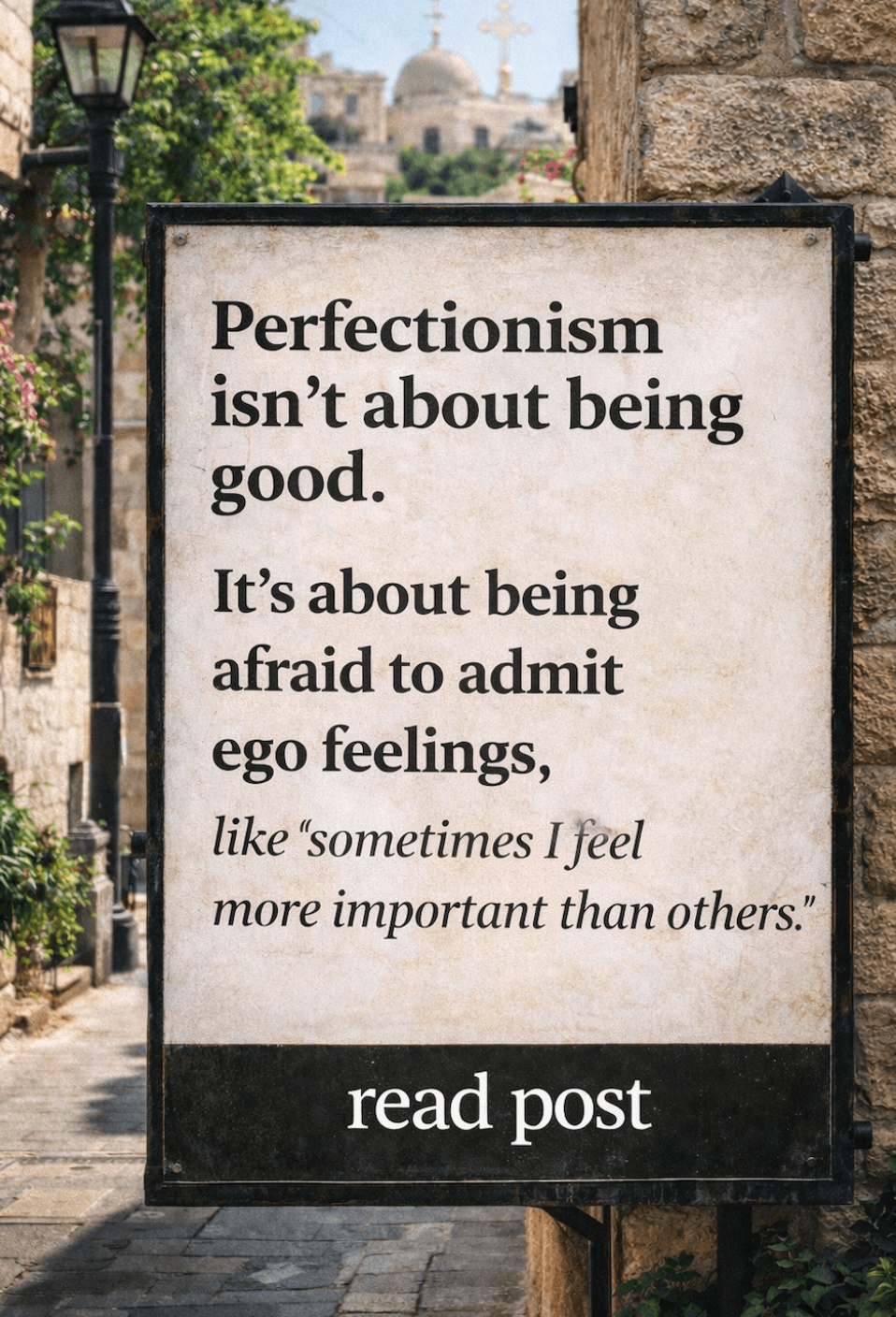
Perfectionism isn’t about wanting to be good.
It’s about being afraid to admit ‘bad’ or uncomfortable feelings.
Which feelings feel dangerous to a perfectionist?
Ego feelings like:
1. jealousy
2. wanting attention
3. feeling better than others
4. feeling unimportant or confused
For a perfectionist, these feelings feel dangerous. Not because they’re evil, but because the person thinks:
“If I feel this, something is wrong with me.”
So instead of dealing with the feeling inside through practicing self-compassion, gratitude, or healthy boundaries,
they try to manage how they look on the outside.
How does shame fit into perfectionism?
How shame fits into this. Healthy shame isn’t about feeling bad forever.
It’s the feeling that says:
“I’m not perfect, and that’s okay.”
When shame can turn into humility, a person can:
1. admit mistakes
2. learn from them
3. stay connected to others
Perfectionism blocks this. Instead of letting shame turn into connection, it makes shame feel dangerous.
So the person thinks:
“If I admit this, I’ll fall apart or lose respect.”
That’s why perfectionism protects image instead of growing humility.
What is narcissism, really?
What narcissism really is.
The word narcissism upsets people, but here’s what it means in simple terms:
Narcissism is a kind of perfectionism. It’s what happens when someone feels they must always see themselves as good, special, or right, because feeling imperfect feels too hard.
So they protect a perfect image of themselves. That’s why narcissism can look like confidence or certainty.
Underneath, it’s fear of saying: “I don’t feel okay inside.”
Why praise becomes so important
When someone doesn’t feel good about themselves on the inside, they need others to tell them they’re good.
Praise isn’t just nice. It feels necessary. It helps them feel steady for a moment.
What does needing praise look like?
That’s why they may:
1. need compliments
2. need to feel admired
3. need to be seen as right
4. struggle with criticism
Not because they truly believe they’re better, but because they’re not sure they’re good at all.
Why do religious schemes feel safe to perfectionists?
Where religious schemes come in Healthy religion helps people become more honest and responsible. Religious schemes do the opposite.
They say:
“If you follow the rules and believe the right things, you are good.”
This feels safe to perfectionism because:
1. you don’t have to look inside
2. you don’t have to admit hard feelings
3. you just have to appear to behave the right way
You don’t have to say:
“I felt jealous.”
“I wanted attention.”
“I felt insecure.”
You just have to look holy. The biggest problem You can’t fix what you won’t admit. Real growth means being able to say:
“I messed up.”
“I felt something unfair”
“I wasn’t proud of myself.”
If a system makes those things feel dangerous to admit, people stop growing. They learn how to look good instead of becoming real.
Why does this turn harmful over time?
Why this turns harmful over time Because the insecurity never gets healed, the system starts needing:
• more praise, validation
• more rules
• more judging of others
Not because people are bad. Because they’re scared to look inside. The difference between real faith and fake systems. Real faith doesn’t make you perfect. It helps you be honest without falling apart. It makes it safe to be human.
Schemes protect image, not truth. And perfectionism will always choose looking good, until it feels safe to be real.
Questions people ask
Is perfectionism the same as wanting to be good?
No. Perfectionism is really the fear of admitting ‘bad’ or uncomfortable feelings, like jealousy or wanting attention. A perfectionist thinks that feeling these things means something is wrong with them, so instead of dealing with the feeling inside, they try to manage how they look on the outside.
How are narcissism and perfectionism connected?
Narcissism is a kind of perfectionism. It happens when someone feels they must always see themselves as good, special, or right, because feeling imperfect feels too hard. So they protect a perfect image of themselves. It can look like confidence or certainty, but underneath it is the fear of saying, “I don’t feel okay inside.”
What is the difference between healthy religion and a religious scheme?
Healthy religion helps people become more honest and responsible. A religious scheme does the opposite: it says you are good if you follow the rules and look the right way, so you never have to look inside or admit hard feelings. Real faith makes it safe to be human; schemes protect image, not truth.
What is healthy shame?
Healthy shame is not about feeling bad forever. It is the feeling that says, “I’m not perfect, and that’s okay.” When shame can turn into humility, a person can admit mistakes, learn from them, and stay connected to others. Perfectionism blocks this by making shame feel dangerous instead of letting it become connection.
“Perfectionism isn’t about being good. It’s about being afraid to admit ego feelings, like “sometimes I feel more important than others.”
Explore the NextSelf Blog. Start with this post explaining the world of souls. And my Youtube.
The blog lists all the difference patterns to study, understanding patterns is how one can develop 'Daas' [felt knowing].
Update: As awe, trust, and love deepen, they can allow greater openness and intimacy with the Creator. That intimacy can include sadness when you notice how much more of His goodness can be revealed.