

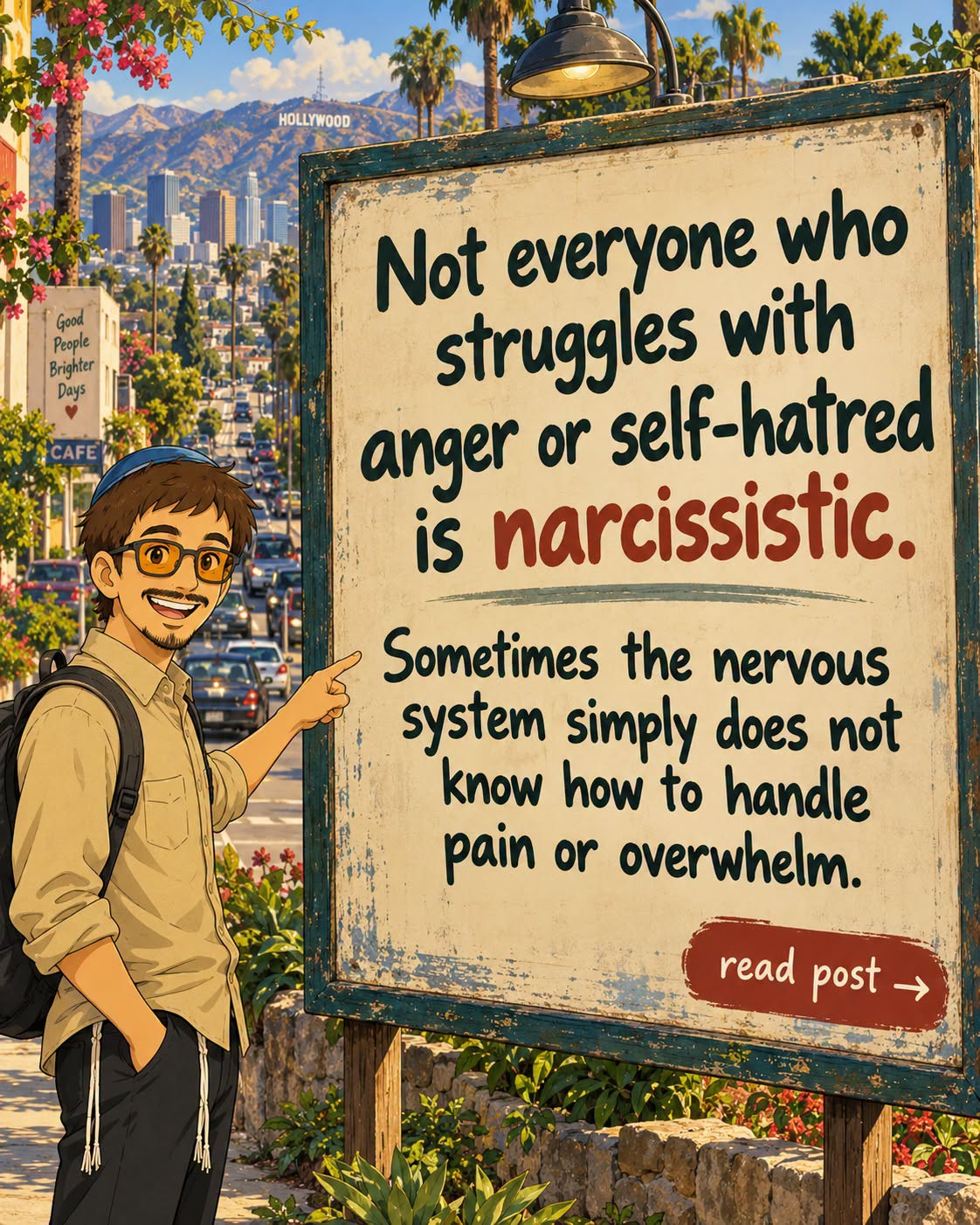
Sometimes a person has serious emotional tantrums, anger problems, or deep self-hatred without having strong narcissistic patterns.
Anger by itself is not narcissism.
Why can a person struggle to regulate anger?
A person can struggle to regulate anger because of stress, trauma, learned behavior, poor emotional skills, or a nervous system that goes into fight mode very quickly.
This can show up as yelling, shutting down, blaming, impulsive reactions, or even adult tantrums.
Sometimes the anger is simply protecting the nervous system from pain or overwhelm.
Underneath it can be something like:
“I feel threatened, overwhelmed, ashamed, or unsafe, and my nervous system does not know how to handle it well.”
Is self-hatred the same as narcissism?
Self-hatred is also not automatically narcissism.
Someone can feel deeply ashamed, dislike themselves, or believe they are worthless without being focused on maintaining an image or controlling how other people see them.
What are narcissistic patterns really about?
Narcissistic patterns are more specifically about protecting the self through image, control, admiration, superiority, blame, manipulation, or difficulty allowing another person’s experience to matter when it threatens your own sense of self.
Can anger, self-hatred, and narcissism overlap?
These problems can overlap.
A person with narcissistic patterns can have intense anger, tantrums, and self-hatred underneath them. But those same behaviors can also exist without narcissism.
That is why it helps to look at the deeper pattern, not just the behavior.
The question is not only:
“Does this person get angry or have tantrums?”
It is also:
“Is the nervous system struggling to handle pain and overwhelm, or is the person repeatedly protecting an image, control, or how they need other people to see them?”
____________________
Healing unhealthy patterns: https://www.facebook.com/share/p/196PCqvhwM/
#NextSelf #narcissism
“Not everyone who struggles with anger or self-hatred is narcissistic. Sometimes the nervous system simply does not know how to handle pain or overwhelm.”
Explore the NextSelf Blog. Start with this post explaining the world of souls. And my Youtube. Content is published to this facebook first and a few days later, to the blog.
The blog lists all the difference patterns to study, understanding patterns is how one can develop 'Daas' [felt knowing].
Update: As awe, trust, and love deepen, they can allow greater openness and intimacy with the Creator. That intimacy can include sadness when you notice how much more of His goodness can be revealed.