

You can learn something about a person by noticing what they keep choosing when the choice becomes costly.
How do we know there is something in the Jewish personality that Chassidus [Jewish mysticism] describes as the G-dly soul [a very deep expression of the Creator's free choice and compassion]?
One place to look is Jewish history.
_____________
What does Jewish history show about costly choices?
For more than 2,000 years, Jewish people lived through exile, persecution, forced conversion, expulsions, and enormous social pressure to give up their connection to the Creator and their identity.
Yet generation after generation, Jews kept choosing connection.
Not every Jew made the same choices, and Jewish history is not a story of perfect people. But there is a remarkable pattern of people accepting real sacrifice rather than completely giving up their relationship with the Creator, Torah, and the Jewish people.
That pattern still exists in the modern world.
In many places, openly living as a Jew can still carry real risk. A Jewish person can know there are security concerns and still choose to put on a kippah, attend a synagogue, gather with other Jews, celebrate Jewish holidays, or publicly identify as Jewish.
Sometimes that choice is described simply as Jewish pride.
From the perspective of Chassidus, something deeper is being expressed.
A person is using free choice and compassion to remain connected to their Jewish soul even when hiding that connection could feel safer.
_____________
What does Chassidus mean by the G-dly soul?
Chassidus describes the G-dly soul as the part of the Jewish personality that naturally wants to be connected with the Creator and express His truth and goodness.
But the G-dly soul does not work alone.
The intellectual soul is the bridge between divine wisdom and the animal soul, which can also be understood as the soul of love, the part of the personality that wants, enjoys, connects, and forms emotional bonds.
The intellectual soul can understand an idea, think about it, and bring that wisdom into the emotional life of the person.
Practically, having a G-dly soul means divine wisdom is received through Jewish heritage.
That wisdom can come through Torah, tradition, Jewish teachers, and the spiritual inheritance carried through the Jewish people.
A person still has to learn, think, question, and freely choose what to do with that wisdom.
_____________
Can a person without a Jewish G-dly soul connect with the Creator?
Someone without a Jewish G-dly soul can also learn divine wisdom and develop awe, love, compassion, and a relationship with the Creator.
The difference is that the wisdom is received through an external source, through learning, teachers, observation, and the instructions the Creator gave humanity through Moses [the instructions were fully lost from nations before Moses].
But regardless of the personality of a person’s soul, every human being is made in the Creator’s image and has an animal soul [soul of love].
That means every human being has access to intelligence and free choice.
Every person can learn, think, notice patterns of truth and goodness, and choose how to act.
And every person has a role in the mission the Creator gave humanity.
_____________
What mission did the Creator give all of humanity?
The human body comes from physical dust, the lowest part of creation.
The Creator chose that even this lowest physical reality could become part of His purpose.
Through human intelligence, free choice, compassion, responsibility, and acts of goodness, physical life itself can become part of that purpose.
So this mission belongs to everyone.
Every human being has a role in helping dust, the lowest physical reality, become part of the Creator’s purpose.
Every person can express something of His free choice and compassion by freely choosing to bring more goodness into physical life.
The Jewish G-dly soul describes a particular way divine wisdom enters the Jewish personality through heritage.
It does not mean that the rest of humanity is outside the Creator’s purpose.
Everyone has a role in expressing His free choice and compassion so that physical life becomes part of His purpose.
_____________
Does the G-dly soul force a person to act well?
In both cases, the intellectual soul is the bridge.
It takes wisdom and helps the animal soul understand why something is good, meaningful, or worthy of love.
That connection still requires free choice.
The G-dly soul does not erase the human personality or force a person to act well.
A person can ignore it, struggle with it, or choose against it.
But across Jewish history, people repeatedly used their free choice to stay connected to something deeper than comfort, safety, status, and even survival.
_____________
How does the G-dly soul become visible through history?
And that connection was not only expressed through belief.
It was expressed through responsibility, compassion, charity, learning, mitzvos, family, community, and continuing to bring goodness into the world even after experiencing terrible suffering.
From the perspective of Chassidus, that long pattern is one way the G-dly soul becomes visible through history.
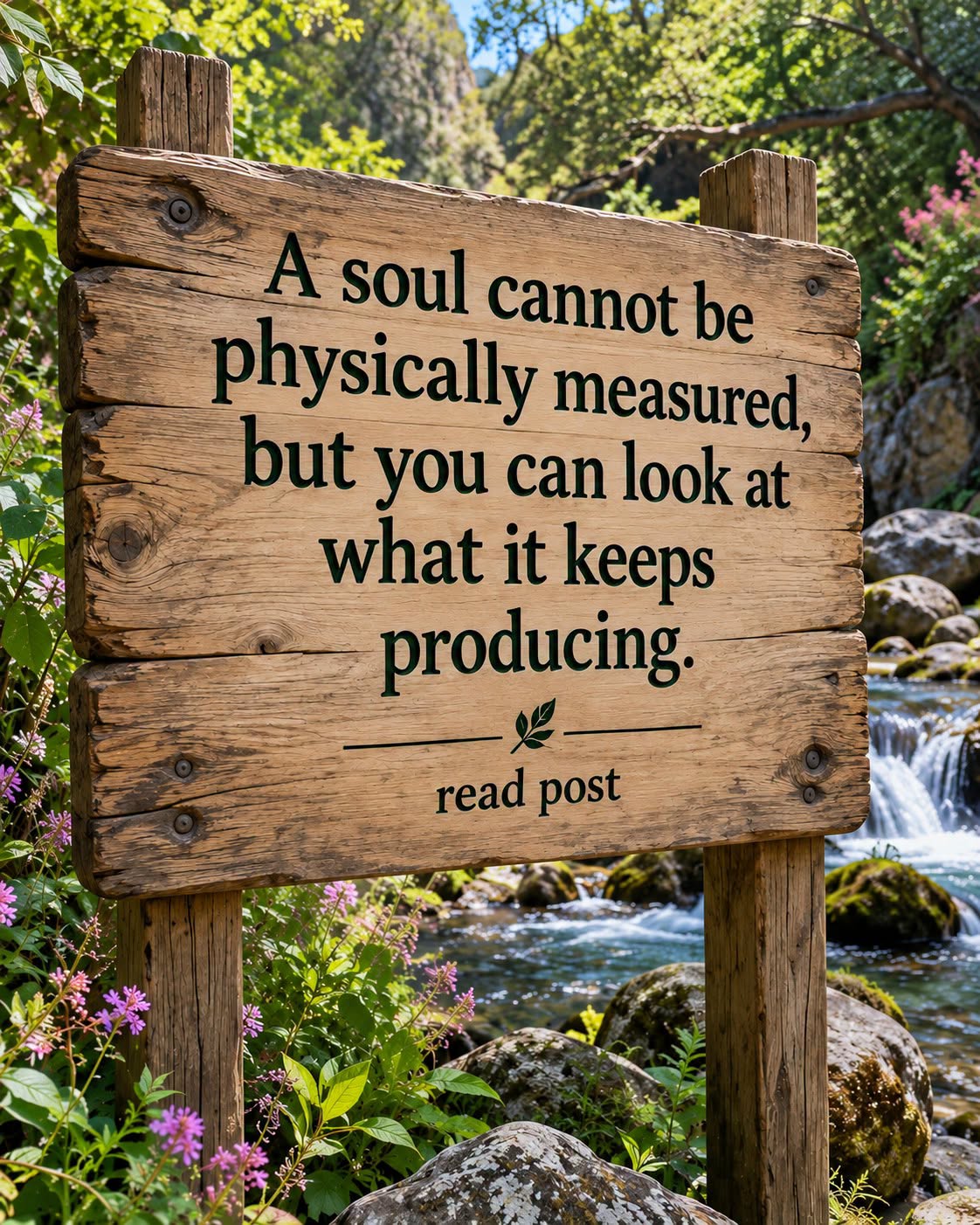
The soul itself cannot be physically measured.
But you can notice what it keeps producing:
Generation after generation receiving divine wisdom through their heritage, thinking about it through the intellectual soul, and using free choice to express it through love, compassion, responsibility, truth, and connection to the Creator.
And the larger purpose includes all humanity:
Using intelligence and free choice to help physical life, even the dust our bodies come from, become part of the Creator’s purpose [becoming apart of the intimacy with Himself] and an expression of His free choice and compassion.
_______________________
Related guides:
More about the soul of love: https://www.facebook.com/share/p/19dnbUC4Ge/
What does it mean to be an expression of spiritual light?
Deep emotional healing
How to feel awe and love consistently: https://www.facebook.com/share/p/1Am4CMdAdw/
Why is suffering built into creation?
#NextSelf #chassidus #kabbalah #Torah #biblestudy
“A soul cannot be physically measured, but you can look at what it keeps producing.”
Explore the NextSelf Blog. Start with this post explaining the world of souls. And my Youtube. Content is published to this facebook first and a few days later, to the blog.
The blog lists all the difference patterns to study, understanding patterns is how one can develop 'Daas' [felt knowing].
Update: As awe, trust, and love deepen, they can allow greater openness and intimacy with the Creator. That intimacy can include sadness when you notice how much more of His goodness can be revealed.