

It trains your body too.
What did your body learn in childhood?
When you were a child, you didn’t just learn ideas.
Your body learned:
1. when it is safe
2. when it is not
3. when to relax
4. when to brace
This is called your nervous system.
Your nervous system is like an alarm
It decides:
1. should I calm down
2. should I stay alert
3. should I hide
4. should I reach out
It learns these rules very early. Before you can explain things with words.
How does your nervous system shape your thoughts?
Your nervous system also shapes your thoughts.
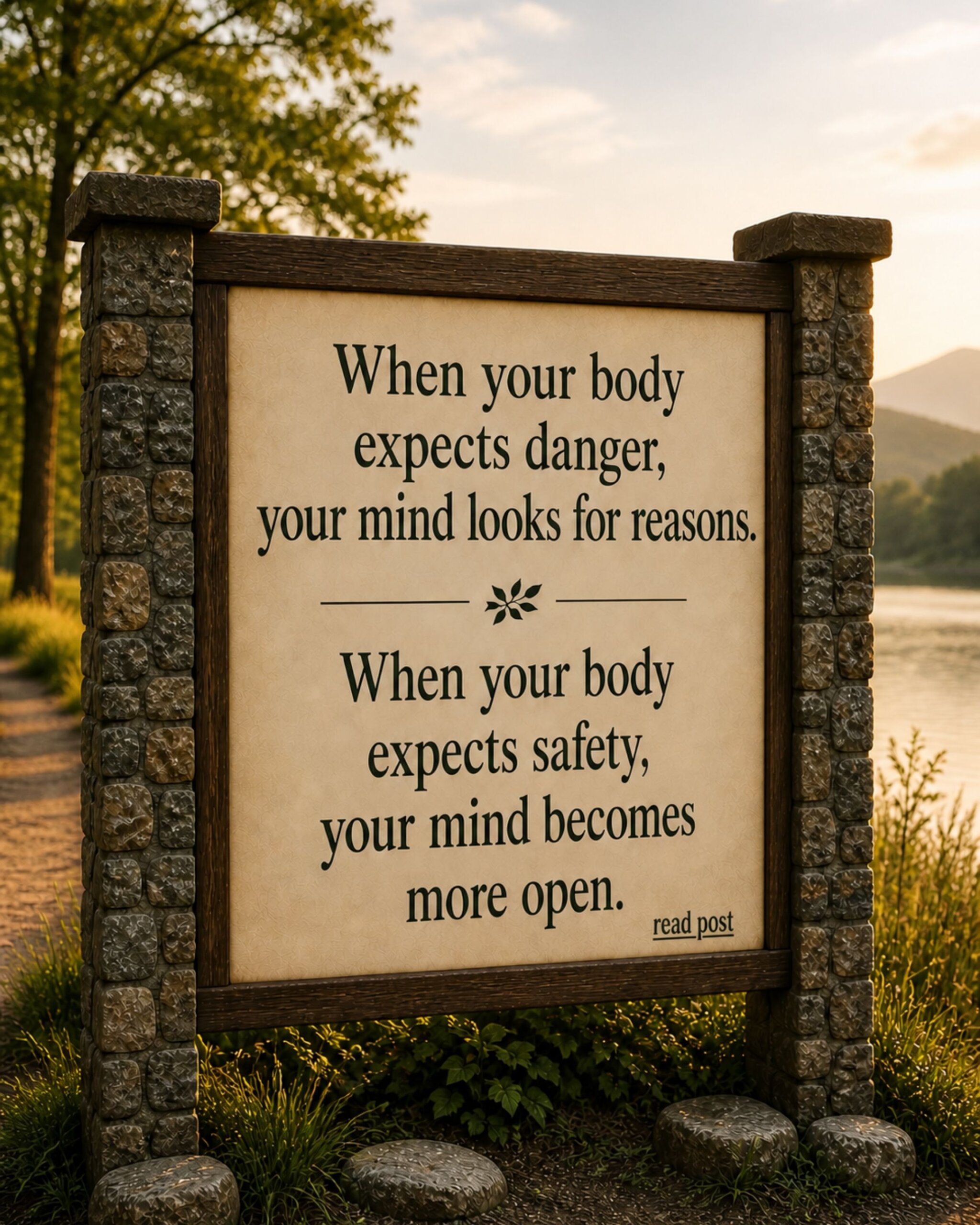
When your body expects danger, your mind looks for reasons. When your body expects safety, your mind becomes more open.
This means your nervous system influences:
1. what you notice
2. what you believe
3. how you interpret other people
4. how you explain life to yourself
Thoughts often follow the body. Not the other way around.
Why isn’t thinking always enough to feel calm?
That’s why thinking isn’t always enough
You can know:
1. I am safe
2. I am loved
3. things are okay
And still feel tense inside.
That doesn’t mean something is wrong with your personality. It means your body learned different rules.
Why do bodies calm down through relationship?
Bodies calm down through relationship. Your nervous system does not calm down from ideas.
It calms down when it learns:
1. I am not alone
2. someone is with me
3. help is possible
4. repair can happen
This is true with people. And it is also true with the Creator.
How does a relationship with the Creator help?
How relationship with the Creator helps. A real relationship with the Creator teaches your body:
1. I can turn toward instead of shutting down
2. I can ask for help
3. I am held, even when life is hard
4. I matter, even when I feel small
As the body calms, thoughts soften too.
Belief and relationship are not the same Belief is thinking something is true.
Relationship is:
1. talking
2. listening
3. asking
4. staying present
Those actions slowly calm the nervous system. And calmer bodies form healthier beliefs.
What does healing really look like?
What healing really looks like: Healing is not fixing your personality.
It is:
1. learning new emotional skills
2. practicing safe connection
3. teaching your body that life is different now
That is how fear softens.
That is how calm grows.
That is how the body learns it does not have to brace all the time.
Questions people ask
How does childhood shape your nervous system?
When you were a child, you did not just learn ideas. Your body learned when it is safe, when it is not, when to relax, and when to brace. Those rules were set very early, before you could explain things with words. That learning is your nervous system.
Why can you feel tense even when you know you are safe?
You can know that you are safe, that you are loved, and that things are okay, and still feel tense inside. Thoughts often follow the body, not the other way around. That does not mean something is wrong with your personality. It means your body learned different rules.
How does a nervous system calm down?
Bodies calm down through relationship, not through ideas. Your nervous system settles when it learns that you are not alone, that someone is with you, that help is possible, and that repair can happen. This is true with people, and it is also true with the Creator.
Is healing about fixing your personality?
No. Healing is not fixing your personality. It is learning new emotional skills, practicing safe connection, and teaching your body that life is different now. That is how fear softens, how calm grows, and how the body learns that it does not have to brace all the time.
“When your body expects danger, your mind looks for reasons. When your body expects safety, your mind becomes more open.”
Explore the NextSelf Blog. Start with this post explaining the world of souls. And my Youtube. Content is published to this facebook first and a few days later, to the blog.
The blog lists all the difference patterns to study, understanding patterns is how one can develop 'Daas' [felt knowing].
Update: As awe, trust, and love deepen, they can allow greater openness and intimacy with the Creator. That intimacy can include sadness when you notice how much more of His goodness can be revealed.