

Some actions begin as fantasies.
And some fantasies are not random.
Where do unhealthy sexual fantasies come from?
Unhealthy sexual fantasies can sometimes be one symptom of deeper survival-mode feelings and beliefs about reality,
about what other people mean, what you need to feel safe, what rejection means, and what you believe you have to do to get your needs met.
A person might repeatedly imagine being wanted, having sexual access to someone, overpowering rejection, controlling another person, or creating a sexual situation that ignores what the other person actually wants.
The fantasy itself does not mean the person will commit a crime.
But it can be worth understanding what emotional function the fantasy is serving.
Why do unhealthy fantasies feel so powerful?
Those feelings and beliefs can make certain fantasies feel emotionally useful.
A sexual fantasy might offer temporary relief from fear of rejection, shame, loneliness, anger, powerlessness, sexual frustration, or the feeling that you do not matter.
It can create an imagined reality where you finally have control, feel desired, avoid humiliation, get revenge, or receive something that reality is not giving you.
That is one reason unhealthy sexual fantasies can become powerful.
They do not only create sexual pleasure.
Sometimes they also reduce anxiety, numb loneliness, protect against shame, release anger, or create a temporary feeling of control and power.
And when the nervous system repeatedly gets relief that way, the fantasy can become easier to return to.
That does not mean having the fantasy makes someone a criminal.
Strong feelings also do not erase choice.
When does a fantasy start to become harmful?
The important question is what happens next.
Before harmful behavior, a person can begin developing beliefs that give them permission to act:
“They owe me.”
“They really want it.”
“I deserve this.”
“They are just playing hard to get.”
“No one will really get hurt.”
“I cannot tolerate being rejected.”
At that point, the problem is no longer only the sexual fantasy.
The person is beginning to twist reality in a way that makes ignoring consent or crossing a boundary feel justified.
___________________________
This is why emotional skills matter.
How can compassion help?
Compassion is one of those skills.
Compassion does not mean deciding that every sexual desire, fantasy, or belief is healthy.
It means understanding what is happening inside you without immediately attacking yourself for it.
“Part of me wants sexual control because it feels powerless.”
“Part of me keeps imagining being wanted because rejection feels unbearable.”
“Part of me is sexualizing this person because it desperately wants connection.”
“Part of me wants revenge because it does not know what to do with the anger.”
Compassion helps you understand what the fantasy is trying to accomplish without giving it permission to control your behavior.
__________________________
Then boundaries become practical.
What do healthy boundaries mean here?
Boundaries mean accepting that your feelings, sexual desires, needs, and fantasies do not give you ownership over another person.
Your loneliness does not cancel their freedom.
Your attraction does not cancel their consent.
Your sexual frustration does not create an obligation for someone else.
Your anger does not give you permission to intimidate them.
Your desire for connection does not give you permission to keep pursuing someone who has said no.
But respecting a boundary can create real discomfort in the nervous system.
Sometimes the work is learning how to stay with sexual frustration, rejection, shame, loneliness, anger, or an urge without escaping deeper into the fantasy or acting it out.
That may require regularly spending 5–15 minutes doing slow breathing, stretching, walking, or another grounding practice so the nervous system gets practice feeling discomfort without immediately trying to remove it through an unhealthy action.
You are practicing:
“I can feel sexual desire without believing I am entitled to another person.”
“I can feel this discomfort and still respect reality.”
“I can be rejected without turning the other person into an enemy.”
“I can feel anger without needing another person to suffer so I can feel better.”
Practicing boundaries can also mean creating distance, ending a conversation, not sending another message, avoiding situations where you know your judgment becomes weaker, reducing material that strengthens an unhealthy fantasy, or asking someone trustworthy for help before you act.
What does emotional maturity look like?
This is part of emotional maturity.
You learn to notice the fantasy.
Understand the feelings and beliefs about reality underneath it.
Notice when your mind is beginning to create a story that gives you permission to ignore consent or cross a boundary.
Practice compassion toward the part of you that is struggling.
Build the ability to tolerate uncomfortable sexual and emotional feelings.
And still choose actions that protect both your dignity and another person’s freedom.
The goal is not to never experience an unwanted, unhealthy, or disturbing sexual fantasy.
The goal is to develop enough awareness, compassion, boundaries, and self-control that a fantasy never gets to decide what you are allowed to do.
Related guides:
How to identify people pleasing:
What does practicing compassion look like?
Perfectionism is through ego feelings:
Understanding suffering through psychology and philosophy:
Not all narcissists have abusive thinking:
The nervous system wants physical boundaries:
Questions people ask
Does having an unhealthy sexual fantasy mean something is wrong with me?
No. A fantasy by itself does not mean you will commit a crime or that you are a criminal. It can sometimes be a signal of deeper feelings like fear of rejection, shame, loneliness, or powerlessness. The healthy response is to understand what the fantasy is trying to accomplish without attacking yourself for it.
What are the warning signs that a fantasy is becoming a problem?
The warning signs are beliefs that give permission to act, like “they owe me” or “they really want it.” At that point a person is twisting reality in a way that makes ignoring consent or crossing a boundary feel justified. The problem is no longer only the fantasy itself.
What do unhealthy sexual fantasies really mean?
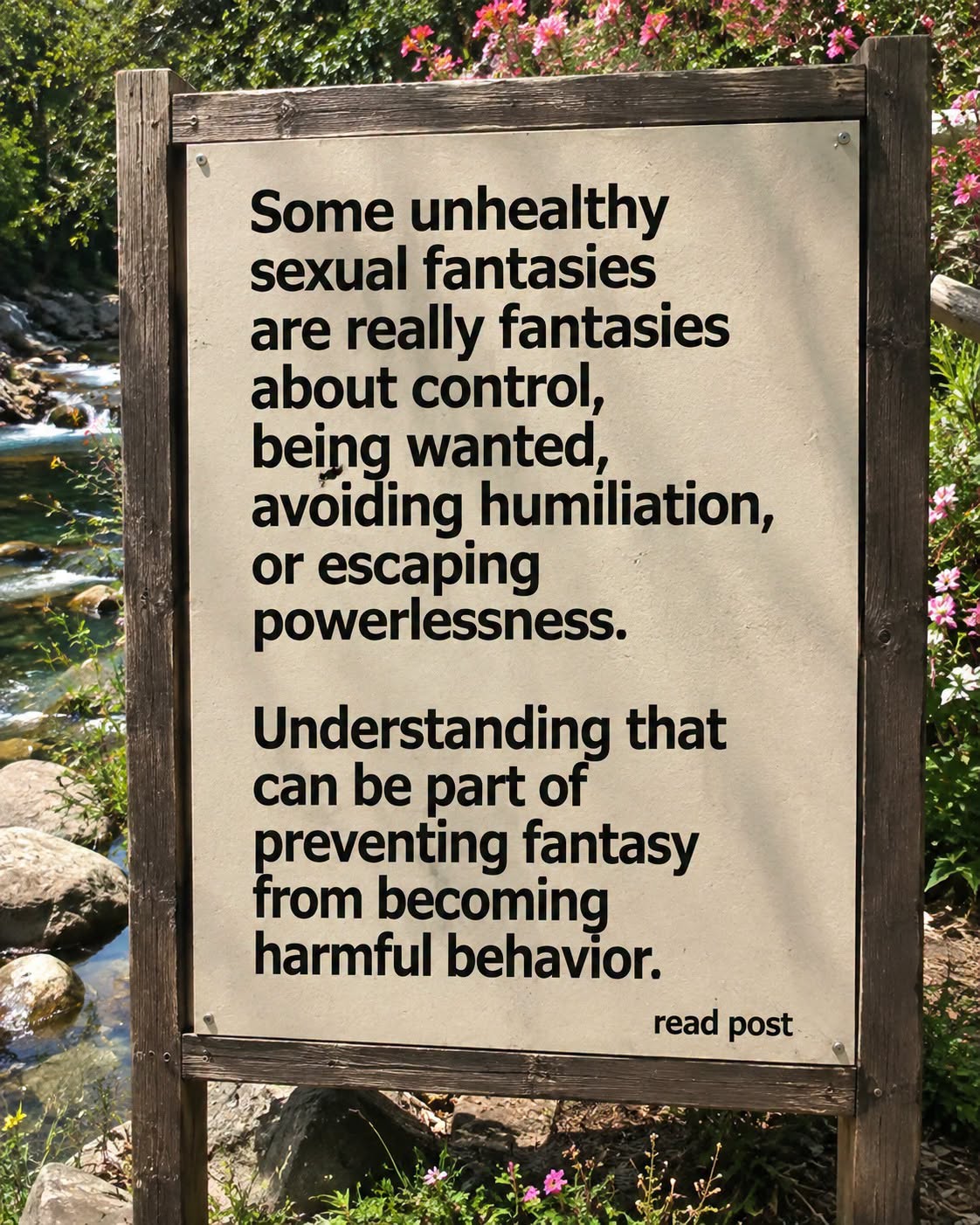
Some unhealthy sexual fantasies are really fantasies about control, being wanted, avoiding humiliation, or escaping powerlessness. They can sometimes be one symptom of deeper survival-mode feelings and beliefs about reality, like what rejection means and what you believe you must do to get your needs met. Understanding this can be part of preventing a fantasy from becoming harmful behavior.
How can I stop myself from acting on an unwanted fantasy?
Practice staying with the uncomfortable feeling instead of escaping into the fantasy. Regularly spend 5–15 minutes on slow breathing, stretching, or walking so your nervous system learns to tolerate discomfort. Also create distance, end conversations, avoid situations that weaken your judgment, and ask someone trustworthy for help before you act.
“Some unhealthy sexual fantasies are really fantasies about control, being wanted, avoiding humiliation, or escaping powerlessness. Understanding that can be part of preventing fantasy from becoming harmful behavior.”
Explore the NextSelf Blog. Start with this post explaining the world of souls. And my Youtube.
The blog lists all the difference patterns to study, understanding patterns is how one can develop 'Daas' [felt knowing].
Update: As awe, trust, and love deepen, they can allow greater openness and intimacy with the Creator. That intimacy can include sadness when you notice how much more of His goodness can be revealed.