

Humility means seeing yourself and other people honestly, then practicing compassionate boundaries that respect both your needs and theirs.
People-pleasing means making another person’s emotional comfort your responsibility instead of practicing honest communication and compassionate boundaries.
It often comes from wanting validation and approval.
A person gives more than they truly want to give, hoping to feel valued, loved, or safe.
Why can people-pleasing feel like a hidden favor?
People-pleasing can be like doing someone a favor without telling them it is a favor.
The other person thinks they are simply receiving kindness, while the people-pleaser may secretly hope for appreciation, closeness, or something in return.
That can lead to keeping score.
They may think, “After everything I have done for you,” or feel hurt that other people do not give back in the same way.
But the other person may not even know that a hidden exchange was taking place.
When kindness is driven by the need for validation, resentment often grows when that validation does not come.
──────────
Pete Walker explains that most people are not only one trauma type.
What are the four trauma responses?
They are usually strongest in two of the four adaptive trauma patterns: fight (which often shows up as narcissism), flight (which is avoidance), freeze (which looks like inaction or shutdown), and fawn (which is people-pleasing).
A person may be mainly fawn-freeze, fight-flight, or another combination. They may also use all four patterns in different situations.
How can one behavior come from more than one pattern?
The same behavior can sometimes be explained through more than one pattern because the patterns describe what the nervous system is trying to do, not only what the behavior looks like.
For example, overeating could be connected to:
1. Fight: overwhelming the nervous system with intense physical pleasure.
2. Flight: avoiding an uncomfortable feeling or responsibility.
3. Freeze: numbing feelings, becoming less present, or thinking, “What’s the point?” when you notice a desire.
4. Fawn (which is people-pleasing): giving yourself comfort when you do not know how to ask for comfort or receive it through a healthy relationship.
This does not mean every case of overeating contains all four patterns.
It means we have to look beneath the behavior and ask what purpose it is serving in that moment.
──────────
People with a strong fawn response (which is people-pleasing) may get especially fast relief from psychology education because they learn that giving themselves up is not humility.
Why can it be painful to learn this about yourself?
That realization can also be painful.
Many people believed they were simply being a good person.
Realizing that much of their kindness came from fear, the need for validation, or the hope of earning love can bring shame.
But that shame is often a sign that old beliefs are being challenged, not proof that they are a bad person.
They begin to understand that they do not have to earn love by keeping everyone comfortable.
What happens when you stop pleasing everyone?
When they stop automatically pleasing people, they can begin saying honest noes, sharing real preferences, protecting their time, and choosing what they genuinely enjoy.
This can bring emotional pleasure earlier in healing because life begins to feel more like their own.
Why can relief be slower for other trauma patterns?
People who depend more strongly on other patterns may have more intense barriers before they feel the same relief.
Someone using fight may first have to face the shame hidden beneath anger and control.
Someone using flight may have to work through strong fear, anxiety, and the need to stay busy.
Someone using freeze may have to slowly come out of numbness, hopelessness, and disconnection.
Does guilt mean you are doing something wrong?
A person with a fawn response (which is people-pleasing) also feels guilt and shame, especially when they begin setting boundaries.
But psychology education helps them understand that guilt does not always mean they are doing something wrong.
Sometimes it means they are finally stopping a survival pattern.
Each honest no, real preference, and compassionate boundary can bring more freedom, energy, emotional pleasure, and connection.
──────────
"Extreme people-pleasing can become like idol worship because it trains a person to become like an idol: silent, willing to put up with anything, and unable to say no." — Tzvi Hirsch of Nadvorna [student of the Maggid of Mezeritch and teachings of the Besht, the Besht reignited chassidus teachings around 300 years ago and was the teacher of the Maggid].
Extreme misguided awe is also like idol worship:Questions people ask
Is people-pleasing the same as being humble?
No. Humility means seeing yourself and other people honestly, then practicing compassionate boundaries that respect both your needs and theirs. People-pleasing makes another person's emotional comfort your responsibility, often to win validation and approval. It can look humble on the outside while fear and the need to be liked hide underneath.
What is the fawn trauma response?
Fawn (which is people-pleasing) is one of four adaptive trauma patterns described by Pete Walker, along with fight, flight, and freeze. A person gives more than they truly want to give, hoping to feel valued, loved, or safe. Most people are strongest in two of the four patterns, not just one.
Why do I feel guilty when I set boundaries?
Guilt and shame often show up when you begin setting boundaries, and guilt does not always mean you are doing something wrong. Sometimes it means you are finally stopping a survival pattern. Each honest no, real preference, and compassionate boundary can bring more freedom, energy, emotional pleasure, and connection.
Why does people-pleasing lead to resentment?
People-pleasing can work like doing someone a favor without telling them it is a favor. The giver secretly hopes for appreciation, closeness, or something in return, which can lead to keeping score. When that hidden validation does not come, resentment often grows, even though the other person never knew an exchange was happening.
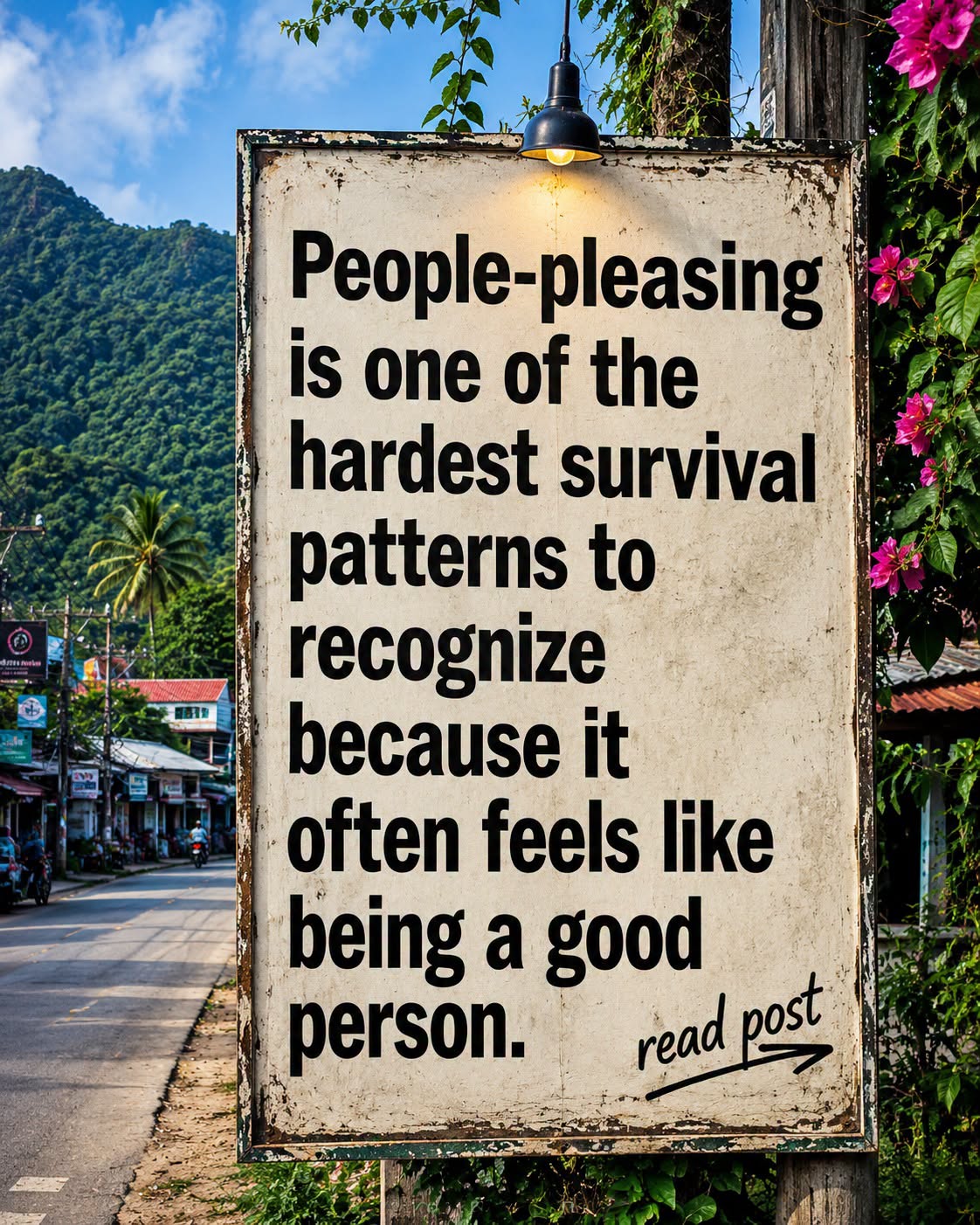
“People-pleasing is one of the hardest survival patterns to recognize because it often feels like being a good person.”
Explore the NextSelf Blog. Start with this post explaining the world of souls. And my Youtube.
The blog lists all the difference patterns to study, understanding patterns is how one can develop 'Daas' [felt knowing].
Update: As awe, trust, and love deepen, they can allow greater openness and intimacy with the Creator. That intimacy can include sadness when you notice how much more of His goodness can be revealed.