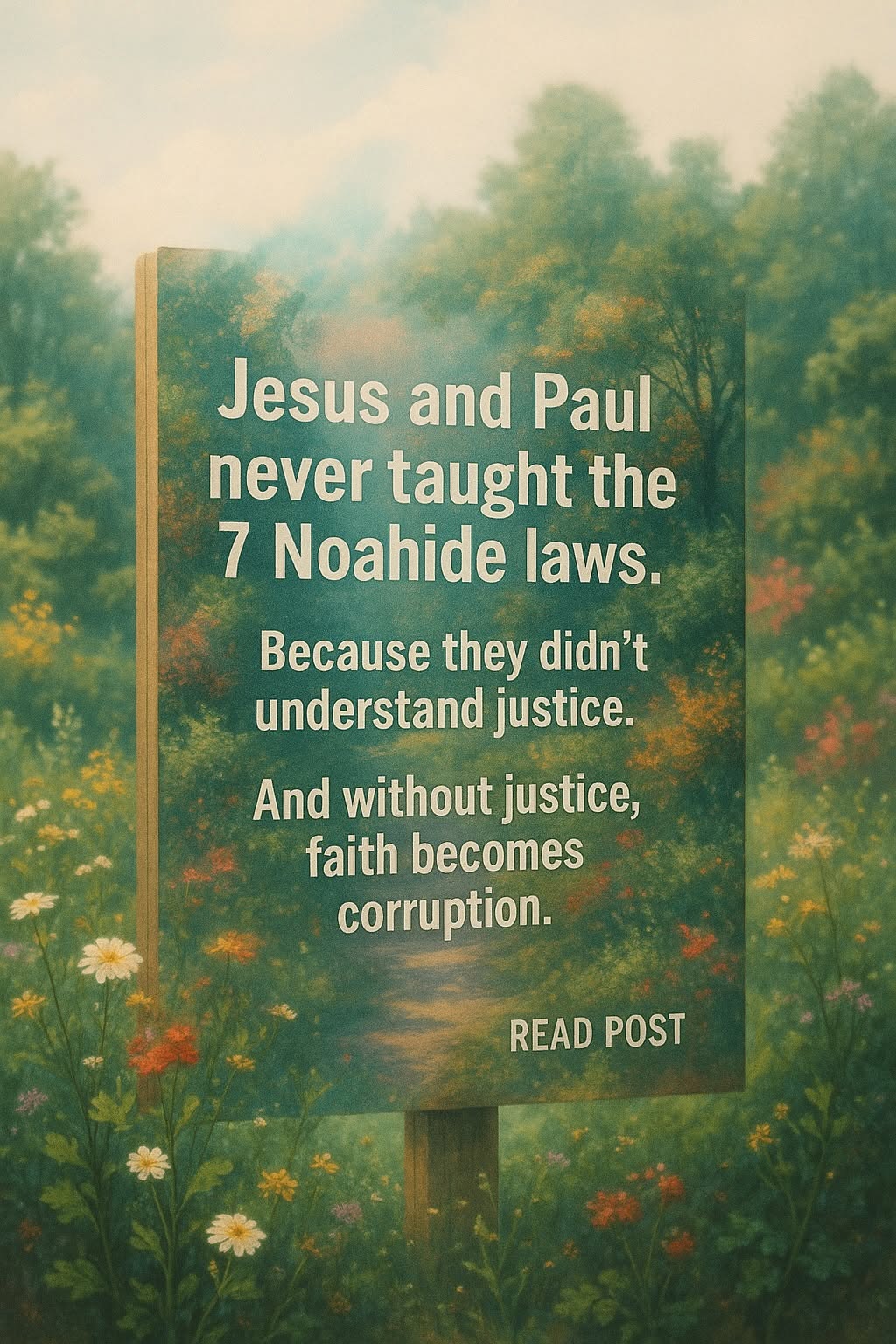
The blog lists all the difference patterns to study, understanding patterns is how one can develop 'Daas' [felt knowing]. Content does not provide medical services or professional counseling, and it is not a substitute for professional medical care.
Questions people ask
What are the seven universal laws the Hebrew Bible gives to all nations?
The post lists seven: don’t murder, don’t steal, don’t worship idols, don’t commit sexual immorality, don’t curse G-d, don’t eat from a living animal, and do establish courts of justice. Together they are a basic moral code meant for every nation, not only one religious group.
Why does the post say this code isn’t about religion?
Because the point isn’t which faith a person follows. It’s that these seven rules build the foundation of a moral world. The post argues real justice needs actual accountability — taking responsibility for what you do — not just believing the right thing.
What does the post say happened when accountability got pushed aside?
It says Christianity replaced justice and accountability with “just believe.” Once real accountability was set aside, the post argues, power and corruption moved in, and today’s nations ended up with legal systems that don’t actually deliver justice, even though the laws are written down.
Is imperfect faith still worth something, according to the post?
Yes. The post points to a related article arguing that misguided faith is better than no faith at all, and invites readers to follow that link to see why, right alongside its own point that real justice depends on accountability, not just on what a person believes.
Comments
Comments are reviewed before they appear. Your email is never published.
Optional analytics help NextSelf understand what writing helps readers most.Optional analytics cookies.
What Is the Hebrew Bible’s Simple Code for All Nations? | NextSelf