

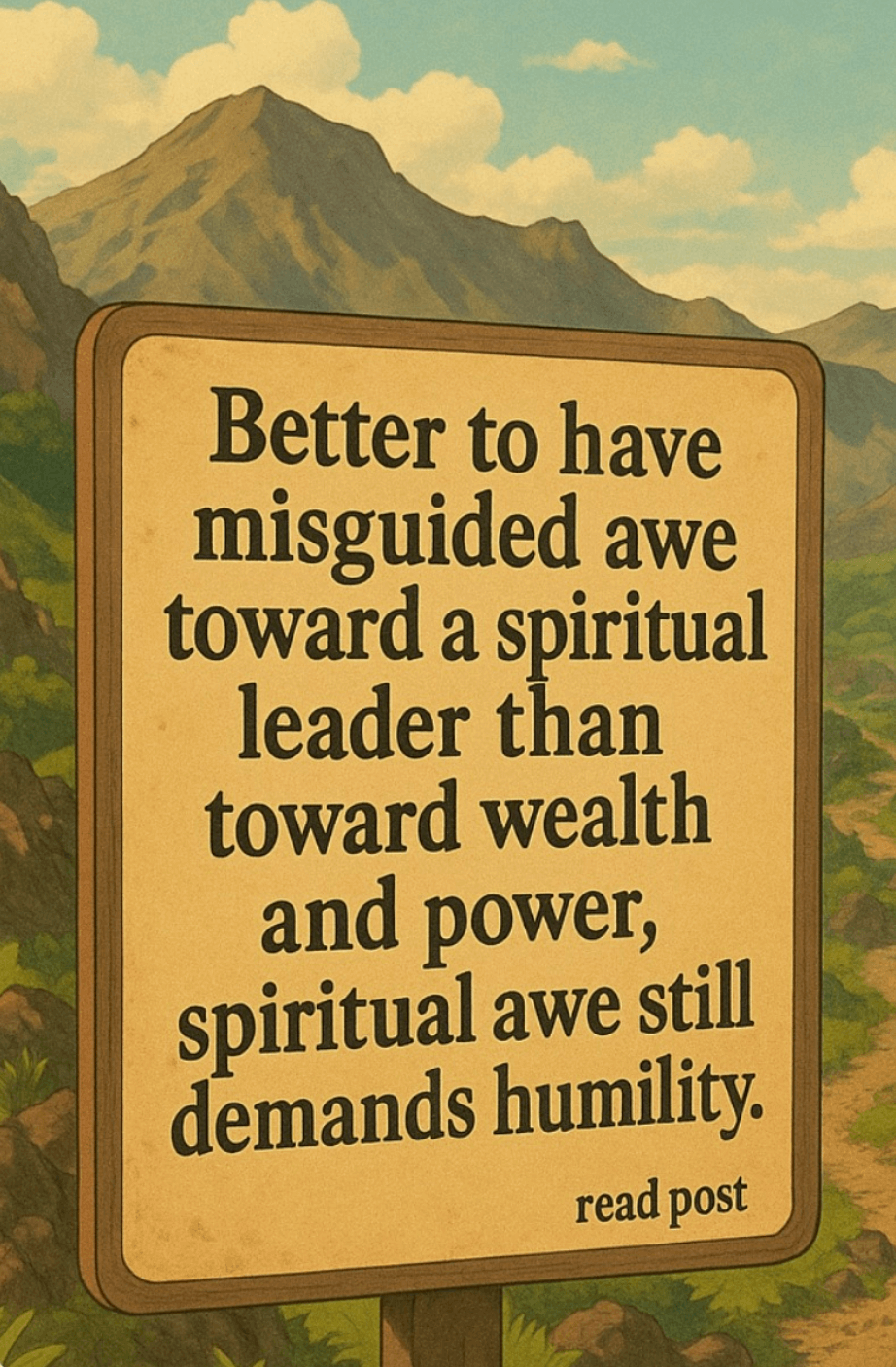
It’s better to have misguided awe (faith) toward a spiritual leader than toward wealth and power, and here’s why.
Awe always reshapes you.
The only question is in which direction.
Why does awe begin your relationship with the Creator?
Jewish wisdom explains, the purpose of life is a relationship with the Creator, and awe is how you begin to show up in that relationship.
Awe isn’t one feeling, it’s a blend that opens you emotionally:
1. fear — because the relationship is real, our choices matter,
2. wonder — because you’re astonished that He is good.
3. Humility - before His greatness
Just like human connection begins with curiosity, connection with the Infinite begins with awe, that moment you notice His goodness and feel safe enough to speak honestly.
When you trust he is good, awe causes love to be felt.
As awe, trust, and love deepen, they can allow greater openness and intimacy with the Creator. That intimacy can include sadness when you notice how much more of His goodness can be revealed.
What does Jewish law say about awe during prayer?
And Jewish law protects this truth:
You may feel awe toward a moral and spiritual scholar. But not while you pray, because in prayer all awe belongs to the Creator alone.
Awe increases through words, and awe is what opens the relationship.
What is misguided awe?
When most of your awe is not directed toward Him, it is misguided awe, but even then, the object you choose still reshapes the soul.
Awe toward a spiritual leader, even if imperfect, still demands humility, refinement, listening, and truth.
Why is awe toward wealth and power different?
But awe toward wealth and power? That doesn’t reshape you into humility, it reshapes you into dependence. It trains your nervous system to chase status, control, and validation, and it disconnects you from the relationship your soul was made for.
Where does each kind of awe take you?
Misguided awe toward the spiritual can still point you back to G-d.
Misguided awe toward power can take you far from yourself.
One direction opens you emotionally. The other can take you anywhere… and often to places you never chose.
More guides:
what makes you valuable?
Some people don’t hate the Jewish people because of ideas
Gratitude is how you practice faith:
Jewish secret to transform suffering into blessing:
You can channel The Creators essence through how you choose to act:
A relationship with the Creator is possible read the guide
Questions people ask
Why does misguided awe still reshape the soul?
Misguided awe is awe that is not directed toward the Creator, but the article says that even then, the object you choose still reshapes the soul. Noticing where your awe actually lands is an emotional skill: awareness. It lets you see what is quietly reshaping you, instead of being reshaped without ever choosing it.
Why is awe toward a spiritual leader better than awe toward wealth and power?
Awe toward a spiritual leader, even an imperfect one, still demands humility, refinement, listening, and truth. Awe toward wealth and power does not reshape you into humility, it reshapes you into dependence, and it trains your nervous system to chase status, control, and validation. Humility and honest listening are emotional skills you can practice.
What feelings make up awe?
Awe is not one feeling. The article calls it a blend that opens you emotionally: fear, because the relationship is real and our choices matter; wonder, because you are astonished that He is good; and humility before His greatness. Naming which of the three you feel is the emotional skill of awareness.
Can you feel awe toward a person and still pray?
Jewish law protects this. You may feel awe toward a moral and spiritual scholar, but not while you pray, because in prayer all awe belongs to the Creator alone. Holding that line is an emotional skill too: a boundary that keeps one relationship from quietly taking the place of another.
Explore the NextSelf Blog. Start with this post explaining the world of souls. And my Youtube.
The blog lists all the difference patterns to study, understanding patterns is how one can develop 'Daas' [felt knowing].
Update: As awe, trust, and love deepen, they can allow greater openness and intimacy with the Creator. That intimacy can include sadness when you notice how much more of His goodness can be revealed.