

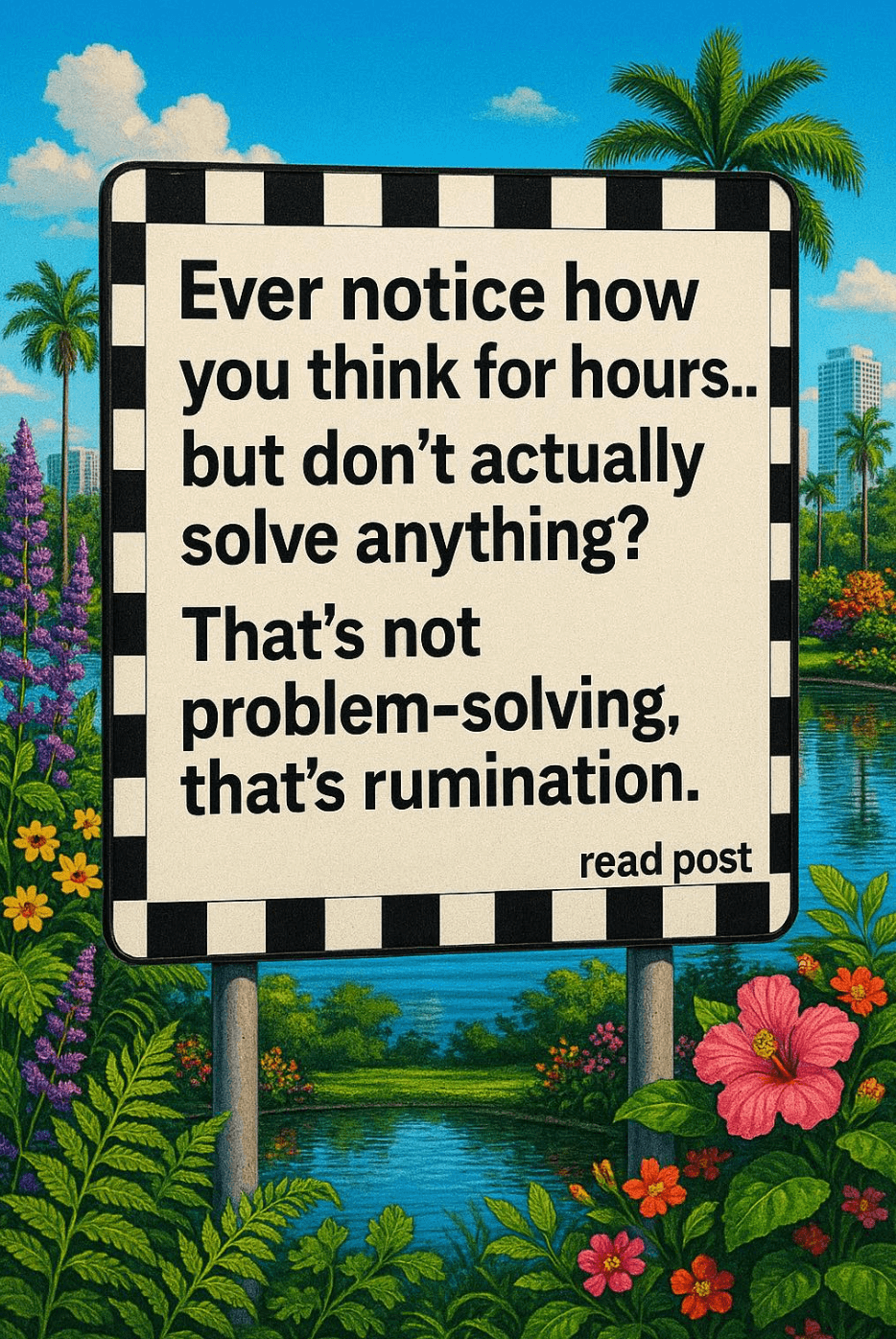
It feels like you’re “working it out,”
but really, you’re circling emotions that haven’t been processed.
Which Feelings Keep You Thinking in Circles?
Common emotional traps:
1. Guilt → “I should’ve done it differently.” (keeps you stuck in the past)
2. Fear → “What if I fail?” (makes every option feel unsafe)
3. Shame → “Something’s wrong with me.” (paralyzes action before it starts)
4. Anger → “It’s unfair.” (locks you in blame instead of solutions)
These emotions hijack your mind into abstract loops. That’s why you can think for hours or years about an idea but never move forward.
How Do You Move From Rumination to Action?
The shift:
1. Process the emotion first — let yourself feel it instead of fighting it.
Helpful thoughts:
• Guilt: “I can learn from this — I don’t have to punish myself.”
• Fear: “I don’t need to predict the future right now. I can take one step.”
• Shame: “This feeling doesn’t define my worth. I’m allowed to be human.”
• Anger: “This hurts, but holding it won’t heal me. I can choose what to do with the energy.”
2. Return to concrete thinking — ask: What’s a step I can take right now?
3. Problem-solve from peace, not panic — solutions come when your nervous system feels safe.
What Happens When You Problem-Solve From Peace?
From that state: optimism opens, clarity sharpens, and solutions appear.
Process first. Then act in the direction of your goals.
More Guides:
Through darkness you develop a greater felt awareness of the Creators love.
When the nervous system is stuck in trauma, it plays scary fantasies on repeat.
Trauma replaces compassion with survival thinking.
Explore the NextSelf Blog. Start with this post explaining the world of souls, and what does it mean to be light? And my Youtube. Content is published to this facebook first and a few days later, to the blog.
The blog lists all the difference patterns to study, understanding patterns is how one can develop 'Daas' [felt knowing].
Content does not provide medical services or professional counseling, and it is not a substitute for professional medical care.