

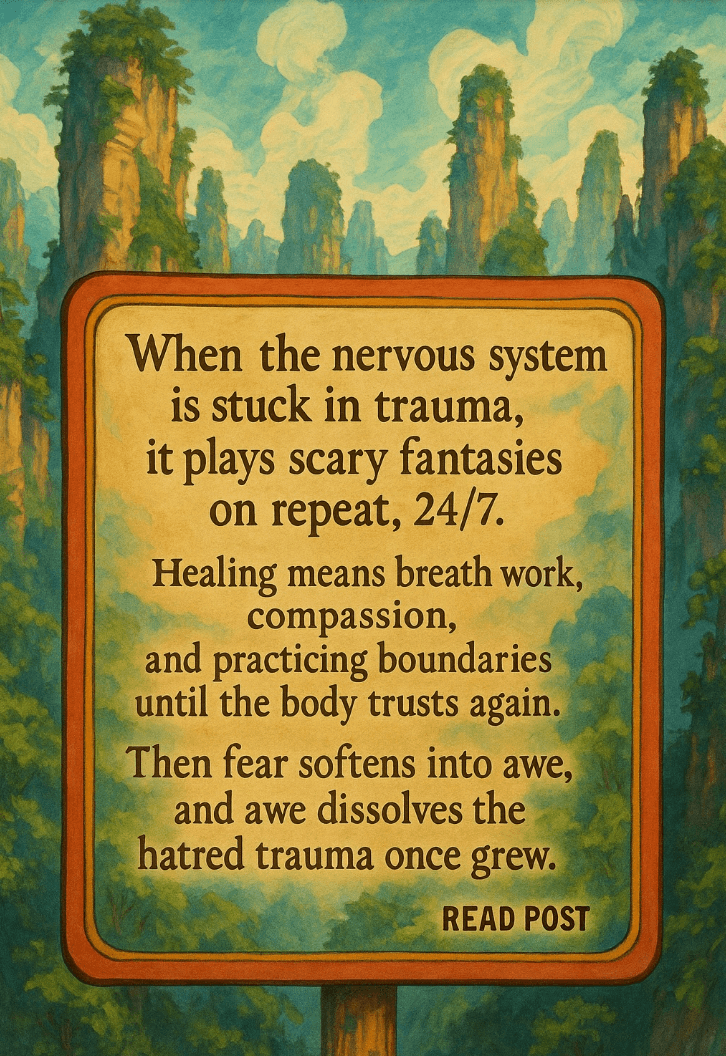
When the nervous system is stuck in trauma, it plays scary fantasies 24/7, stories of threat, humiliation, or control.
What drives the four trauma patterns?
That constant fear is what drives all four adaptive trauma patterns:
fight, (unhealthy aggression)
flight (avoidance),
freeze (rumination),
and fawn (people pleasing).
Each one is the body’s way of surviving an endless alarm. If those fantasies aren’t healed, they start to dominate the mind.
The person begins believing them, then acting them out — trying to control fear instead of processing it.
What does real processing of fear look like?
But real processing means internalizing this truth:
The Creator still cares for me, even when I feel shame.
Through slow, steady breath work, and the daily practice of compassionate boundaries, the body begins to trust again — fear softens into awe, and awe dissolves the hatred that trauma once grew.
How does abusive thinking become abusive behavior?
That’s how abusive thinking turns into abusive behavior: the body keeps reliving danger, and the mind mistakes domination for safety.
Awe is a blend of sadness fear and wonder. Awe deepens when you express appreciation.
a relationship with G-d isn’t complicated, learn why:
A relationship with G-d isn't complicated.
Jewish secret to transform trauma into blessing:
You can forgive and still feel angry –
Explore the NextSelf Blog. Start with this post explaining the world of souls, and what does it mean to be light? And my Youtube. Content is published to this facebook first and a few days later, to the blog.
The blog lists all the difference patterns to study, understanding patterns is how one can develop 'Daas' [felt knowing].
Content does not provide medical services or professional counseling, and it is not a substitute for professional medical care.