

because trauma patterns shape how we experience safety, pain, and control.
How Do Trauma Responses Shape the Way You Forgive?
When your system lives in fight (which often shows up as narcissism), forgiveness/apologizing feels like surrender, as if letting the person who ‘hurt’ you “win.”
When you’re in flight (which is avoidance), forgiveness feels unsafe, your body is still braced for the next blow.
In freeze (which looks like inaction or shutdown), forgiveness feels impossible, you’ve shut down just to survive.
And in fawn (which is people-pleasing), forgiveness feels like self-betrayal, you’ve learned that staying connected means pleasing others, even when it hurts you.
Why Isn’t Forgiveness a Sign of Weakness?
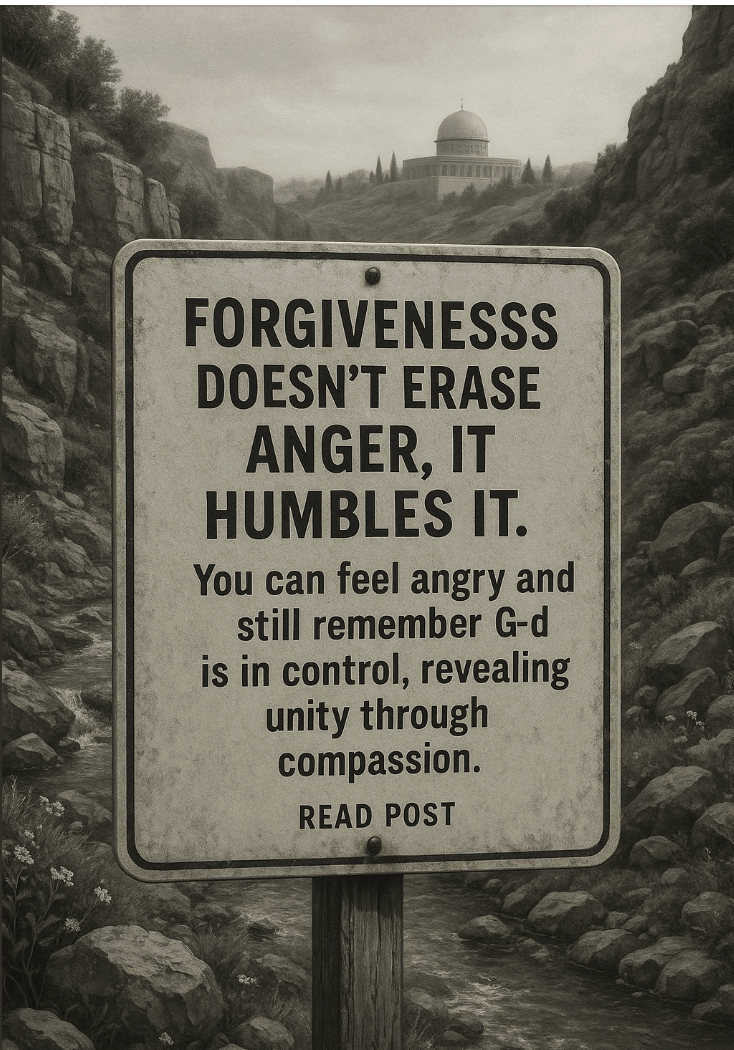
But forgiveness isn’t weakness. It’s remembering that G-d is still in control, even when others weren’t. You can forgive and still feel angry. Anger means something still needs to change, within you, or in the world around you.
G-d forgave the Jewish people, but He still called for transformation, to live from trust instead of trauma,
from faith instead of fear.
What Does Chassidus Teach About Forgiveness?
And Chassidus reveals:
when we repair relationships — with ourselves and others — we’re symbolically atoning for G-d Himself. Because creation carries the experience of distance, misunderstanding, and pain for humanity, and G-d allows us to partner with Him in healing it.
Forgiveness is the return to humility, the balance between compassion and boundaries that makes space for unity to be revealed.
Every act of compassion doesn’t fix a broken world, it uncovers the wholeness that was never lost.
Every apology restores awareness of connection.
Every time we bring love where fear once ruled, we help the world remember its Source.
Forgiveness, then, isn’t pretending the past didn’t happen. It’s choosing to heal the part of creation that was wounded through it, and in doing so, we help G-d’s presence return to a world still learning to trust His love again.
Jewish secret to transform suffering into blessing and why does creation have to carry so much pain? Your pain isn't random.
7th Chabad Rebbe explained the gift of being misguided – What's the benefit of being misguided?
Baal Shem Tov explained why misguided faith is better then no faith: Here's a truth people miss:
Happiness happens when you get what you want, joy is when you notice G-ds kindness in this moment – Bringing Messiah Through Joy
Questions people ask
Why does forgiveness feel so hard for some people?
Your trauma response often decides how forgiveness feels. In fight (which often shows up as narcissism), it feels like surrender. In flight (which is avoidance), it feels unsafe. In freeze (which looks like inaction or shutdown), it feels impossible. In fawn (which is people-pleasing), it feels like self-betrayal. Naming your pattern is the emotional skill of awareness.
Can you truly forgive someone and still feel angry?
Yes. The article says you can forgive and still feel angry, because anger means something still needs to change, either within you or in the world around you. Forgiveness does not erase that anger; it means remembering that G-d is still in control, even when others weren't. Noticing this anger honestly is part of the skill of awareness.
Does forgiving someone mean pretending nothing happened?
No. The article is direct about this: forgiveness isn't pretending the past didn't happen. It's choosing to heal the part that was wounded, while still holding the balance between compassion and boundaries, the emotional skill this article points to. That balance is what makes real unity and healing possible, not denial.
What does forgiveness have to do with trusting G-d?
The article ties them together directly: forgiveness means remembering that G-d is still in control, even when others weren't. G-d forgave the Jewish people but still called for transformation, to live from trust instead of trauma. When we repair our relationships, the article says, we partner with G-d in healing the pain creation carries, practicing the emotional skill of responsibility.
Explore the NextSelf Blog. Start with this post explaining the world of souls. And my Youtube. Content is published to this facebook first and a few days later, to the blog.
The blog lists all the difference patterns to study, understanding patterns is how one can develop 'Daas' [felt knowing].
Update: As awe, trust, and love deepen, they can allow greater openness and intimacy with the Creator. That intimacy can include sadness when you notice how much more of His goodness can be revealed.