

Ever felt confused when someone hurts you—but they act like the victim?
That’s emotional manipulation.
How does emotional manipulation work?
Here’s how it works (even between countries, like Palestinians and Israelis):
→ Step 1:
They cross your boundaries, claiming love or justice.
“I attacked because you left me no choice.”
→ Step 2:
If caught, they quickly apologize—but repeat again.
(or they may skip to step 3)
→ Step 3:
When apologies fail, they use emotions as weapons:
Sadness: “Look how much you hurt me.”
Anger: “You forced me into this.”
Guilt: “How can you ignore my suffering?”
→ Step 4:
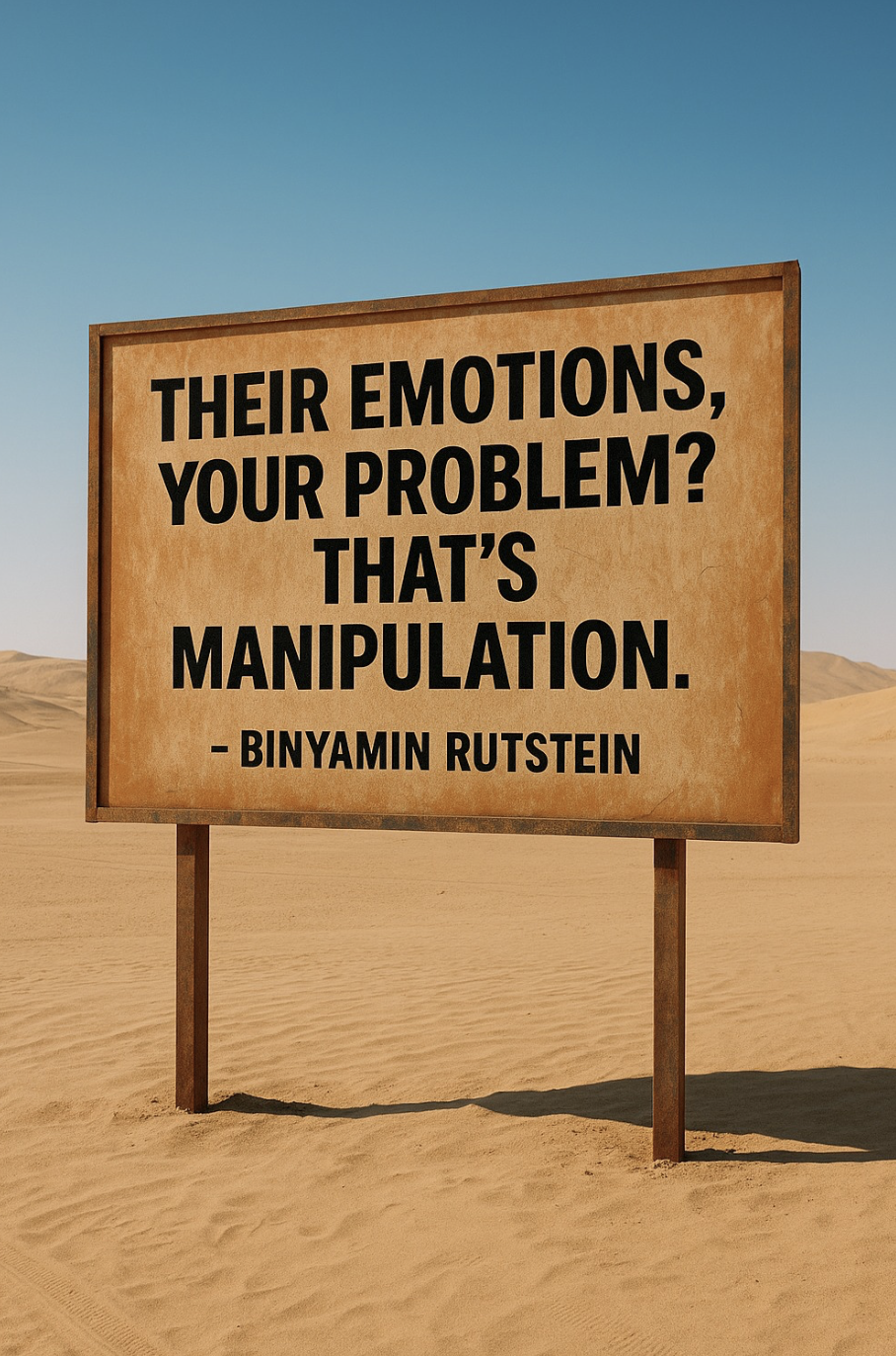
Suddenly, THEIR emotions become YOUR problem:
“If I’m angry or sad, it’s your fault.”
→ Step 5:
You’re trapped trying to make them happy (which is impossible).
You lose peace.
Why does Europe side with the “victim”?
Europe unintentionally feeds this cycle by supporting the emotional “victim” without checking facts—because Europe carries guilt from its own history.
But here’s the truth:
Truth isn’t halfway between honesty and manipulation. It leans closer to the side that owns up honestly.
How can you escape this trap?
How to escape this trap?
Recognize manipulation—even unintentional—is still manipulation.
Demand honesty and responsibility clearly.
Stop trying to fix their emotions.
Focus on actions, not words.
Remember:
“Accountability beats apology every single time.”
Explore the NextSelf Blog. Start with this post explaining the world of souls, and what does it mean to be light? And my Youtube. Content is published to this facebook first and a few days later to the blog, list of 100+ 1 line ideas, how to transform selfish desire like gossip, one structure of spiritual beliefs is healthy for the nervous system, learn about my story and book recommendations.
The blog lists all the difference patterns to study, understanding patterns is how one can develop 'Daas' [felt knowing].
Content does not provide medical services or professional counseling, and it is not a substitute for professional medical care.