

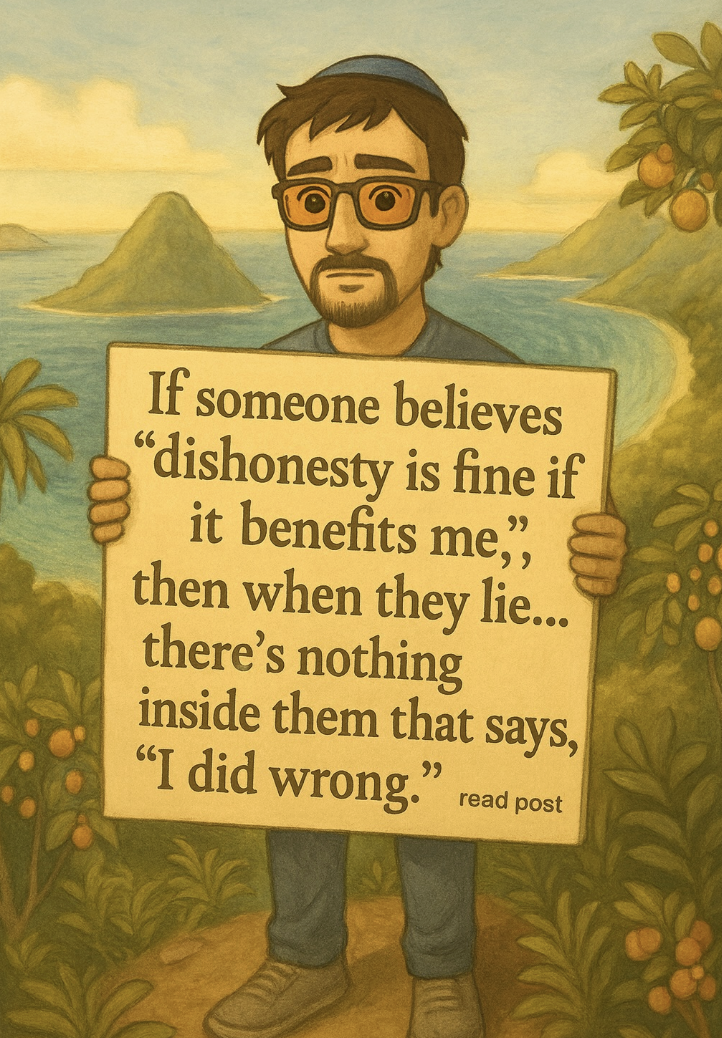
It’s not just pride. It’s values.
Why is saying sorry so scary?
If your value is “dishonesty is okay if it helps me,” then when you lie, there’s nothing inside that says “I did wrong.”
And to apologize? That would mean admitting the value itself might be broken. That’s scary.
What is the apology paradox?
The Paradox.
To change a value, you usually need to apologize. But to apologize, you have to challenge the value.
How can I learn to apologize?
A Simple Guide :
1. Notice the hidden value.
Ask: What belief is protecting this behavior?
2. Start small.
Make one honest apology, even for something tiny.
3. Separate action from identity.
It’s not “I am a liar.” It’s “I lied because I believed this.”
4. Practice.
Each apology teaches your body:
• Honesty is safe.
• Vulnerability brings connection.
5. Rewrite the value.
Shift to: “Honesty matters, even when it costs me, because it builds trust and connection.”
Apology isn’t just about the past. It’s about opening the future to a new way of living.
Explore the NextSelf Blog. Start with this post explaining the world of souls, and what does it mean to be light? And my Youtube. Content is published to this facebook first and a few days later, to the blog.
The blog lists all the difference patterns to study, understanding patterns is how one can develop 'Daas' [felt knowing].
Content does not provide medical services or professional counseling, and it is not a substitute for professional medical care.