

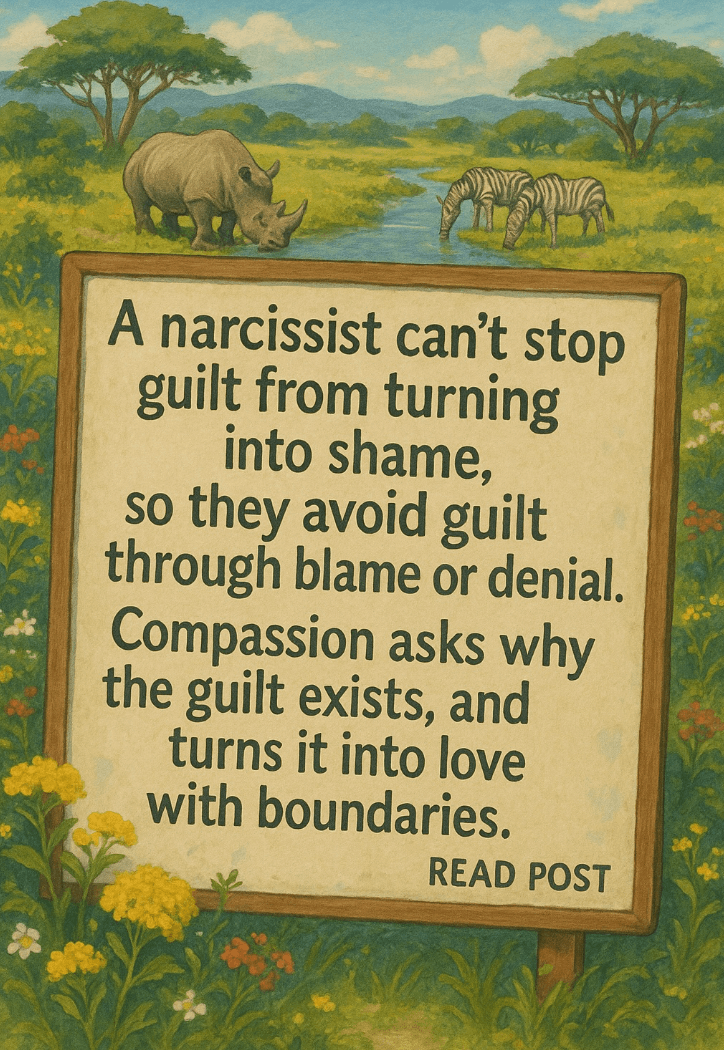
They’ll avoid the feeling of shame at all costs, even if it means blaming, denying, or disconnecting. But guilt isn’t the enemy.
It’s the soul’s way of saying, “I want to do better.” True self compassion isn’t just kindness, it’s the courage to ask, “Why does this guilt exist?” It’s saying, “I’m trying my best, and I’m still learning.”
Through that awareness, guilt can transform into love with healthy boundaries,
into responsibility with understanding. That’s the path of healing, learning to hold guilt without collapsing into shame.
More guides:
forgiveness doesn’t erase anger, change does: https://nextself.ai/spirituality/many-people-misunderstand-forgiveness/
Joy isn’t about living in denial – https://nextself.ai/spirituality/bringing-messiah-through-joy/
trauma replaces compassion with survival patterns: https://www.facebook.com/share/p/1BSH3MSrHh/
How trauma disrupts your personality: https://nextself.ai/spirituality/abusive-thinking-doesnt-appear-out-of-nowhere/
trauma turns anger into hatred – https://nextself.ai/spirituality/baseless-hatred-isnt-only-about-others/
Jewish secret to transform suffering into blessing: https://nextself.ai/spirituality/your-pain-isnt-random/
Explore the NextSelf Blog. Start with this post explaining the world of souls. And my Youtube.
The blog lists all the difference patterns to study, understanding patterns is how one can develop 'Daas' [felt knowing].
Update: As awe, trust, and love deepen, they can allow greater openness and intimacy with the Creator. That intimacy can include sadness when you notice how much more of His goodness can be revealed.