

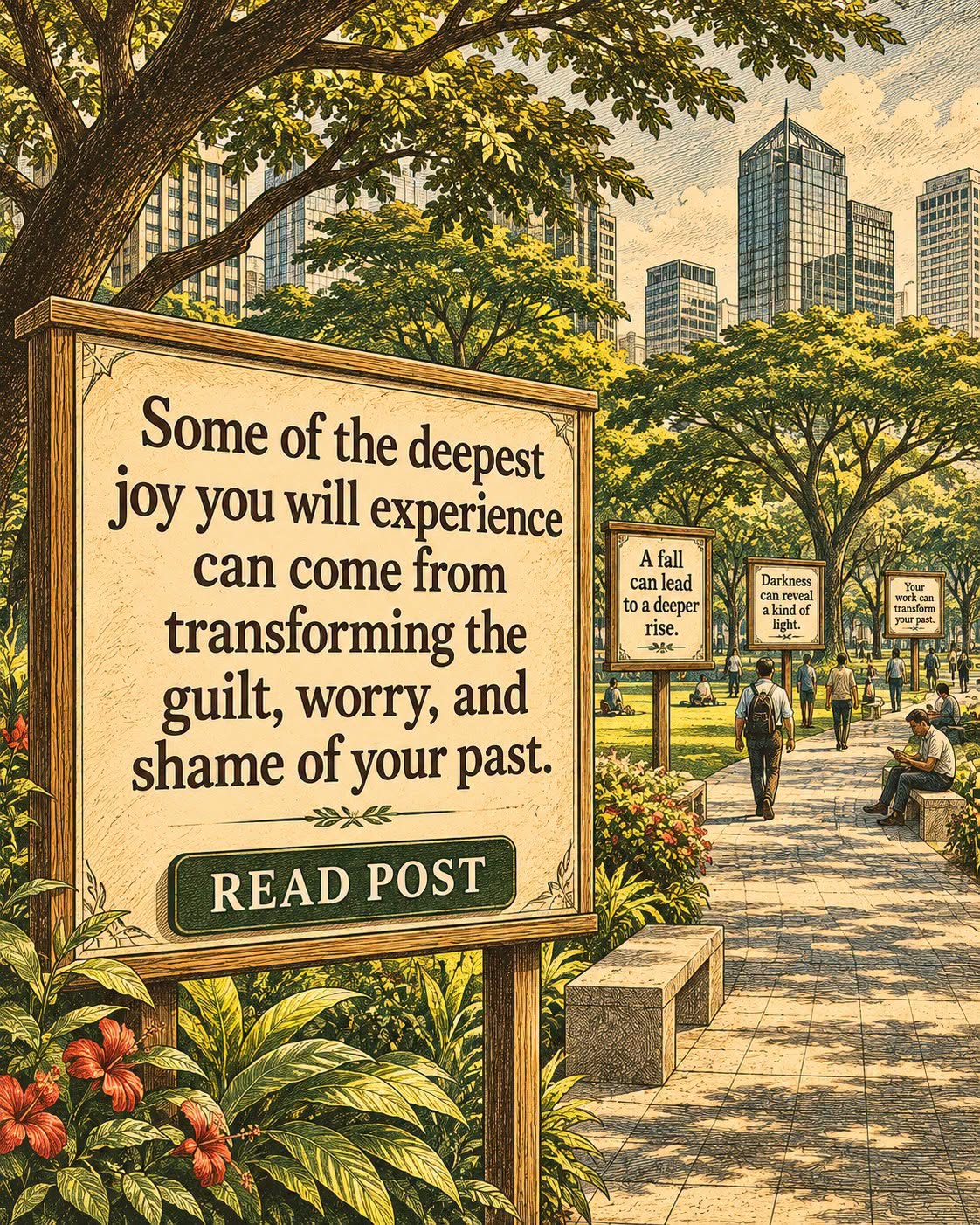
Even the poor choices that leave us with guilt, worry, and shame can become part of the reason we experience deeper joy and love.
Chassidus [Jewish mysticism, psychology, and philosophy] teaches that every yerida [fall into greater darkness, guilt, worry, or shame] happens for the sake of an aliyah [rise that allows us to experience deeper joy and goodness].
Even when we make poor choices through our own free will, there is hashgacha pratis [Divine providence] in what happened.
What do Chanukah candles teach about guilt and shame?
The Lubavitcher Rebbe explains this idea in a maamer [Chassidic talk] about why we light Chanukah candles after the sun sets.
When the sun sets, we lose the light that was easy to see. Spiritually, this represents a time when Elokus [the Creator's goodness] is hidden.
But when the sun sets, it is shining someplace else. Chassidus teaches that even in the darkness, another kind of Divine light is present.
Revealing this deeper light requires human effort. Through our choices, hard work, and desire to serve Hashem [cause of existence, doesn't lack intelligence or compassion], we can reveal a kind of goodness that could not be experienced in the same way before the darkness.
Why would the Creator allow us to fall?
The first yerida happens when the soul enters the physical body. The soul enters a world where it can make choices that go against Hashem's will.
Why are our poor choices part of Divine providence?
Poor choices can create an even deeper fall, leaving us with guilt, worry, and shame.
The Rebbe explains that even when a person commits an aveirah [sin] through free will, it is part of Divine providence.
This doesn't mean Hashem wants us to sin or that we aren't responsible for our choices. He wants the aliyah that can follow [deeper trust and relationships].
When a particular aliyah follows a particular yerida, there was no other way to reach that rise without that fall.
The power for the rise is already present within the fall.
This comes from Hashem, whose goodness the maamer describes as etzem hatov and teva hatov [good in essence and nature].
What can Avraham's tenth test teach us about pain?
How can we experience joy after making poor choices?
The Rebbe compares the pain of our falls to Avraham's tenth test, Akeidas Yitzchak [the Binding of Isaac].
Avraham did not sin, but his final test brought him tremendous pain. Despite that pain, he served Hashem with simcha [joy] and zrizus [eagerness to act].
His tenth test brought him to a level that his first nine tests could not reach.
During the deepest galus [exile, when the Creator's goodness is hidden], someone who returns to serving Hashem with joy after making poor choices can experience a rise that reflects Avraham's final test.
[I like to think it may mean I completed that test many times]
How can we appreciate life before we feel its goodness?
A difficult experience can remind us that what we feel is not the whole story. Even when we feel pain, there is much more happening in our lives than the suffering we currently experience.
Sometimes we can understand a deeper relationship with the Creator before we are able to feel it.
You don't have to feel the full goodness of your life to begin appreciating that it exists.
Thinking about how much of life is a gift, including the ability to experience relationships, can help us feel appreciation, find inner strength, and experience deeper joy.
How do we turn a fall into a rise?
Teshuvah [returning to Hashem after wrongdoing] is not only about feeling regret. It involves doing good, correcting what we can, and trusting that Hashem wants us to rise.
How does trust help us change after a fall?
The Rebbe compares this trust to someone going into war with the certainty that Hashem is walking with them and will help them win.
Even when our yetzer hara [desire to act selfishly] feels like a mountain, we can trust that we have the strength to change.
We don't need to wait until the darkness is gone to begin experiencing the light.
The Chanukah story teaches that even when all the oil appeared to be contaminated, one sealed jug of pure oil remained.
Chassidus teaches that everyone has a part of themselves that remains untouched, even through the deepest darkness.
We can bring that light into our daily lives through our choices, our effort, and our joy [we can always work on improving our personalities].
The purpose isn't only to escape suffering. It is to experience deeper spiritual pleasure [feeling awe, love, and joy] in serving Hashem, until what brings Him pleasure [opposites uniting] becomes our pleasure.
How can we bring deeper light into our thoughts?
Rabbi Yossi Paltiel explains an idea based on the Zohar [a foundational text of Jewish mysticism]: "When the light of Atzilus is in Atzilus, it's not important. It was created to shine in lower worlds."
We can use this as a metaphor for our thoughts. Some are like Atzilus [deep compassion and kindness], while others are like the lower worlds [thoughts, stories, and desires connected to guilt, worry, and shame]. Our work is to bring the light of our higher thoughts into the parts of ourselves that need it most [or the parts of other people].
Our mistakes don't have to be the whole story.
Even a fall caused by our own poor choices can become part of the rise that allows us to experience deeper awe, trust, love, and joy.
Based on the Lubavitcher Rebbe's maamer Ner Chanukah Mishetishka HaChama, 5735.
__________________
Related ideas:
Why is everyone lacking pleasure?
Why is suffering built into creation?
Biggest obstacle to spiritual growth is to feel holy
#NextSelf #kabbalah #biblestudy
“Some of the deepest joy you will experience can come from transforming the guilt, worry, and shame of your past.”
Explore the NextSelf Blog. Start with this post explaining the world of souls, and what does it mean to be light? And my Youtube. Content is published to this facebook first and a few days later to the blog, list of 100+ 1 line ideas, how to transform selfish desire like gossip, one structure of spiritual beliefs is healthy for the nervous system, learn about my story and book recommendations.
The blog lists all the difference patterns to study, understanding patterns is how one can develop 'Daas' [felt knowing].
Content does not provide medical services or professional counseling, and it is not a substitute for professional medical care.