

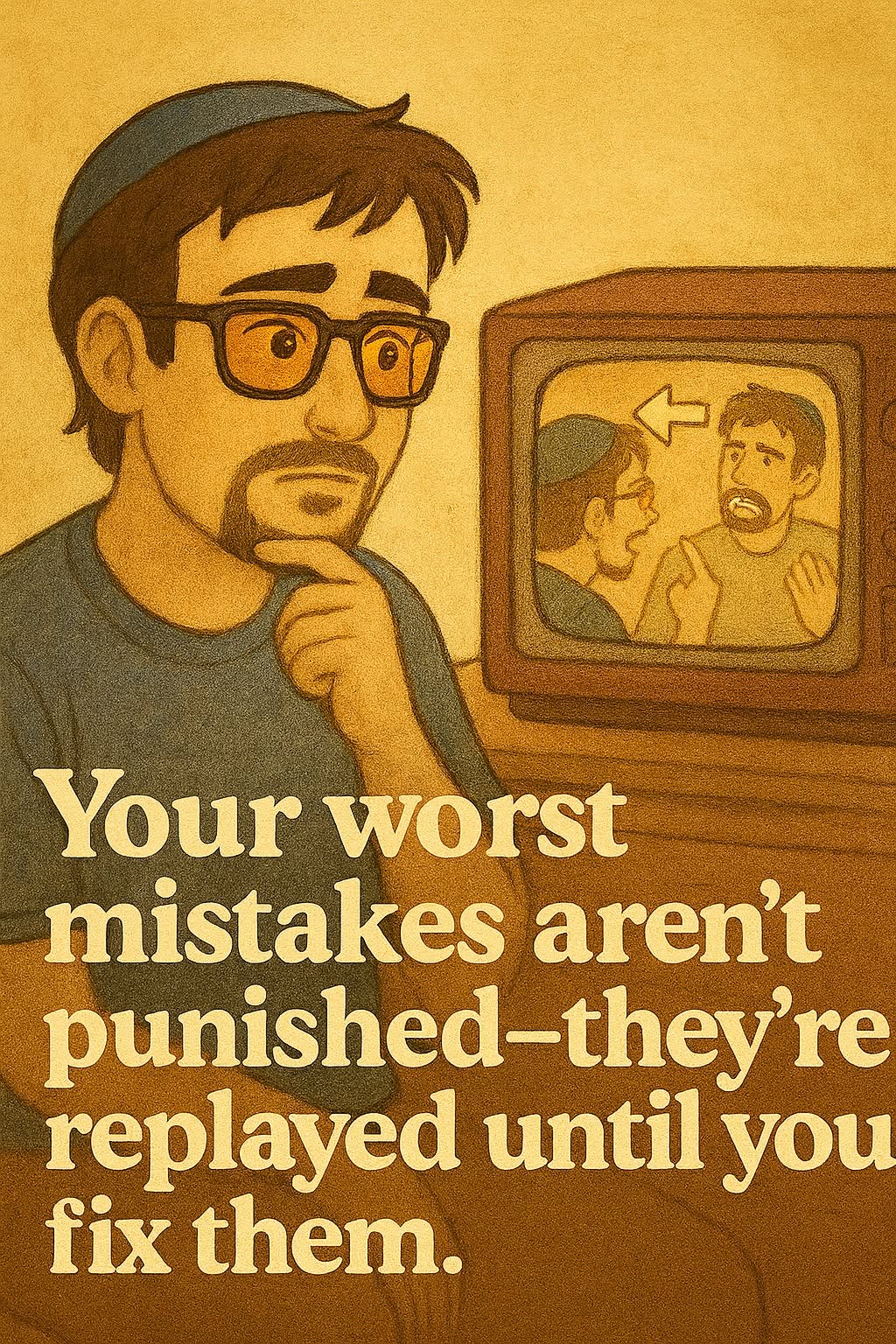
It’s not flames or pitchforks.
In Jewish tradition, “hell” isn’t about punishment.
It’s about feeling the pain of relationships we’ve damaged.
Here’s the surprising part:
Every person you’ve ever interacted with gets asked about you:
“Were they honest and fair?”
If someone answers “no,” your soul deeply feels the shame, regret, and loneliness of hurting someone.
That pain, called “Gehinnom” can last up to 12 months.
It’s living in deep regret and loneliness.
Realizing you’ve hurt people and didn’t fix it.
Sometimes, a soul even has to come back to this world to repair what was broken.
Here’s why honesty feels so hard sometimes:
The adaptive trauma patterns, fight, flight, freeze, and fawn, often block us from truly being honest.
1. Fight: We get defensive or aggressive instead of admitting mistakes.
2. Flight: We avoid difficult conversations altogether.
3. Freeze: We feel stuck and can’t speak up.
4. Fawn: We say what others want to hear, ignoring our own truth.
Sound overwhelming?
Here’s the good news:
You don’t have to wait until the next life to heal.
Right now, today, you can:
1. Recognize your trauma pattern and how it keeps you from honesty.
2. Practice honesty, even when it’s hard.
3. Reach out to mend broken trust, even if it feels uncomfortable.
When you repair these relationships, you heal your soul and even bring healing to the world itself.
Remember:
Healing a broken relationship is healing the world.
Choose honesty.
Choose compassion.
Start today.
"Your worst mistakes aren't punished, they're replayed until you fix them."
Explore the NextSelf Blog. Start with this post explaining the world of souls. And my Youtube. Content is published to this facebook first and a few days later, to the blog.
The blog lists all the difference patterns to study, understanding patterns is how one can develop 'Daas' [felt knowing].
Update: As awe, trust, and love deepen, they can allow greater openness and intimacy with the Creator. That intimacy can include sadness when you notice how much more of His goodness can be revealed.