

Jewish generational trauma didn’t start in the 20th century.
It began centuries earlier,
when the Catholic Church shaped the world’s view of Jews.
This wasn’t random hatred, it was institutional.
Popes and church councils created policies
that segregated Jews, forced conversions,
banned land ownership, and confined communities to ghettos.
For over a thousand years,
these structures became the normal fabric of society.
Jewish families lived generation after generation
under laws whispering:
“You don’t belong here.”
But here’s the deeper truth:
The Jewish people didn’t survive because life was safe.
Why Did the Jewish People Survive?
We survived because we chose knowing G-d
over choosing physical comfort.
And knowing G-d doesn’t come from comfort,
it comes from practicing awe and joy,
thinking about ideas that open you to His infinity,
and living with kindness and acts of love
supported by boundaries.
⸻
Trauma shaped more than our history,
it shaped our instincts for safety through the nervous system.
What Are the Four Trauma Responses?
1. Fight ‘protects’ safety with intensity (narcissism).
2. Flight tries to earn safety through doing/avoidance.
3. Freeze (which looks like inaction or shutdown) stays silent to stay safe.
4. Fawn (which is people-pleasing) pleases others to avoid feeling fear.
Not flaws,
adaptive wisdom
in a world that punished Jewish existence.
⸻
And here is a spiritual truth Jewish wisdom teaches:
Healing doesn’t happen because we suffered.
When Does Healing Actually Happen?
Healing happens when suffering pushes us
to understand G-d’s unconditional love more deeply and increase our acts of compassionate boundaries.
The more you understand His love,
the more your body becomes a vessel that can hold His light,
sense His closeness,
and feel motivated to channel blessing into the world.
Pain doesn’t close the heart/compassion,
it helps expand it.
It creates space for humility, love, and awe.
Why Is Jewish Resilience So Unusual?
This is why Jewish resilience is so unusual:
Trauma didn’t break us.
It made us a greater channel for blessing.
⸻
And real healing begins with truth.
We heal not by erasing history, but by facing it.
When Jews and Christians look honestly
at what the Church once taught about Jews,
and how those echoes still live today,
fear becomes clarity,
and pain becomes a doorway to repair.
Because unconditional love doesn’t deny pain.
It redeems it.
⸻
And here’s the part no one wants to say:
For decades, the Catholic Church has acted as if
feeling bad is the same as repair.
Is Remorse the Same as Repair?
But remorse is not repair.
Emotion is not accountability.
Real healing requires responsibility,
naming what happened,
understanding the impact,
and choosing actions that honor those who were harmed.
In Jewish wisdom,
feeling bad is not the end of the process,
it’s the beginning.
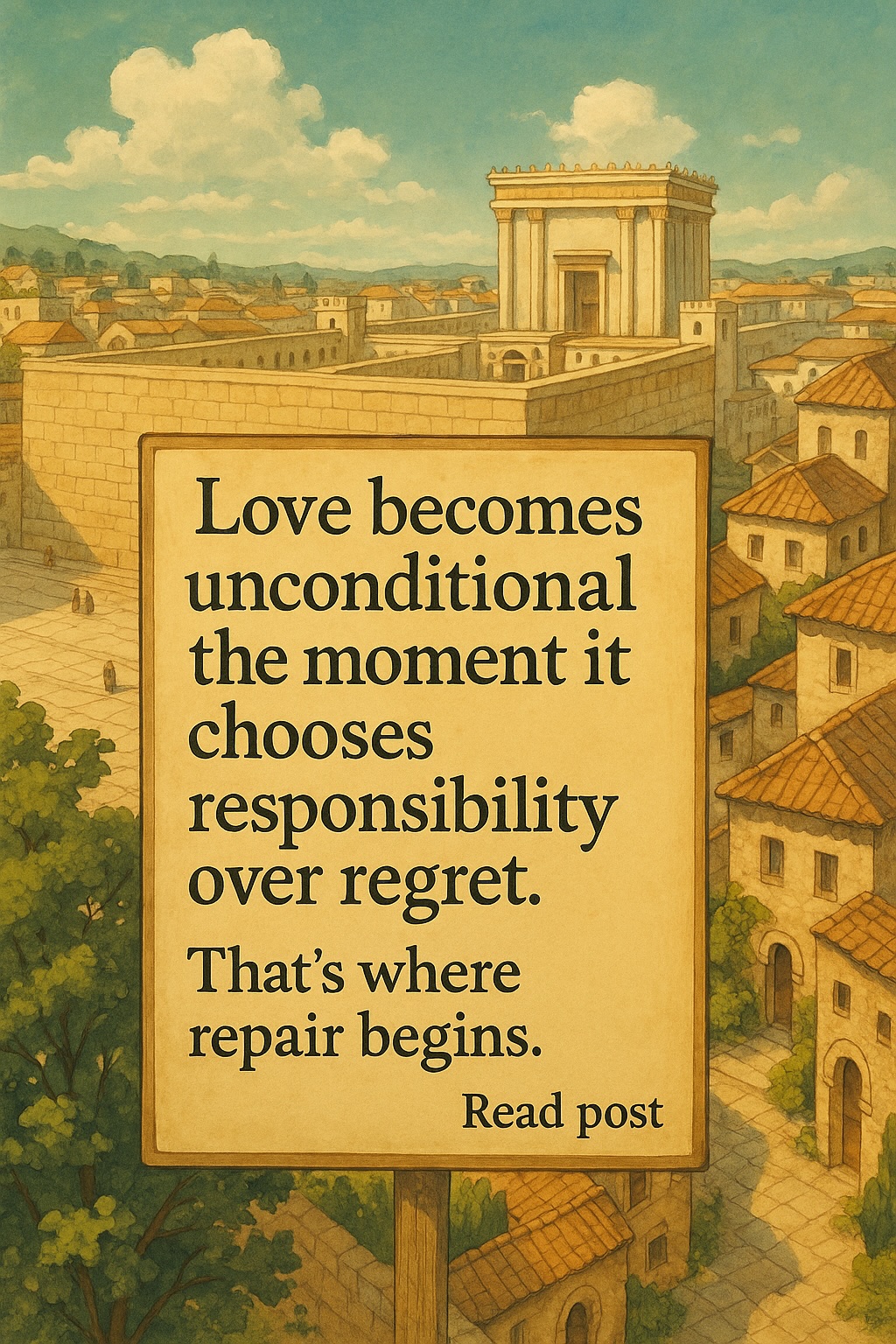
Love becomes unconditional
the moment it chooses responsibility over regret.
That’s where repair begins.
It means asking yourself:
“What is my responsibility now?”
More guides:
Shame reveals G-dliness: Shame becomes revelation
Trauma takes away your awareness: what we know about trauma today
Jewish secret to transform pain into blessing: Your pain isn’t random
Questions people ask
When did Jewish generational trauma begin?
It did not begin in the 20th century. It began centuries earlier, when the Catholic Church shaped the world’s view of Jews. Jewish families then lived generation after generation under laws that whispered, “You don’t belong here.” That is why the trauma is generational.
What did the Catholic Church do to Jewish communities?
Popes and church councils created policies that segregated Jews, forced conversions, banned land ownership, and confined Jewish communities to ghettos. This was not random hatred; it was institutional. For over a thousand years those structures became the normal fabric of society.
Are trauma responses a sign of weakness?
No. They are not flaws but adaptive wisdom in a world that punished Jewish existence. Fight ‘protects’ safety with intensity. Flight tries to earn safety through doing and avoidance. Freeze (which looks like inaction or shutdown) stays silent to stay safe. Fawn (which is people-pleasing) pleases others to avoid feeling fear.
How can Jews and Christians heal this history together?
By facing it instead of erasing it. When Jews and Christians look honestly at what the Church once taught about Jews, and at how those echoes still live today, fear becomes clarity and pain becomes a doorway to repair. Unconditional love does not deny pain; it redeems it.
“Love becomes unconditional the moment it chooses responsibility over regret. That's where repair begins.”
Explore the NextSelf Blog. Start with this post explaining the world of souls. And my Youtube.
The blog lists all the difference patterns to study, understanding patterns is how one can develop 'Daas' [felt knowing].
Update: As awe, trust, and love deepen, they can allow greater openness and intimacy with the Creator. That intimacy can include sadness when you notice how much more of His goodness can be revealed.