

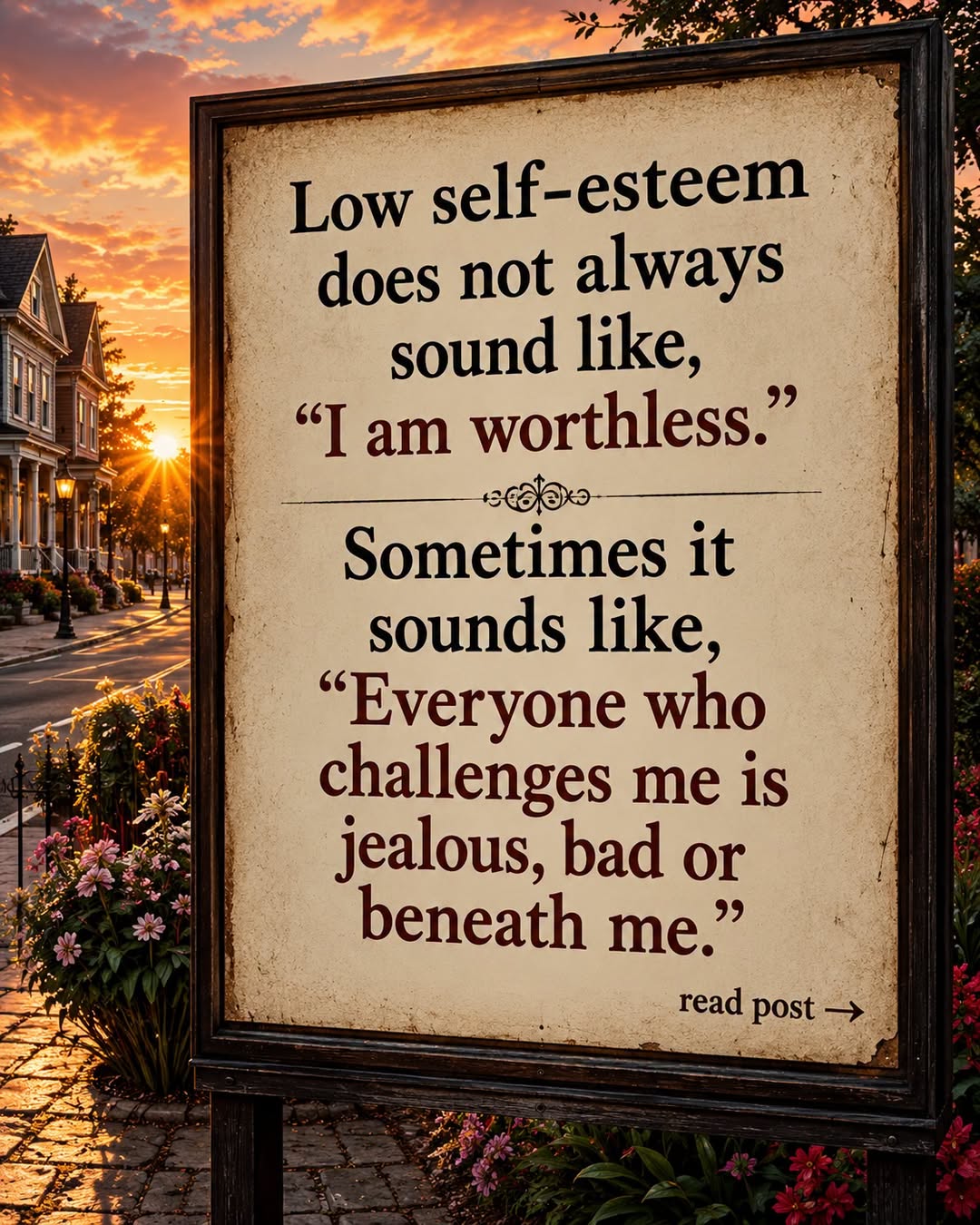
Sometimes it sounds like, “Everyone who challenges me is jealous.”
Trauma-adaptive fight mode does not always sound like rage.
Sometimes it sounds like certainty.
“They are trying to bring me down.”
“They cannot handle my confidence.”
“They are just insecure and living a tragic life.”
Sometimes those things may be true.
But if that becomes the automatic explanation every time someone challenges you, criticizes you, misunderstands you, or does not respond how you wanted, it may not be confidence.
It may be fear-thinking.
Toxic shame is not only the feeling, “I did something wrong.”
It is the deeper belief, “Something is wrong with me.”
That belief can be very painful to feel directly.
So when curiosity and self-compassion are missing from part of the personality, trauma-adaptive fight mode may step in to protect that shame.
It protects by becoming certain.
It protects by blaming.
It protects by turning pain into superiority.
“They are beneath me.”
That is not truth.
That is not truth. That is shame trying to hide.
Trauma-adaptive fight mode develops to protect a person from feeling unsafe, powerless, ashamed, or controlled.
That protection can become useful when a real boundary needs to be set.
But when it is driven by fear-thinking, it can escape shame by turning uncertainty into a story where the other person is the problem.
Instead of feeling, “That hurt me,” the mind says, “They are jealous.”
Instead of feeling, “I felt dismissed,” the mind says, “They are beneath me.”
Instead of feeling, “I feel unsure right now,” the mind says, “I already know exactly what their motive is.”
That story can feel powerful for a moment.
It protects you from feeling embarrassed, rejected, powerless, or unimportant.
But it also blocks self-reflection.
Because once the other person becomes jealous, bad, or less worthy, there is nothing left to notice inside yourself.
No trying to understand patterns through curiosity.
No self-compassion.
No responsibility, repair or growth.
Real self-reflection begins when you can admit, “I felt threatened,” without needing to describe the other person as jealous, bad, or less worthy than you.
That does not mean the other person was right.
It does not mean you ignore disrespect.
It means you separate what happened from the story your nervous system created to protect you.
What happened?
What did I feel?
What did I assume?
What pattern am I noticing?
Am I trying to understand this through curiosity, or am I trying to feel safe by making the other person the problem?
Can I have compassion for the part of me that felt threatened, without letting that part attack someone else’s character?
That is how trauma-adaptive fight mode starts turning back into strength.
Because real strength is not needing to win every inner story.
Real strength is being honest enough to notice when your mind is protecting your shame by attacking someone else’s character.
"Low self-esteem does not always sound like, "I am worthless." Sometimes it sounds like. "Everyone who challenges me is jealous, bad or beneath me."
Explore the NextSelf 2026 Index and 2025 Index. Start with this post explaining the world of souls.
They organize the core ideas on awareness, compassion, boundaries, and how they build real relationship and responsibility with The Creator.
Update: When an individual trusts the Creator is good, awe [wonder, humility and fear], which is felt after noticing patterns of infinite wisdom, causes love to be felt and that love includes sadness because His goodness can always be more revealed and joy.
All information is for educational purposes only.