

A narcissistic pattern can hide inside religion, spirituality, morality, kindness, or self-improvement.
The beliefs can be real.
The deeper problem is the goal.
Is the goal intimacy [a real relationship]?
Or is the goal building and protecting an image of being good, spiritual, moral, smart, righteous, kind, or important?
That difference changes how you treat people.
Image-building asks:
“How do I protect the way I see myself?”
Intimacy asks:
“What is really happening between us?”
Intimacy requires curiosity.
You have to be willing to find out that you misunderstood someone, acted selfishly, caused harm, or need to change.
That can take a lot of inner strength.
How can trauma make it harder to feel another person’s pain?
Trauma patterns do more than affect behavior.
Childhood trauma can make some emotions feel so painful that your nervous system learns to avoid fully feeling them.
Over time, this can affect which emotions feel safe enough to fully experience.
Shame can feel too painful.
Helplessness can feel dangerous.
Sadness can become numbness.
Fear can turn into anger.
Guilt can quickly turn into defending yourself.
When some emotions feel too painful inside you, it can also become harder to deeply feel another person’s pain.
You may understand:
“They are hurt.”
But fully feeling what their pain means can also force you to face thoughts like:
“I hurt them.”
“I was wrong.”
“I acted selfishly.”
“I cannot control how they see me.”
That requires a deeper kind of empathy.
Some research on narcissistic patterns shows that a person may still be able to understand what someone else is feeling, while having more difficulty actually feeling with them.
Why can narcissism look moral?
This is one reason narcissism can look moral.
Instead of focusing on the other person’s experience, the mind can protect the image:
“I was only telling the truth.”
“I was defending the Creator.”
“I have standards.”
“I was trying to help.”
“They are too sensitive.”
“My intentions were good.”
Some of these statements can even be true.
But they can still be used to avoid a harder question:
“What happened inside this person because of how I treated them?”
What does real morality require?
Real morality requires enough inner strength to see yourself as imperfect.
Otherwise morality can become another way to escape shame.
The goal becomes:
“I need to be the good person.”
Instead of:
“I need to become better at relationships.”
If the relationship only works while you protect each other’s image, it may be more transactional than intimate.
Then disagreement can feel like disrespect.
Feedback can feel like an attack.
A boundary can feel like rejection.
An apology can feel like losing your worth.
The other person’s pain can start to feel like proof that you are bad, instead of information about what happened between you.
The real test of your values is whether you still want the truth when the truth makes you look worse.
What goal does healing require?
Healing requires a different goal.
Not: “I need to prove I am good.”
But: “I want intimacy [real relationship] more than image.”
That means the ashamed part, scared part, selfish part, defensive part, and the part that caused harm cannot simply be pushed away.
Those parts need to stay inside the relationship long enough to learn and change.
You can say:
“What I did matters.
I still have worth.
I can understand what happened, repair what I can, and become more responsible.”
That creates more inner strength than:
“If I admit I was wrong, I become a bad person.”
Can religion become part of an image?
The same thing can happen with religion and spirituality.
Religion can become part of an image:
“I am righteous.”
“I understand G-d.”
“I defend truth.”
“I follow the right rules.”
Or religion can help build intimacy:
“Can I become more honest before the Creator?”
“Can I listen when someone tells me I hurt them?”
“Can I accept responsibility without drowning in shame?”
“Can my beliefs help me become more curious, kind, and willing to repair harm?”
Healthy spirituality should help you face reality more honestly, not hide from it.
Your image then becomes less important.
How you actually live becomes more important.
Which emotional skills help you stay honest and connected?
Healing takes years of ongoing work. You have to keep building emotional skills like awareness, compassion, boundaries, and self-forgiveness.
These skills help your nervous system stay honest and connected when shame, fear, guilt, or rejection make you want to protect your image. Over time, intimacy can become more important than proving you are good.
A powerful question to ask is:
When the truth makes me look worse, do I still want the truth?
Because intimacy requires being willing to learn something about yourself that your image did not want to see.
Related guides:
How to practice compassion
Healing deep emotional pain
Transforming guilt and worry about the past into love
Why does selfish desire have to be so strong?
Healing people pleasing
How to notice emotional numbness more deeply?
Visit nextself.ai/blog for more.
#NextSelf #traumahealing #narcissismawareness #narcissist
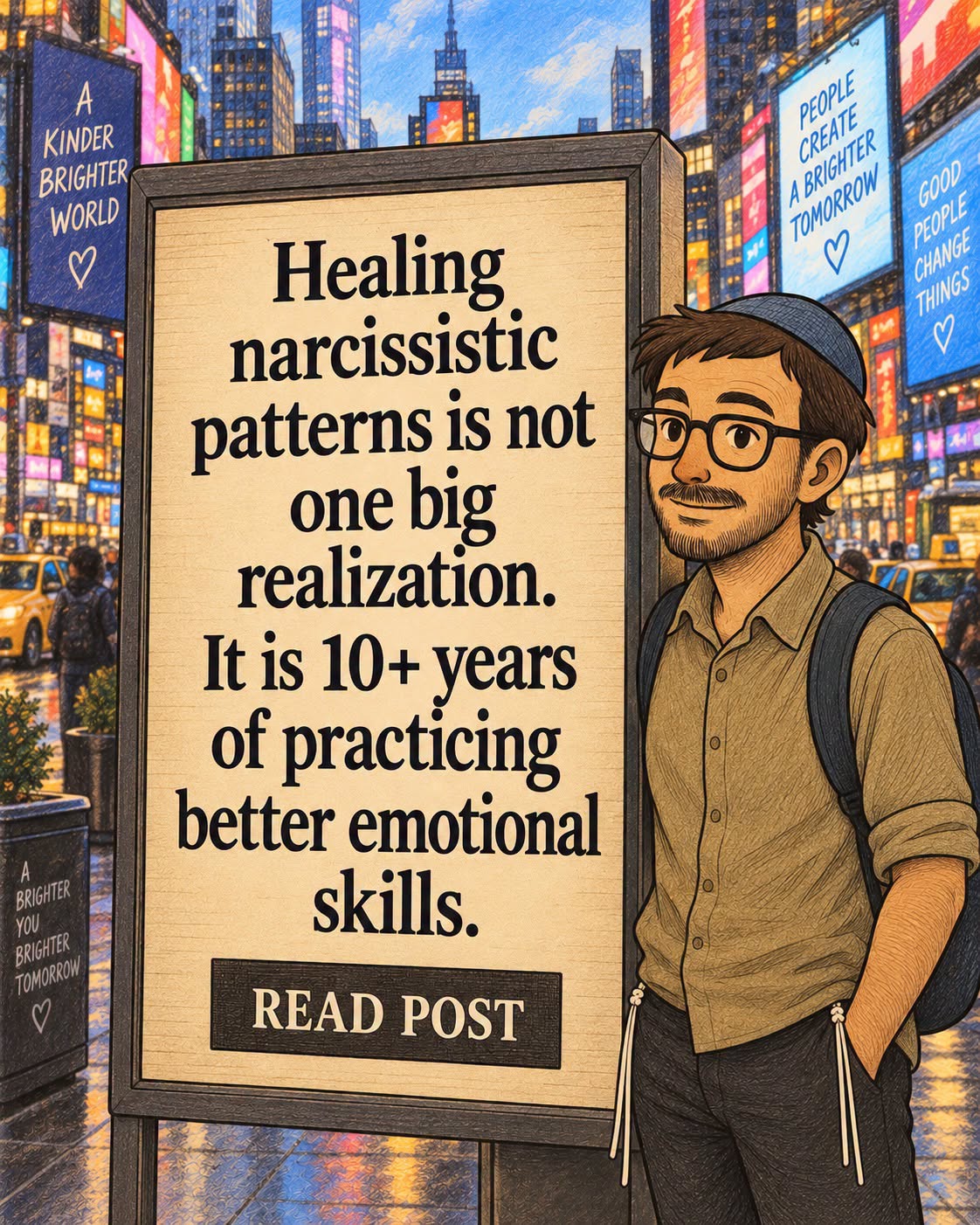
“Healing narcissistic patterns is not one big realization. It is 10+ years of practicing better emotional skills.”
Explore the NextSelf Blog. Start with this post explaining the world of souls. And my Youtube. Content is published to this facebook first and a few days later, to the blog.
The blog lists all the difference patterns to study, understanding patterns is how one can develop 'Daas' [felt knowing].
Update: As awe, trust, and love deepen, they can allow greater openness and intimacy with the Creator. That intimacy can include sadness when you notice how much more of His goodness can be revealed.