

Choni Hamagol [known for miracles through prayer]: “Either companionship or death” (Taanis 23a)
"Life is not worth living if one’s colleagues do not treat him with the respect to which he is accustomed" - Rashi. [an intense emotional state to live in]
“a person should always live the in the place of his teacher” - Ulla (berachos 8a)
Elijah instructed Rabbi Nassan that the food he eats should fill only one third of his stomach’s capacity, drink should fill another third, and that the last third should remain empty - Talmud
“the reward in the world to come is only a product of the work one does in this world” - Rabbi Yakov, a teacher of Rebbi
"There may be a 7 year famine, but it does not enter a craftman’s door [for he can rely on his craft to sustain him]." - Rava
Rav Sheishes warned against overeating in general, saying that, “filling the stomach ranks among the types of evil” (Berachos 32a)
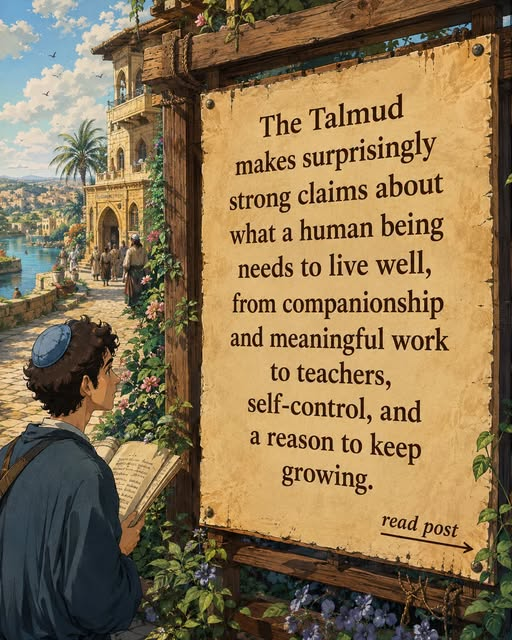
"The Talmud makes surprisingly strong claims about what a human being needs to live well, from companionship and meaningful work to teachers, self-control, and a reason to keep growing."
Visit this profile for more content.
Explore the NextSelf Blog. Start with this post explaining the world of souls. And my Youtube. Content is published to this facebook first and a few days later, to the blog.
The blog lists all the difference patterns to study, understanding patterns is how one can develop 'Daas' [felt knowing].
Update: As awe, trust, and love deepen, they can allow greater openness and intimacy with the Creator. That intimacy can include sadness when you notice how much more of His goodness can be revealed.