

Elul is the last month of the Jewish year.
The Alter Rebbe describes Elul with a strange image:
The king leaves the palace and enters the field.
Why the field?
Because that is where the people are, and the king comes to meet them in the place where ordinary life is happening.
But the goal is not to stay in the field forever.
By noticing the king there, a person begins to want something more: to come closer, live with greater awareness of his kingship, behold more beauty, and eventually want to enter the palace.
How can the Creator become “closer”?
But this raises a deeper question:
How can the Creator become “closer”?
The Infinite Creator is not physically far away during one month and nearby during another.
Chassidus is describing a change in how His relationship with us is revealed and how we experience it.
What does Elul have to do with the nervous system?
That is where beliefs about reality begin to shape the nervous system.
You can believe with your mind that the Creator is the Source of your life while your nervous system still experiences the world as random, threatening, or separate from Him.
Elul trains a different awareness through what we repeatedly think, say, study, and do.
We think more about the Creator, study the wisdom He chose to reveal in Torah, speak in ways that strengthen the relationship, and act with greater awareness that our choices are happening before Him.
The Alter Rebbe’s image of a king in the field itself helps us think more deeply about the Creator.
We cannot picture the Infinite Creator Himself. But the metaphor gives the mind something it can reflect on: a King who is beyond us, yet chooses to come into the place where ordinary life is happening and makes Himself available to the people there for a conversation.
Thinking deeply about that image can make His kingship, closeness, and desire for relationship feel more real to us.
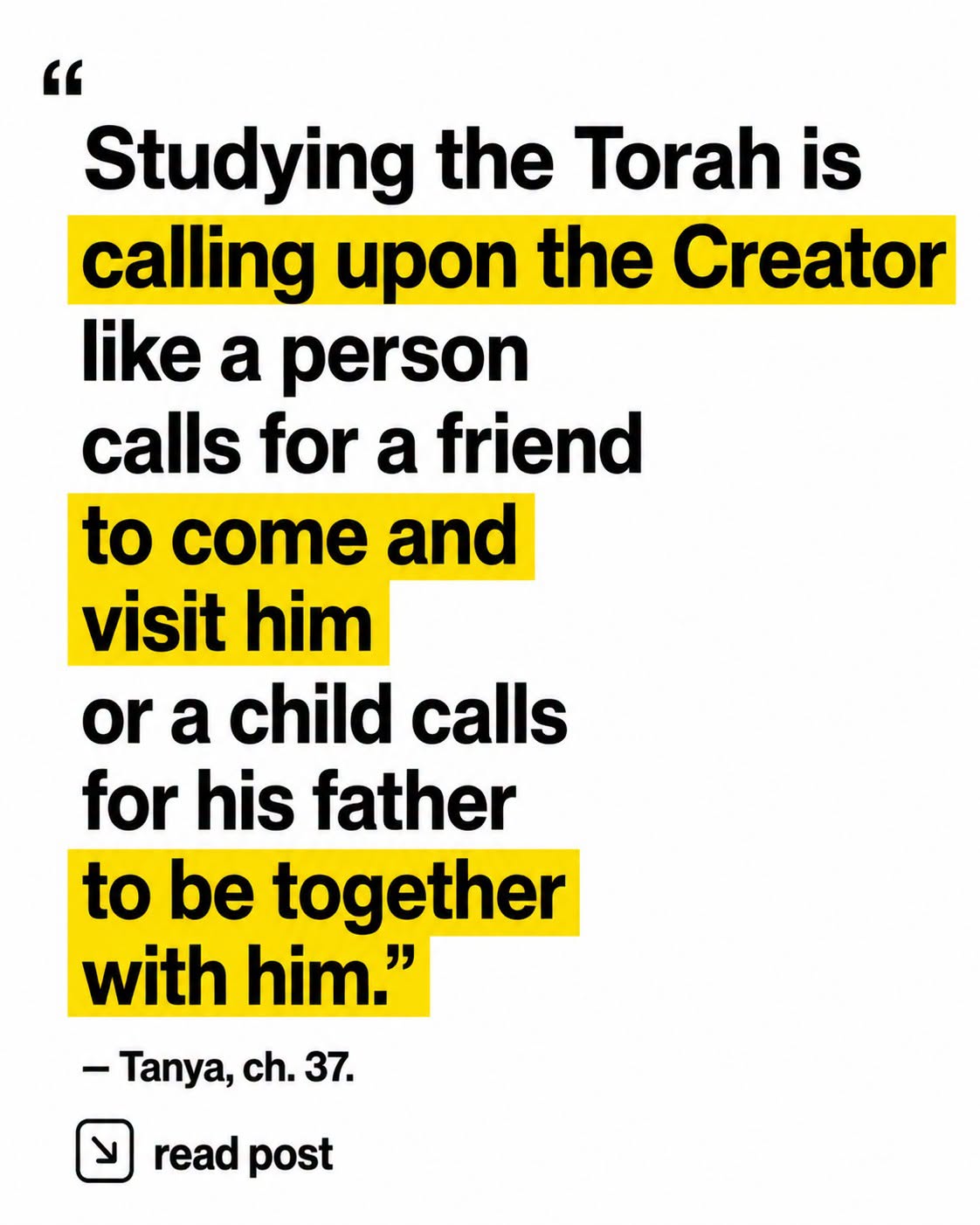
The Tanya also describes Torah study as calling upon the Creator like someone calling for a friend to visit, or a child calling for his father to be together with him.
That is because Torah is not only information about religion.
Torah is how the Creator chose to make His wisdom knowable to us.
When we study it, we are training the mind to become familiar with what He chose to reveal.
How do we start noticing Him in ordinary life?
Through those thoughts, words, study, and actions, we become better at noticing expressions of Him in ordinary life.
We notice goodness and wisdom, notice that our choices matter before Him, and notice that existence itself is not independent of its Source.
And one of the deepest ways to meet Him in the field more often is to notice the endless patterns of wisdom built into ordinary life.
You can notice how a seed becomes a tree, how the body repairs itself, how a conversation can change a relationship, or how one small choice can shape what happens next.
The more patterns you notice, the more ordinary life stops looking ordinary.
You begin noticing what you normally pass over: a meal, someone caring about you, an unexpected solution, the wisdom built into nature, and the ability to understand, choose, repair, and begin again.
And each kindness or pattern of wisdom can open a deeper question:
Why is there goodness here at all?
Why is there so much order and wisdom?
The more deeply you look at existence, the more mysterious it becomes.
Why does anything exist?
Why does nature follow patterns we can understand?
Why can people recognize goodness, beauty, and meaning?
Why can one person truly care about another?
We do not have to pretend every mystery has been solved.
Wonder begins when we notice how much there is to wonder about.
What does Chassidus add to this wonder?
Chassidus takes this one step deeper.
The world is not only evidence that a Creator made it long ago.
Everything continues to receive its existence from Him.
So gratitude becomes more than saying “thank You” for individual gifts.
It becomes a way of noticing relationship.
And the more we notice expressions of Him in the field, the more awe we can feel.
How does awe change what the nervous system practices?
Awe means becoming aware that you are living before the King, that your choices matter to Him, and that the Infinite Creator desires a relationship with you.
That awareness can change what the nervous system practices.
Fear can slowly become trust, the need for approval can become healthier love and boundaries, and the mind can spend less energy predicting what might go wrong and more energy noticing wisdom and goodness.
Desire can also become more than wanting the next thing.
It can become a desire for greater intimacy with the Source of life.
That is part of the depth of “the king in the field.”
The King comes into the field because that is where we are.
And by studying His wisdom and noticing expressions of Him there, we begin to desire the palace.
We begin to desire greater closeness, to behold more beauty, and to live with deeper awareness of His kingship.
Elul, the final month of the Jewish year, gives us a special chance to practice that before a new year begins.
Not because the mystery goes away, but because the more patterns of His wisdom we notice, the more often ordinary life becomes a meeting place with Him.
_________________
Related Guides:
The emotional skills you develop in this life shape how quickly you enjoy the world of souls
How do you transform guilt and worry about the past into love?
“We use anthropomorphic expressions such as “G-ds word” and “G-ds hand” because we need to generate some concrete expression for abstract realities, they do not convey His essence.” - Rabbi Adin Even-Yisrael [Steinsaltz]
#NextSelf #chassidus #kabbalah #Torah
Questions people ask
What does “the king is in the field” mean in Elul?
It is the Alter Rebbe’s image for Elul: the king leaves the palace and comes to the field because that is where the people are, where ordinary life is happening. The emotional skill here is awareness. When you notice the King in your ordinary day, you begin to want more: to come closer, and eventually to enter the palace.
Is G-d actually closer to us during Elul?
Not in physical distance. Chassidus describes a change in how His relationship with you is revealed and experienced. You can believe the Creator is the Source of your life while your nervous system feels the world as random or threatening. Elul trains a different awareness through what you repeatedly think, say, study, and do. That is an emotional skill.
How does belief in the Creator affect the nervous system?
Beliefs about reality begin to shape the nervous system. The emotional skills involved are awareness and awe: knowing you are living before the King, that your choices matter to Him, and that the Infinite Creator desires a relationship with you. With that awareness, fear can slowly become trust, and the need for approval can become healthier love and boundaries.
How do you practice gratitude and wonder in everyday life?
Noticing the patterns of wisdom built into ordinary life is an emotional skill you can practice: a seed becoming a tree, the body repairing itself, one small choice shaping what happens next. Wonder begins when you notice how much there is to wonder about. Gratitude then becomes more than saying “thank You”; it becomes a way of noticing relationship.
“"Studying the Torah is calling upon the Creator like a person calls for a friend to come and visit him or a child calls for his father to be together with him." -Tanya, ch. 37.”
Explore the NextSelf Blog. Start with this post explaining the world of souls. And my Youtube. Content is published to this facebook first and a few days later, to the blog.
The blog lists all the difference patterns to study, understanding patterns is how one can develop 'Daas' [felt knowing].
Update: As awe, trust, and love deepen, they can allow greater openness and intimacy with the Creator. That intimacy can include sadness when you notice how much more of His goodness can be revealed.