

There are several different questions that often get mixed together when people talk about the Creator.
The first question is simply:
Why does anything exist at all?
Everything we see gets its existence from something else.
1. A person exists because of parents.
2. A tree comes from a seed.
3. The seed came from another tree.
Why can everything not get its existence from something else?
But if absolutely everything only got its existence from something else, then nothing would have existence from itself.
So Maimonides argues that there has to be a Source that does not get its existence from anything else.
Everything else ultimately receives existence from that Source.
That is the idea behind saying:
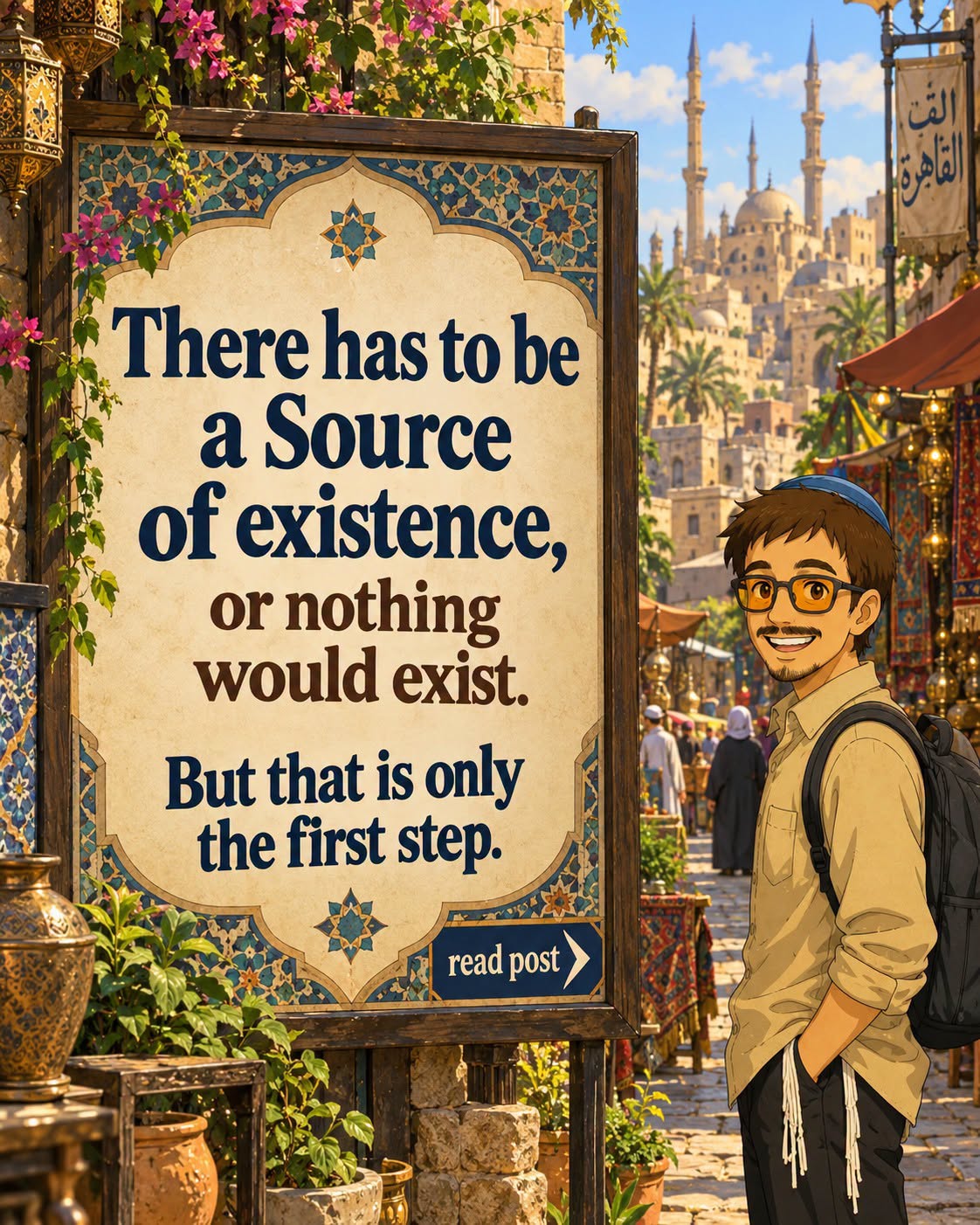
There has to be a Source of existence, or nothing would exist.
__________
Why can there not be two or three Sources?
But another question still remains:
Why exactly one Source?
Maimonides also asks why there can only be one ultimate Source. If there were 2-3 ultimate Sources, there would have to be some real difference between them.
Something would have to make one this Source and the other a different Source.
But then each one would be defined by something more basic than itself.
Maimonides argues that the ultimate Source cannot be made from parts or different elements that explain what it is.
If it were, it would depend on those things.
The ultimate Source has to exist through itself and not depend on anything more basic.
That is why Maimonides argues that the ultimate Source must be One.
The Alter Rebbe gives a metaphor for thinking about that Oneness, "opposites like awe and love are united like inseparable friends", explained more here: https://www.facebook.com/share/p/1FF72zrynJ/
__________
Does one Source prove the Creator has intelligence?
But this still does not automatically prove everything people believe about the Creator.
The belief that the Source has intelligence is another argument. Explained here: https://www.facebook.com/share/p/1BtWHYzD75/
The belief that the Source has free choice is another argument.
The belief that the Source is good is another argument [see linked post at the end].
These ideas can support each other, but they should not be treated as one giant argument.
Philosophy can begin with the question of why anything exists and lead toward one ultimate Source.
Then separate arguments can ask what can be known about that Source.
Belief goes further by asking what it means to live in relationship with Him.
You could still believe that this Source is blind, with no intelligence or choice, almost like an infinitely powerful rock [like in comic books].
What do order, beauty, and mathematics suggest?
But that is a separate belief.
When we look at existence, we do not only see that things exist. We also see deep patterns of order, beauty, structure, mathematics, and systems that work together.
Those patterns do not mathematically prove that the Source has intelligence and free choice, but they give us reason to ask whether a completely blind Source is really the best explanation of the reality we actually observe.
__________
Why does the Creator want a world made of dust?
In Chassidus, believing that the Creator is good also changes how you understand why this physical world exists.
Your body comes from dust.
Your soul is an expression of His light, and it allows you to feel awe and love toward Him.
The Creator desires the lowest world, the world of physical dust, to become part of His unity through intimacy with Him.
The soul helps make that possible by allowing a physical human being to know Him, trust Him, feel awe and love toward Him, and freely choose a relationship with Him through developing the mindset "Im here to be a channel for goodness towards myself and others".
The purpose is for this physical world itself to become part of intimacy with the Creator.
Which emotional skills turn awe into love?
A relationship with the Creator [the Source] begins when you feel awe.
Awe begins by noticing patterns that show there is wisdom behind life.
You notice order in nature, patterns in your own thoughts and feelings, the way events connect, and how one choice can change what happens next.
As you notice more of these patterns, you can develop a sense that reality is not simply random, that there is a Source guiding it and believe the Creator has intelligence and free choice.
Wonder grows as you see how much wisdom is built into existence.
Fear grows as you realize the Creator is here, giving us existence moment by moment, and that your choices truly matter before Him.
Humility grows as you realize how little you understand compared with the wisdom behind everything.
Trust in His goodness then helps awe grow into love.
Expressing appreciation, or simply talking with the Creator about what you are thinking and feeling, can deepen awe and love.
As awe, trust, and love deepen, they can allow greater openness and intimacy with the Creator.
That intimacy can include sadness when you notice how much more of His goodness could still be revealed.
Music can also help the nervous system feel that awe and love more deeply by turning what the mind understands into something the body can feel.
______________
Related guides:
Why was suffering/trauma built into creation? https://www.facebook.com/share/p/1D4tTnpebM/
How is free choice possible? https://www.facebook.com/share/p/19KiupAADE/
Deep emotional healing from the trauma built into creation explained
What happens if honesty threatens a relationship? https://www.facebook.com/share/p/18atSNHUSt/
Emotionally healthy beliefs of the world of souls
Emotional numbness blocks relationship
You can transform guilt and worry about the past into love
Visit nextself.ai/blog for guides to emotionally healthy spirituality.
#NextSelf #kabbalah #Torah #biblestudy #spiritualgrowth
Questions people ask
Why does anything exist at all?
Everything we see gets its existence from something else, like a person from parents. Maimonides argues everything cannot depend only on other things, so there must be one Source that exists through itself. Asking a question like this is the emotional skill of curiosity: not accepting things at face value, but wanting to understand why.
What does it mean that the Creator is One?
It does not just mean one G-d instead of two or three. Maimonides argues the true Source cannot be built from parts, since parts depend on something more basic. The Alter Rebbe pictures that Oneness as awe and love united like inseparable friends. Holding opposites together is an emotional skill, practiced by letting trust turn awe into love.
Can philosophy prove the Creator has intelligence and free choice?
No, not by itself. Intelligence, free choice, and goodness are separate arguments that support each other but should not become one giant argument. Existence shows order, beauty, structure, and mathematics, which gives us reason to ask whether a blind Source explains what we observe. Keeping those questions separate, instead of collapsing them, is the emotional skill of honest awareness.
How do you practice awe and love toward the Creator?
By practicing specific emotional skills. Awe begins with noticing patterns of wisdom behind life: order in nature, patterns in your own thoughts and feelings, and the way events connect. Humility and appreciation are also emotional skills, and trust in His goodness then helps awe grow into love and intimacy. You practice them by expressing appreciation or simply talking with Him.
“There has to be a Source of existence, or nothing would exist. But that is only the first step.”
Explore the NextSelf Blog. Start with this post explaining the world of souls. And my Youtube. Content is published to this facebook first and a few days later, to the blog.
The blog lists all the difference patterns to study, understanding patterns is how one can develop 'Daas' [felt knowing].
Update: As awe, trust, and love deepen, they can allow greater openness and intimacy with the Creator. That intimacy can include sadness when you notice how much more of His goodness can be revealed.