

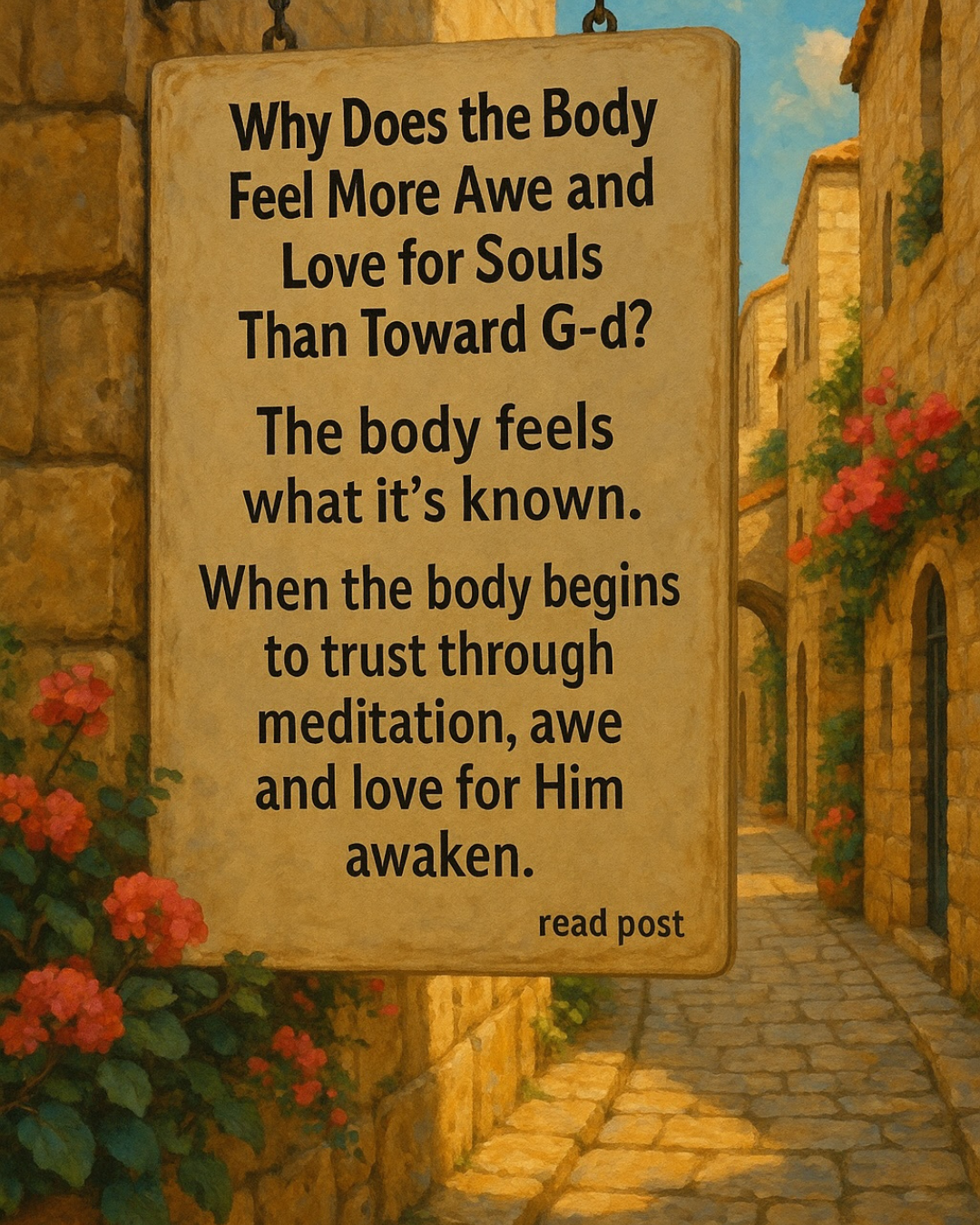
He’s infinite,
the mind believes,
but the nervous system doesn’t always feel Him — because of trauma.
The body feels what it’s known before,
a voice, a hug, a look of care.
Those moments live in the nervous system as safety and love.
So when you think of someone you’ve loved,
even if they’re no longer here,
your body remembers that warmth.
It feels real, because it once had form.
Why Is a Formless G-d Hard to Feel?
But G-d is formless.
The nervous system doesn’t know where to look,
so faith stays in the mind,
while the body waits to feel something real.
That’s why the mind can guide the body,
through quiet focus.
What Does This Quiet Focus Look Like?
Think about how G-d gives life to every world,
yet also surrounds them with a light too great to hold.
Darkness helps us realize this —
because only when we can’t see,
do we start to sense what’s holding us.
What Happens When the Body Softens?
That thought helps soften the nervous system,
control begins to fade, humility grows,
and in that humility,
the body begins to sense His greatness.
That’s the beginning of awe,
when the body stops trying to protect itself,
and starts to feel the Presence that’s always been here.
Then remember this:
in His presence, everything is as nothing.
The body no longer feels separate.
The heart opens wider,
and love flows naturally from awe.
This is how the mind teaches the nervous system to believe,
until G-d no longer feels far,
but closer than breath itself.
More Guides:
Healing is about rewriting your relationship with trauma – Ever wonder why it's hard to change how you feel or act?
Why did G-d give Adam 6 commandments? The 7 Noahide Laws
How does trauma take away your awareness? From what we know about trauma today
The secret to transform suffering into blessing: Your pain isn't random
Why is it hard to change unhealthy beliefs? Ever wonder why it's so hard to leave a dysfunctional system?
People pleasing is like idol worship: When a Part of a Personality Doesn't Know G-d
Forgiveness doesn’t erase anger, change does: Many people misunderstand forgiveness
Questions people ask
Why can’t I feel G-d even though I believe in Him?
Believing is a job for the mind, but feeling safe is a job for the nervous system. Your body only recognizes what it has felt before, like a voice, a hug, or a look of care. G-d has no form, so the nervous system does not know where to look for Him yet, especially when trauma is in the way.
How does trauma affect the ability to feel G-d’s presence?
Trauma changes what the nervous system expects to feel. The body only trusts what it has felt before, so if the nervous system does not know where to look for something formless, faith can stay stuck in the mind while the body keeps waiting to feel something real.
What practice helps the nervous system feel closer to G-d?
The article points to quiet, focused thought. It suggests thinking about how G-d gives life to every world, yet also surrounds it with a light too great to hold. Even darkness plays a part: only when we cannot see do we start to sense what is holding us up.
What is the beginning of awe, according to this teaching?
Awe begins when the body stops trying to protect itself and lets its guard down. This calls on the emotional skill of awareness, noticing what the body feels right now instead of controlling it. As control fades and humility grows, the nervous system can finally sense G-d’s greatness.
Explore the NextSelf Blog. Start with this post explaining the world of souls. And my Youtube. Content is published to this facebook first and a few days later, to the blog.
The blog lists all the difference patterns to study, understanding patterns is how one can develop 'Daas' [felt knowing].
Update: As awe, trust, and love deepen, they can allow greater openness and intimacy with the Creator. That intimacy can include sadness when you notice how much more of His goodness can be revealed.